

 By
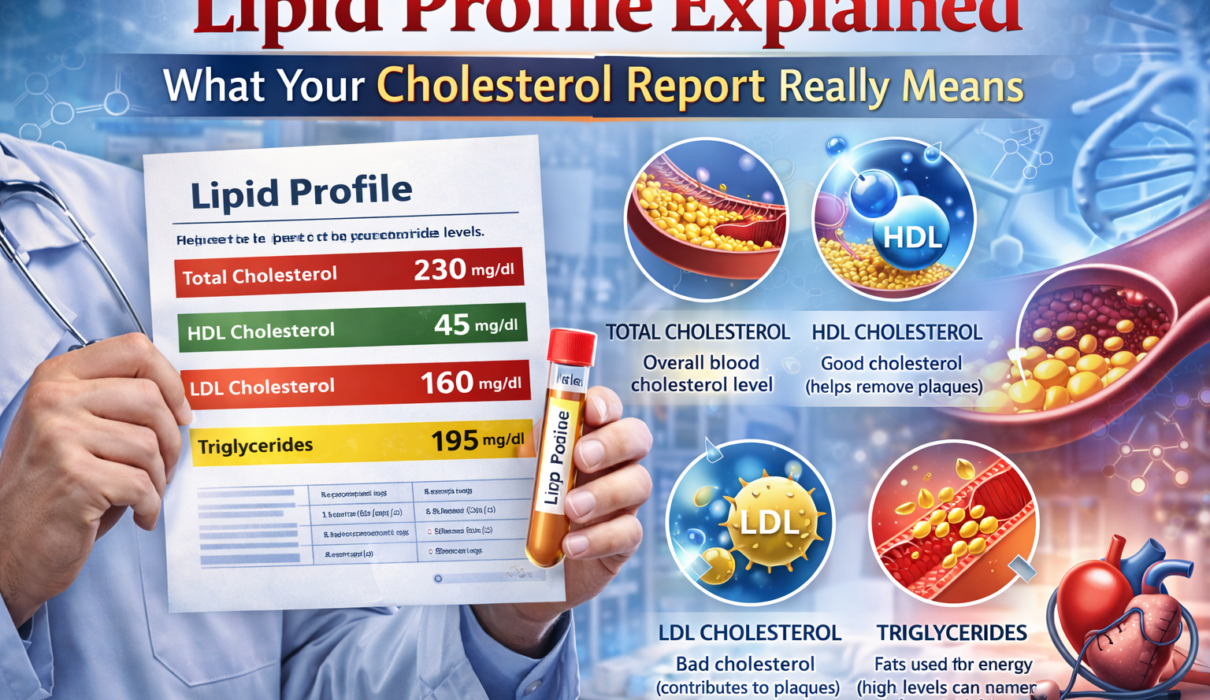
By A lipid profile is a blood test that measures different types of fats in the bloodstream. It is commonly ordered during routine health checkups or when evaluating cardiovascular risk.
Because cholesterol numbers are often misunderstood, interpreting a lipid profile requires looking at the full pattern rather than focusing on a single value.
Understanding what each component represents helps place results in proper medical context.
What Is a Lipid Profile?
A lipid profile measures:
- Total cholesterol
- Low-density lipoprotein (LDL) cholesterol
- High-density lipoprotein (HDL) cholesterol
- Triglycerides
Some reports also include:
- Non-HDL cholesterol
- VLDL
- Cholesterol ratios
These values reflect how fats are transported and stored in the body.
Why Lipids Matter
Lipids are essential for:
- Hormone production
- Cell membrane structure
- Energy storage
- Vitamin absorption
However, imbalance in lipid levels may increase long-term cardiovascular risk (WHO, 2023).
Components of a Lipid Profile
Total Cholesterol
Total cholesterol represents the overall amount of cholesterol in the blood.
It includes:
- LDL
- HDL
- VLDL components
Total cholesterol alone does not determine risk. The breakdown matters more.
LDL Cholesterol
LDL is often referred to as “low-density lipoprotein.”
It transports cholesterol to tissues.
Excess LDL may contribute to plaque formation in blood vessels over time (CDC, 2024).
Higher LDL levels are associated with increased cardiovascular risk.
HDL Cholesterol
HDL helps remove excess cholesterol from the bloodstream and transport it back to the liver.
Higher HDL levels are generally associated with protective cardiovascular effects.
However, HDL alone does not eliminate risk if LDL is elevated.
Triglycerides
Triglycerides are a form of fat used for energy storage.
Elevated triglycerides may be associated with:
- Insulin resistance
- Obesity
- Poorly controlled diabetes
- High carbohydrate intake
- Excess alcohol consumption
Very high levels may increase pancreatitis risk.
How Lipid Results Are Interpreted
Interpretation depends on:
- Age
- Gender
- Blood pressure
- Smoking status
- Diabetes status
- Family history
Risk calculators are often used rather than relying on single numbers (American Heart Association, 2023).
Common Lipid Patterns
Elevated LDL with Normal Triglycerides
May suggest dietary or genetic hypercholesterolemia.
High Triglycerides with Low HDL
Often associated with metabolic syndrome or insulin resistance.
Elevated Total Cholesterol with High HDL
May not indicate increased cardiovascular risk if HDL is proportionally high.
When Is a Lipid Profile Ordered?
Lipid testing is commonly recommended:
- During routine screening
- For individuals over 20 years old
- In diabetes or hypertension
- With family history of heart disease
- After cardiovascular events
- To monitor statin therapy
Screening intervals vary based on risk profile.
Fasting vs Non-Fasting Lipid Tests
Traditionally, lipid tests were done fasting.
However, current guidelines indicate that non-fasting lipid testing is often acceptable for routine screening (NHLBI, 2023).
Fasting may still be required when triglycerides are significantly elevated.
Practical Takeaway
A lipid profile evaluates cholesterol and triglyceride levels to assess cardiovascular risk. LDL, HDL, and triglycerides together provide more meaningful insight than total cholesterol alone.
Interpretation should consider overall risk factors, not just isolated numbers.
Final Thoughts
Cholesterol is not inherently harmful. It is essential for normal physiology. The issue arises when imbalance persists over time in the presence of other risk factors.
Understanding the full lipid pattern allows for informed discussions rather than fear-based reactions to single values.
Author
Written by Aman
This article is for educational purposes only and does not constitute medical advice.
References
World Health Organization (WHO). Cardiovascular diseases overview.
https://www.who.int/news-room/fact-sheets/detail/cardiovascular-diseases-(cvds)
Centers for Disease Control and Prevention (CDC). Cholesterol basics.
https://www.cdc.gov/cholesterol
American Heart Association (AHA). Understanding cholesterol.
National Heart, Lung, and Blood Institute (NHLBI). Blood cholesterol tests.