

 By
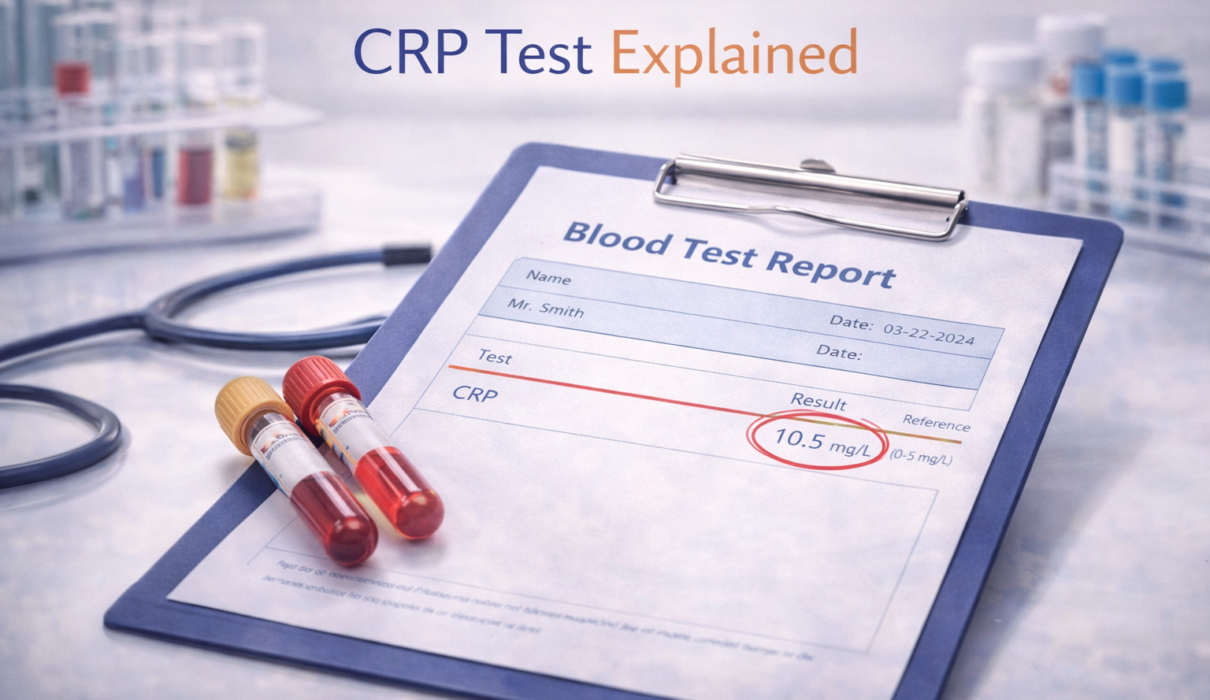
By The C-reactive protein (CRP) test is a commonly ordered blood test used to detect inflammation in the body. It is often requested when there is suspicion of infection, autoimmune disease, or chronic inflammatory conditions, and it is also used in cardiovascular risk assessment.
CRP does not identify a specific disease on its own. Instead, it indicates whether inflammation is present and how active it may be (CDC, 2024; NIH, 2023).
Understanding what the CRP test measures helps place results into proper medical context and prevents unnecessary alarm.
What Is C-Reactive Protein (CRP)?
CRP is a protein produced by the liver in response to inflammation. When the body experiences injury, infection, or tissue damage, CRP levels rise in the blood.
It plays a role in:
- Immune response
- Inflammation signaling
- Clearing damaged cells
CRP levels can rise quickly and fall rapidly once inflammation improves (WHO, 2022).
What Is the CRP Test?
The CRP test measures the amount of C-reactive protein in the blood.
It is used to:
- Detect inflammation
- Monitor inflammatory conditions
- Evaluate response to treatment
- Assess infection severity
- Estimate cardiovascular risk (in specific forms of testing)
It is a supportive test rather than a standalone diagnostic tool.
Types of CRP Tests
Standard CRP Test
This test detects moderate to high levels of inflammation and is commonly used for:
- Infections
- Autoimmune disorders
- Inflammatory diseases
High-Sensitivity CRP (hs-CRP)
This version measures very low levels of CRP and is often used in cardiovascular risk assessment.
hs-CRP helps evaluate:
- Low-grade chronic inflammation
- Risk of heart disease
- Long-term vascular health (AHA, 2023)
Why the CRP Test Is Ordered
CRP testing may be ordered for:
- Fever or suspected infection
- Autoimmune disease evaluation
- Monitoring chronic inflammatory disorders
- Assessing treatment response
- Cardiovascular risk screening
- Unexplained fatigue or body pain
It is also used to track inflammation over time.
What High CRP Levels May Indicate
Elevated CRP levels may be associated with:
- Bacterial or viral infections
- Inflammatory diseases
- Tissue injury
- Chronic conditions
- Obesity and metabolic disorders
Higher levels usually reflect more active inflammation (NHS, 2023; CDC, 2024).
What Low or Normal CRP Levels Mean
Low CRP levels generally indicate:
- Absence of significant inflammation
- Lower risk of inflammatory disease activity
- Stable health status
However, normal CRP does not rule out all medical conditions.
Factors That Can Affect CRP Results
CRP levels may be influenced by:
- Recent illness
- Injury or surgery
- Smoking
- Obesity
- Pregnancy
- Chronic stress
- Certain medications
Because of this, results must be interpreted alongside symptoms and clinical history (NIH, 2023).
CRP and Heart Disease
hs-CRP is sometimes used to assess cardiovascular risk.
Persistent low-grade inflammation may contribute to:
- Atherosclerosis
- Heart attack risk
- Stroke risk
CRP does not replace cholesterol testing but adds information about inflammatory status (AHA, 2023; WHO, 2022).
Common Misunderstandings About CRP
- CRP does not identify the exact cause of inflammation
- High CRP does not always mean serious disease
- Normal CRP does not exclude all illness
- CRP is not specific for cancer or infection alone
Understanding these points helps avoid misinterpretation.
Why the CRP Test Matters
Inflammation plays a role in many health conditions, including:
- Infections
- Autoimmune diseases
- Cardiovascular disease
- Metabolic disorders
CRP testing helps monitor inflammatory activity and guide further evaluation (CDC, 2024).
Practical Takeaway
The CRP test measures inflammation in the body. It is a useful screening and monitoring tool but must be interpreted in combination with symptoms, medical history, and other tests.
Final Thoughts
CRP is a simple blood test with broad clinical relevance. Understanding what it measures allows individuals to approach results calmly and engage in informed discussions with healthcare professionals.
Author
Written by Aman
Aman has a medical background and focuses on explaining health topics clearly and responsibly. This article is for educational purposes only and does not constitute medical advice.
References
- World Health Organization (WHO). (2022). Inflammation and chronic disease. https://www.who.int/news-room/fact-sheets/detail/noncommunicable-diseases
- National Institutes of Health (NIH). (2023). C-reactive protein test. https://medlineplus.gov/lab-tests/c-reactive-protein-crp-test/
- Centers for Disease Control and Prevention (CDC). (2024). Inflammation and immune response. https://www.cdc.gov/inflammation
- National Health Service (NHS). (2023). C-reactive protein (CRP) test. https://www.nhs.uk/conditions/c-reactive-protein-test/
- American Heart Association (AHA). (2023). Inflammation and heart disease. https://www.heart.org/en/health-topics/cholesterol/inflammation-and-heart-disease
- Ridker, P. M. (2016). C-reactive protein and cardiovascular disease. New England Journal of Medicine, 375(6), 580–590. https://pubmed.ncbi.nlm.nih.gov/27518610/