

 By
By Diabetes often develops quietly. In many people, early changes in blood sugar levels occur long before a diagnosis is made. Because symptoms may be mild or gradual, they are easy to overlook or attribute to stress, fatigue, or aging.
Recognizing early warning signs helps promote timely screening and informed medical care (CDC, 2024; WHO, 2022).
Why Do Symptoms Appear?
When blood glucose rises above normal levels, the body tries to restore balance by:
- Increasing urine production to remove excess sugar
- Drawing water from tissues, leading to dehydration
- Reducing glucose entry into cells, lowering available energy
These processes explain many of the common symptoms of diabetes (NIDDK, 2023).
Common Early Symptoms
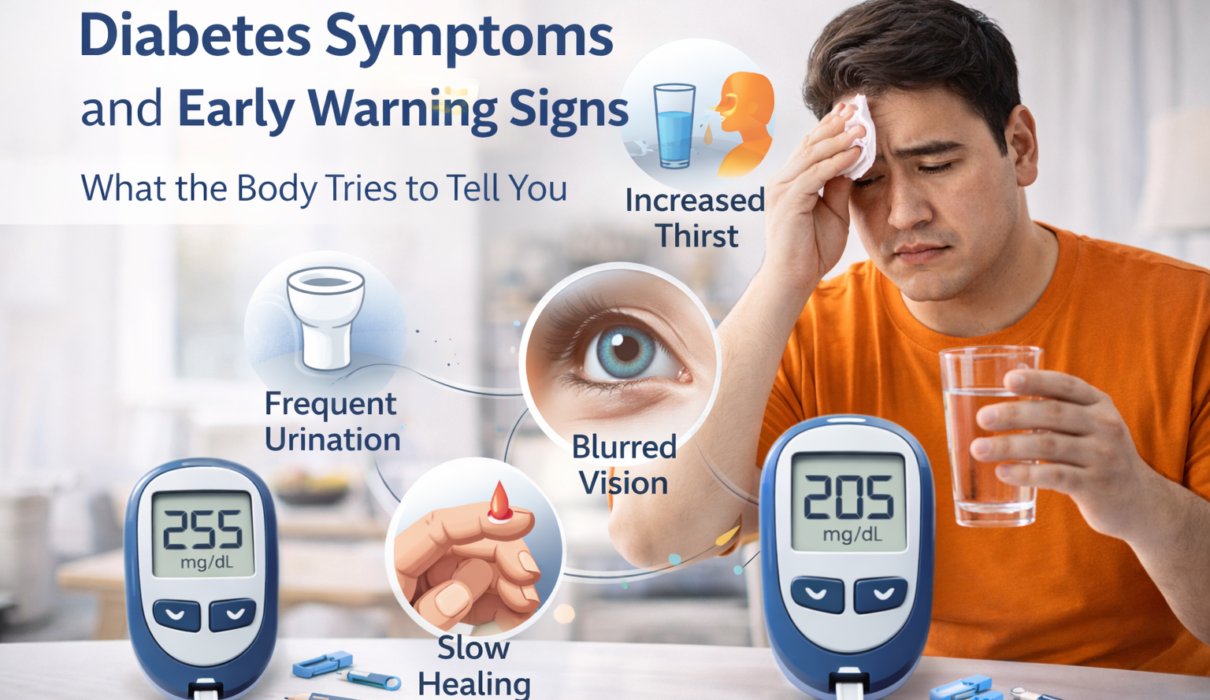
Increased Thirst (Polydipsia)
High blood sugar causes frequent urination, which leads to fluid loss. The body responds by triggering thirst.
People may notice:
- Drinking more water than usual
- Persistent dry mouth
Frequent Urination (Polyuria)
Excess glucose spills into urine and pulls water with it.
This may result in:
- Needing to urinate more often
- Waking at night to urinate
- Larger volumes of urine
Fatigue
Because glucose cannot enter cells effectively, the body’s main energy source becomes less available.
This can cause:
- Persistent tiredness
- Reduced stamina
- Difficulty concentrating
Blurred Vision
High blood sugar changes fluid balance in the eye lens, temporarily affecting focus.
Vision may:
- Become blurry
- Fluctuate during the day
- Improve when glucose stabilizes
Unexplained Weight Changes
Some people may experience:
- Weight loss despite normal eating
- Loss of muscle mass
This occurs because the body begins breaking down fat and muscle for energy when glucose cannot be used properly (ADA, 2023).
Less Obvious Warning Signs
Slow Wound Healing
High blood sugar interferes with circulation and immune response, slowing tissue repair.
Small cuts or bruises may:
- Heal slowly
- Become infected more easily
Frequent Infections
Elevated glucose supports bacterial and fungal growth, increasing risk of:
- Skin infections
- Urinary tract infections
- Yeast infections
Tingling or Numbness
Nerve irritation caused by prolonged glucose elevation can produce:
- Tingling
- Burning sensations
- Reduced sensation in hands or feet
This may be an early sign of diabetic neuropathy (NIH, 2023).
Differences Between Sudden and Gradual Onset
Rapid onset (often seen in insulin deficiency)
Symptoms may develop within weeks:
- Excessive thirst
- Rapid weight loss
- Extreme fatigue
Gradual onset (often seen in insulin resistance)
Symptoms may develop slowly over years:
- Mild fatigue
- Slight vision changes
- Frequent urination
- Often unnoticed
This is why routine screening is important (CDC, 2024).
When Symptoms Are Absent
Many people have elevated blood sugar without noticeable symptoms. This stage is sometimes identified as prediabetes or early diabetes during routine health testing.
Absence of symptoms does not mean absence of risk.
How Symptoms Are Evaluated
Symptoms alone are not enough for diagnosis. Blood tests are required, such as:
- Fasting blood glucose
- HbA1c
- Oral glucose tolerance test
Diagnosis should always be made by qualified healthcare professionals using established criteria (WHO, 2022).
Common Misunderstandings
| Belief | Reality |
|---|---|
| No symptoms means no diabetes | Many cases are silent |
| Fatigue always means diabetes | Fatigue has many causes |
| Only overweight people get diabetes | Thin people can develop diabetes |
| Symptoms appear immediately | Often develop gradually |
Why Early Awareness Matters
Early recognition allows for:
- Timely medical evaluation
- Monitoring of risk factors
- Prevention of long-term complications
- Better long-term outcomes
Education and awareness remain key tools in reducing disease burden (CDC, 2024).
Practical Takeaway
Diabetes symptoms result from the body’s response to elevated blood sugar. Common signs include thirst, frequent urination, fatigue, blurred vision, and slow healing. Many people experience few or no symptoms initially, making screening essential.
Final Thoughts
Symptoms are signals, not diagnoses. They reflect underlying changes that deserve careful attention rather than fear. Understanding these early warning signs supports informed healthcare decisions and responsible self-awareness.
Clear information promotes better health conversations.
Author
Written by Aman
Aman has a medical background and focuses on explaining health topics clearly and responsibly. This article is for educational purposes only and does not constitute medical advice.
References
- Centers for Disease Control and Prevention (CDC). (2024). Diabetes symptoms and diagnosis. https://www.cdc.gov/diabetes/basics/symptoms.html
- World Health Organization (WHO). (2022). Diabetes fact sheet. https://www.who.int/news-room/fact-sheets/detail/diabetes
- National Institute of Diabetes and Digestive and Kidney Diseases (NIDDK). (2023). Symptoms of diabetes. https://www.niddk.nih.gov/health-information/diabetes/overview/symptoms-causes
- American Diabetes Association (ADA). (2023). Classification and symptoms of diabetes. https://diabetesjournals.org/care
- National Institutes of Health (NIH). (2023). Diabetic neuropathy. https://medlineplus.gov/diabeticneuropathy.html
1 Comment