

 By
By Hypertension is often called a “silent condition” because it may cause no symptoms for years. Despite this, persistently elevated blood pressure can gradually damage blood vessels and organs throughout the body. These effects are known as hypertension complications.
Not everyone with high blood pressure develops complications, and risk varies depending on duration, overall health, and associated factors. Understanding how complications occur helps highlight why early detection and monitoring are important (WHO, 2022; CDC, 2024).
Why Do Hypertension Complications Occur?
Blood flows through arteries under pressure. When this pressure remains high over time, it can:
- Injure the inner lining of blood vessels
- Promote narrowing and stiffening of arteries
- Increase workload on the heart
- Reduce blood supply to organs
These changes develop gradually and may go unnoticed until significant damage has occurred (NIDDK, 2023).
Major Organ Systems Affected
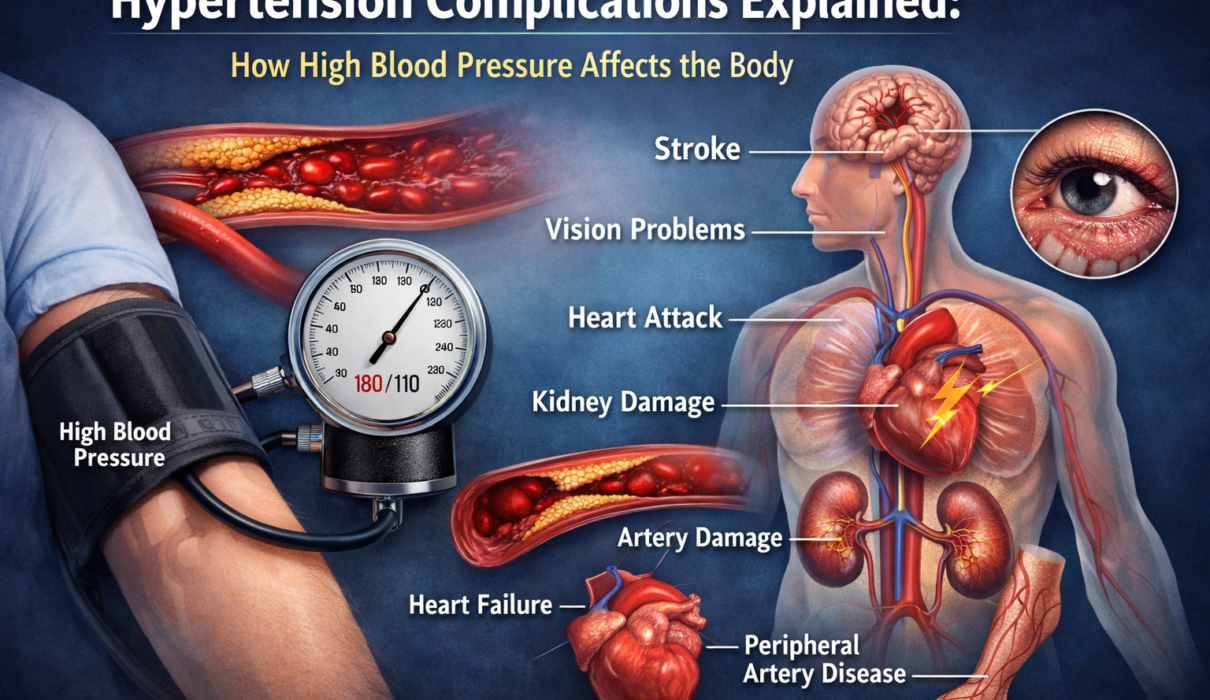
Hypertension can influence many parts of the body. The most commonly affected systems include the heart, brain, kidneys, eyes, and blood vessels.
Heart-Related Complications
Coronary Artery Disease
High blood pressure damages coronary arteries and contributes to plaque buildup. This can reduce blood flow to the heart muscle and increase the risk of heart attack (AHA, 2023).
Heart Failure
When the heart must pump against high pressure for long periods, its muscle may thicken and weaken. Over time, this can reduce the heart’s ability to pump blood effectively.
Enlarged Heart (Left Ventricular Hypertrophy)
Chronic pressure overload can cause enlargement of the heart’s main pumping chamber, which increases the risk of rhythm problems and heart failure.
Brain and Nervous System Complications
Stroke
Hypertension is one of the leading risk factors for stroke. Damaged or narrowed blood vessels in the brain can rupture or become blocked, reducing oxygen supply to brain tissue (WHO, 2022).
Transient Ischemic Attacks (TIAs)
Temporary reductions in blood flow to the brain may cause brief neurological symptoms and signal increased stroke risk.
Cognitive Changes
Long-term high blood pressure has been associated with memory problems and reduced cognitive function later in life (NIH, 2023).
Kidney Complications
Chronic Kidney Disease
The kidneys rely on healthy blood vessels to filter waste from the blood. High blood pressure can damage these vessels, leading to reduced kidney function over time.
Protein in Urine
Damage to kidney filters may allow protein to leak into urine, which is often an early sign of kidney involvement (NIDDK, 2023).
Eye Complications (Hypertensive Retinopathy)
High blood pressure can injure the small blood vessels in the retina. This may cause:
- Blurred vision
- Visual disturbances
- In severe cases, vision loss
Eye changes often develop silently and may be detected during routine eye examinations.
Blood Vessel Complications
Peripheral Artery Disease
Narrowing of blood vessels in the limbs can reduce blood flow, leading to leg pain during walking and delayed wound healing.
Aneurysm Formation
Weakening of blood vessel walls may result in bulging areas called aneurysms, which can rupture and become life-threatening.
Sexual and Reproductive Health Effects
Reduced blood flow caused by hypertension can contribute to:
- Erectile dysfunction
- Reduced sexual function
These effects reflect vascular changes rather than hormonal causes.
Factors That Increase Risk of Complications
Risk is influenced by:
- Duration of hypertension
- Degree of blood pressure elevation
- Smoking
- Diabetes
- High cholesterol
- Obesity
- Genetic susceptibility
- Lack of medical monitoring
Multiple risk factors acting together increase the likelihood of complications (CDC, 2024).
How Complications Are Detected
Complications are often identified through routine evaluations such as:
- Blood pressure monitoring
- Blood and urine tests for kidney function
- Eye examinations
- Heart tests (ECG, echocardiography)
- Brain imaging when indicated
Many complications develop without early symptoms, which makes regular screening essential.
Common Misunderstandings
| Belief | Reality |
|---|---|
| High blood pressure is harmless | It can damage organs silently |
| Complications happen quickly | Usually develop over years |
| Only elderly people are affected | Damage can occur at any age |
| Symptoms always appear first | Often detected through tests |
| One normal reading means no risk | Blood pressure changes over time |
Why Awareness Matters
Understanding hypertension complications allows for:
- Earlier detection
- Regular monitoring
- Prevention of severe outcomes
- Better long-term planning
Education plays a key role in reducing disease burden worldwide (WHO, 2022).
Practical Takeaway
Hypertension can affect the heart, brain, kidneys, eyes, and blood vessels when left unmonitored over time. These complications develop gradually and may occur without symptoms, making routine blood pressure checks and medical evaluation essential.
Final Thoughts
High blood pressure is more than a number on a machine. Its long-term impact depends on how early it is detected and how consistently it is monitored. Knowledge about complications replaces fear with understanding and supports informed healthcare decisions.
Clear information leads to better prevention.
Author
Written by Aman
Aman has a medical background and focuses on explaining health topics clearly and responsibly. This article is for educational purposes only and does not constitute medical advice.
References
- World Health Organization (WHO). (2022). Hypertension fact sheet. https://www.who.int/news-room/fact-sheets/detail/hypertension
- Centers for Disease Control and Prevention (CDC). (2024). High blood pressure complications. https://www.cdc.gov/bloodpressure/health_problems.htm
- National Institute of Diabetes and Digestive and Kidney Diseases (NIDDK). (2023). High blood pressure and kidney disease. https://www.niddk.nih.gov/health-information/kidney-disease/high-blood-pressure
- American Heart Association (AHA). (2023). High blood pressure and heart disease. https://www.heart.org/en/health-topics/high-blood-pressure
- National Institutes of Health (NIH). (2023). High blood pressure and cognitive health. https://www.nia.nih.gov/health/high-blood-pressure