

 By
By Hypothyroidism is a condition in which the thyroid gland does not produce enough thyroid hormones to meet the body’s needs. Because thyroid hormones regulate metabolism, energy production, and multiple organ systems, reduced hormone levels can affect the body gradually and subtly.
Many symptoms develop slowly, which is why hypothyroidism is often diagnosed through laboratory testing rather than clinical signs alone.
What the Thyroid Gland Does
The thyroid is a small gland located in the front of the neck. It produces two primary hormones: thyroxine (T4) and triiodothyronine (T3). These hormones regulate metabolic rate, temperature control, heart function, digestion, and neurological activity.
Thyroid function is controlled by thyroid-stimulating hormone (TSH), which is released from the pituitary gland.
What Happens in Hypothyroidism
In hypothyroidism, thyroid hormone production decreases. As hormone levels fall, the pituitary gland releases more TSH in an attempt to stimulate the thyroid.
This is why elevated TSH is often the first laboratory sign of hypothyroidism.
Reduced thyroid hormone slows metabolic processes throughout the body.
Common Causes
Hypothyroidism may develop for several reasons, including:
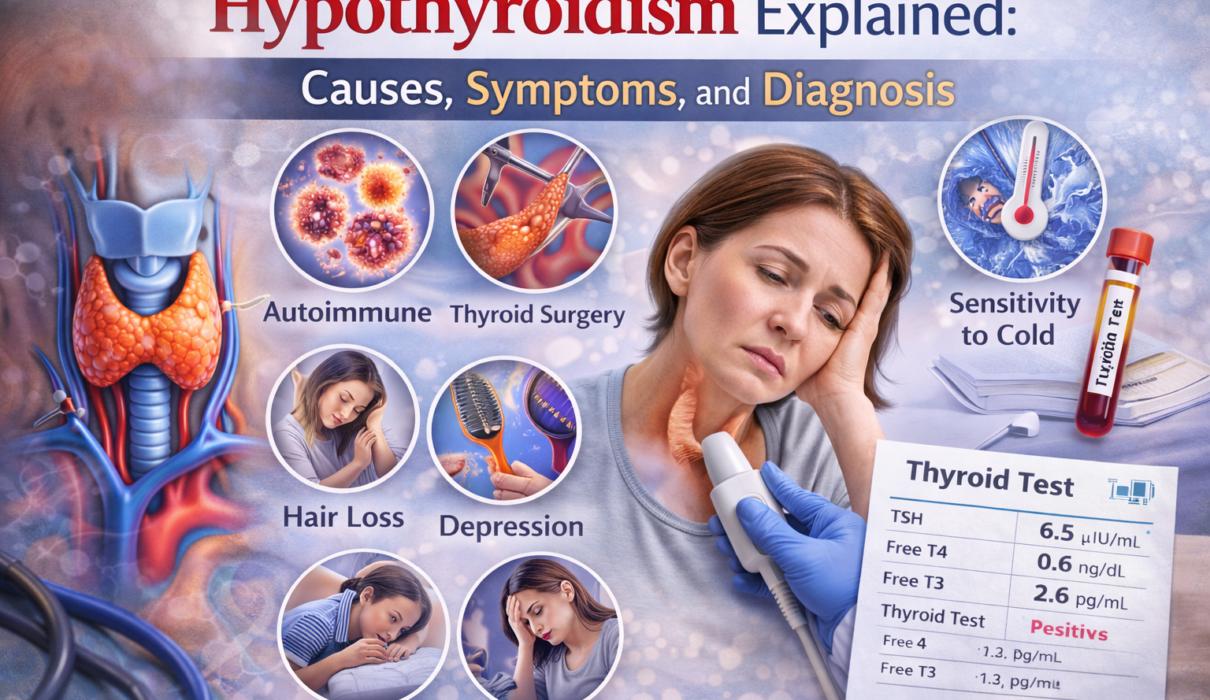
- Autoimmune thyroiditis (such as Hashimoto’s thyroiditis)
- Thyroid surgery
- Radioactive iodine treatment
- Iodine deficiency
- Certain medications
- Postpartum thyroid changes
In many regions, autoimmune causes are the most common (NIH, 2023).
Symptoms
Because thyroid hormones influence many systems, symptoms can vary widely. Common features include:
- Fatigue
- Cold intolerance
- Weight gain
- Dry skin
- Hair thinning
- Constipation
- Slowed heart rate
- Menstrual irregularities
Symptoms usually develop gradually and may be mild in early stages.
Subclinical Hypothyroidism
In some cases, TSH is elevated while T3 and T4 remain within normal range. This is referred to as subclinical hypothyroidism.
Individuals may have minimal or no symptoms, and diagnosis is made through blood testing.
How It Is Diagnosed
Diagnosis relies on laboratory evaluation:
- TSH level
- Free T4
- Sometimes free T3
- Thyroid antibody testing
TSH is typically elevated in primary hypothyroidism, while free T4 is reduced.
Interpretation should always consider clinical context.
Long-Term Considerations
Untreated hypothyroidism can affect:
- Cardiovascular function
- Lipid levels
- Fertility
- Cognitive function
However, outcomes vary depending on severity and duration.
Practical Takeaway
Hypothyroidism is a condition characterized by reduced thyroid hormone production, often detected through elevated TSH levels. Symptoms develop gradually and may overlap with other conditions, making laboratory evaluation essential for diagnosis.
Final Thoughts
Thyroid function influences nearly every organ system. Because symptoms are often subtle and nonspecific, awareness and appropriate testing are key to identifying hypothyroidism early.
Clear understanding prevents unnecessary confusion around fatigue and weight-related symptoms.
Author
Written by Aman
This article is for educational purposes only and does not constitute medical advice.
References
National Institute of Diabetes and Digestive and Kidney Diseases (NIDDK). Hypothyroidism overview.
https://www.niddk.nih.gov/health-information/endocrine-diseases/hypothyroidism
American Thyroid Association (ATA). Hypothyroidism information.
National Institutes of Health (NIH). Hashimoto’s thyroiditis.
https://medlineplus.gov/hashimotosdisease.html
World Health Organization (WHO). Iodine deficiency disorders.
1 Comment