

 By
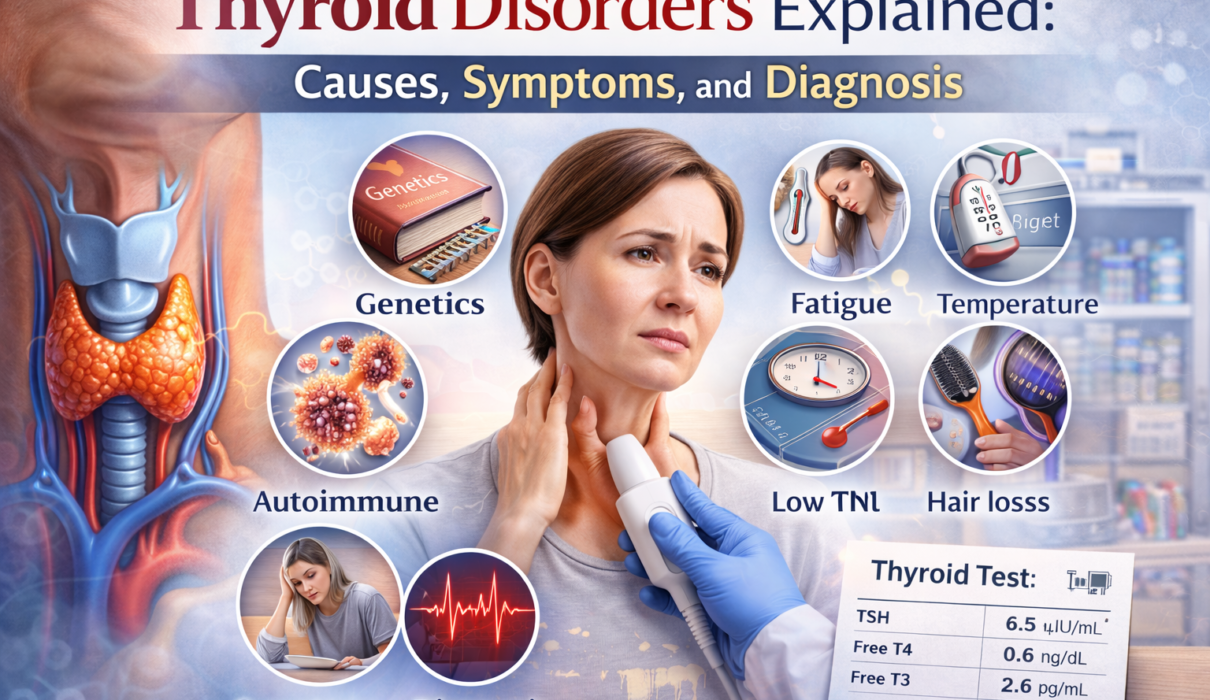
By Thyroid disorders are among the most common hormonal conditions worldwide. They affect how the body uses energy, regulates temperature, and maintains metabolic balance. Many thyroid conditions are detected through routine blood tests or when individuals experience unexplained changes in weight, heart rate, or energy levels.
Understanding thyroid disorders helps clarify how a small gland in the neck can influence multiple body systems (WHO, 2022; NIH, 2023).
What Is the Thyroid Gland?
The thyroid is a butterfly-shaped gland located in the front of the neck. It produces hormones that regulate:
- Metabolism
- Heart rate
- Body temperature
- Energy levels
- Growth and development
These hormones influence nearly every organ in the body (NHS, 2023).
What Are Thyroid Disorders?
Thyroid disorders occur when the gland produces either too much or too little thyroid hormone, or when its structure becomes abnormal.
They are broadly classified into:
- Hypothyroidism (underactive thyroid)
- Hyperthyroidism (overactive thyroid)
- Structural disorders such as goiter or thyroid nodules
- Autoimmune thyroid diseases
Each type affects the body differently.
Hypothyroidism
Hypothyroidism occurs when the thyroid produces insufficient hormones.
Common features may include:
- Fatigue
- Weight gain
- Cold intolerance
- Dry skin
- Slow heart rate
It is often associated with autoimmune conditions and may develop gradually over time (CDC, 2024; NHS, 2023).
Hyperthyroidism
Hyperthyroidism occurs when the thyroid produces excessive hormones.
Possible features include:
- Weight loss
- Heat intolerance
- Rapid heartbeat
- Nervousness or anxiety
- Increased sweating
This condition may result from autoimmune causes or thyroid inflammation (ATA, 2023).
Autoimmune Thyroid Disorders
Autoimmune thyroid diseases occur when the immune system mistakenly attacks the thyroid gland.
The two most common are:
- Hashimoto’s thyroiditis (leading to hypothyroidism)
- Graves’ disease (leading to hyperthyroidism)
These conditions represent a major proportion of thyroid disorders worldwide (WHO, 2022; ATA, 2023).
Thyroid Nodules and Goiter
Structural changes in the thyroid include:
- Thyroid nodules (small lumps within the gland)
- Goiter (enlargement of the thyroid)
Most nodules are benign and discovered incidentally during imaging or physical examination. Further evaluation determines their significance (NIH, 2023).
Symptoms of Thyroid Disorders
Symptoms depend on hormone levels and individual sensitivity.
They may include:
- Changes in weight
- Fatigue
- Hair thinning
- Mood changes
- Heart rhythm changes
- Menstrual irregularities
Some individuals have minimal symptoms and are diagnosed through laboratory testing alone.
How Thyroid Disorders Are Diagnosed
Diagnosis is usually based on blood tests that measure:
- Thyroid-stimulating hormone (TSH)
- Free T4 and sometimes Free T3
- Thyroid antibodies (in some cases)
Imaging studies such as ultrasound may be used to evaluate structural abnormalities (NHS, 2023; NIH, 2023).
Why Thyroid Disorders Matter
Thyroid hormones influence heart function, metabolism, brain activity, and bone health. Untreated thyroid disorders may affect quality of life and contribute to long-term complications if not properly evaluated and monitored (CDC, 2024).
Common Misunderstandings About Thyroid Disorders
- Symptoms alone cannot confirm a thyroid disorder
- Normal weight does not rule out thyroid disease
- Nodules are not always cancerous
- One abnormal test does not define lifelong disease
Accurate diagnosis requires proper interpretation of test results and clinical context.
Practical Takeaway
Thyroid disorders involve changes in hormone production or gland structure and are commonly detected through blood testing. They affect many body systems and should be evaluated in a balanced, evidence-based manner.
Final Thoughts
Thyroid disorders are common, varied, and usually manageable with proper medical evaluation. Understanding their causes and diagnosis supports informed health decisions and reduces unnecessary anxiety.
Author
Written by Aman
Aman has a medical background and focuses on explaining health topics clearly and responsibly. This article is for educational purposes only and does not constitute medical advice.
References
- World Health Organization (WHO). (2022). Iodine and thyroid disorders. https://www.who.int/news-room/fact-sheets/detail/iodine-deficiency-disorders
- National Institutes of Health (NIH). (2023). Thyroid diseases. https://www.niddk.nih.gov/health-information/endocrine-diseases/thyroid-disease
- Centers for Disease Control and Prevention (CDC). (2024). Thyroid disease and health. https://www.cdc.gov/ncbddd/thyroid/index.html
- National Health Service (NHS). (2023). Underactive and overactive thyroid. https://www.nhs.uk/conditions/thyroid-disease/
- American Thyroid Association (ATA). (2023). General information about thyroid disease. https://www.thyroid.org/thyroid-information/
- Vanderpump, M. P. J. (2011). The epidemiology of thyroid disease. British Medical Bulletin, 99(1), 39–51. https://pubmed.ncbi.nlm.nih.gov/21558146/
3 Comments