

 By
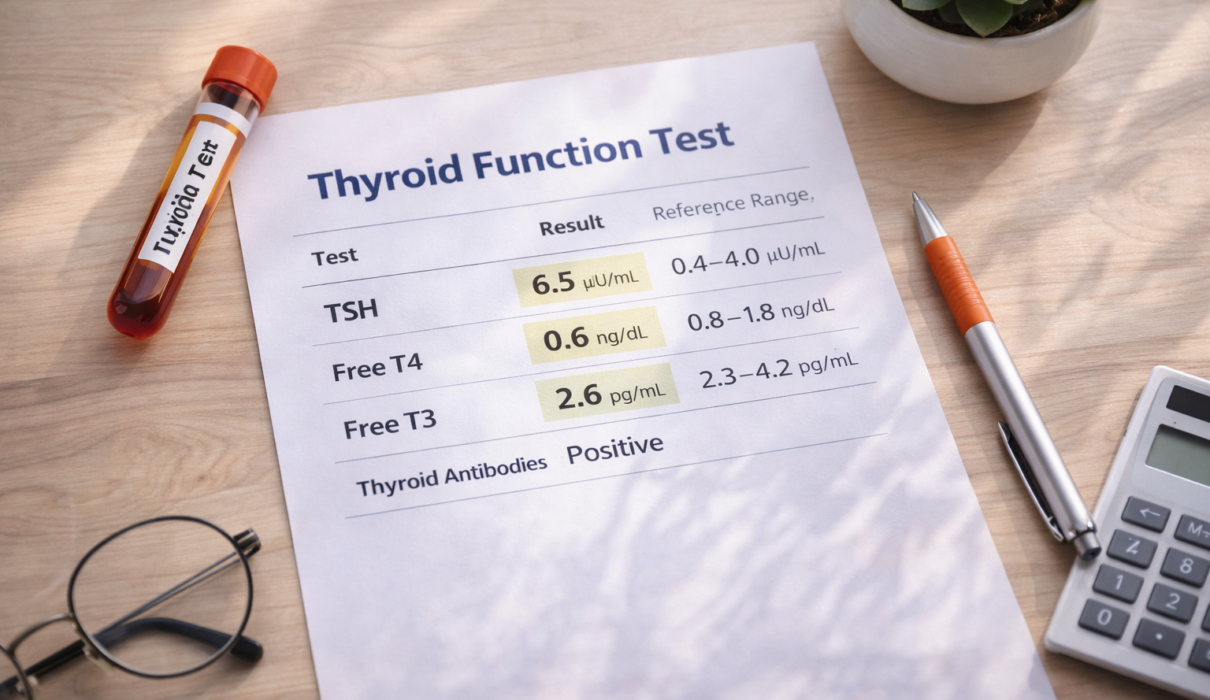
By A Thyroid Function Test (TFT) is one of the most commonly ordered blood tests to evaluate how well the thyroid gland is working. It is often requested when people experience symptoms such as fatigue, weight changes, hair thinning, or heart rate abnormalities, or during routine health screening.
Understanding what each component of a thyroid test means helps place results in proper medical context and reduces confusion or unnecessary concern (NIH, 2023; NHS, 2023).
What Is a Thyroid Function Test?
A Thyroid Function Test is a group of blood tests that measure hormones related to thyroid activity. These tests assess how much thyroid hormone the body is producing and how the brain is regulating the thyroid gland.
TFTs help evaluate:
- Thyroid hormone production
- Hormonal balance
- Possible thyroid disorders
- Response to treatment or monitoring over time
It is a screening and monitoring tool rather than a single diagnostic answer.
Main Components of a Thyroid Function Test
A standard TFT panel usually includes:
Thyroid-Stimulating Hormone (TSH)
TSH is produced by the pituitary gland in the brain and controls how much hormone the thyroid releases.
- High TSH may suggest low thyroid hormone levels (hypothyroidism)
- Low TSH may suggest excess thyroid hormone (hyperthyroidism)
TSH is usually the first and most sensitive marker used in thyroid screening (ATA, 2023; NHS, 2023).
Free T4 (Thyroxine)
Free T4 represents the active circulating thyroid hormone available to tissues.
It helps determine:
- Whether the thyroid is producing enough hormone
- The severity of hormone imbalance
Free T4 is interpreted together with TSH rather than alone (NIH, 2023).
Free T3 (Triiodothyronine)
Free T3 is the more active thyroid hormone at the tissue level.
It may be measured when:
- Hyperthyroidism is suspected
- TSH and T4 results are unclear
Not all patients require T3 testing as part of routine evaluation.
Thyroid Antibody Tests
In some cases, antibody tests are ordered to identify autoimmune thyroid disease.
These may include:
- Thyroid peroxidase antibodies (TPOAb)
- Thyroglobulin antibodies (TgAb)
- TSH receptor antibodies (TRAb)
Positive antibodies can indicate autoimmune conditions such as Hashimoto’s thyroiditis or Graves’ disease (WHO, 2022; ATA, 2023).
Why a Thyroid Test Is Ordered
Thyroid tests may be ordered for:
- Unexplained fatigue
- Weight changes
- Hair loss
- Menstrual irregularities
- Heart rhythm changes
- Family history of thyroid disease
- Routine health screening
They are also used to monitor known thyroid conditions.
How Results Are Interpreted
Thyroid results are interpreted by looking at patterns rather than single values.
For example:
- High TSH with low Free T4 suggests hypothyroidism
- Low TSH with high Free T4 suggests hyperthyroidism
- Normal TSH with symptoms may require further evaluation
Interpretation always depends on clinical symptoms and medical history (NHS, 2023; NIH, 2023).
Subclinical Thyroid Disorders
Sometimes thyroid tests show mild abnormalities without clear symptoms.
This is called:
- Subclinical hypothyroidism
- Subclinical hyperthyroidism
These findings may require monitoring rather than immediate intervention, depending on individual factors (ATA, 2023).
Common Misunderstandings About TFT
- One abnormal value does not always mean thyroid disease
- Symptoms alone cannot confirm a thyroid disorder
- Normal TSH does not rule out all thyroid problems
- Antibody positivity does not always mean active disease
Understanding these points helps avoid misinterpretation.
Factors That Can Affect Test Results
Several factors can influence thyroid test results:
- Recent illness
- Pregnancy
- Certain medications
- Time of testing
- Laboratory variations
Results must be interpreted in medical context rather than in isolation.
Why Thyroid Testing Matters
Thyroid hormones affect:
- Metabolism
- Heart function
- Brain activity
- Bone health
- Energy levels
Persistent hormone imbalance may influence long-term health if not properly evaluated and monitored (CDC, 2024).
Practical Takeaway
A Thyroid Function Test evaluates hormone levels that regulate metabolism and energy balance. It should be interpreted using patterns of results and clinical context rather than a single number.
Final Thoughts
Thyroid tests are simple blood tests with wide-ranging significance. Clear understanding of what each marker represents supports informed discussions with healthcare professionals and reduces unnecessary anxiety.
Author
Written by Aman
Aman has a medical background and focuses on explaining health topics clearly and responsibly. This article is for educational purposes only and does not constitute medical advice.
References
- World Health Organization (WHO). (2022). Iodine deficiency and thyroid disorders. https://www.who.int/news-room/fact-sheets/detail/iodine-deficiency-disorders
- National Institutes of Health – National Institute of Diabetes and Digestive and Kidney Diseases (NIDDK). (2023). Thyroid tests. https://www.niddk.nih.gov/health-information/diagnostic-tests/thyroid-tests
- Centers for Disease Control and Prevention (CDC). (2024). Thyroid disease and pregnancy and health. https://www.cdc.gov/ncbddd/thyroid/index.html
- National Health Service (NHS). (2023). Thyroid function tests. https://www.nhs.uk/conditions/thyroid-function-tests/
- American Thyroid Association (ATA). (2023). Thyroid function tests. https://www.thyroid.org/thyroid-function-tests/
- Ross, D. S. et al. (2016). Guidelines for diagnosis and management of thyroid disease. Journal of Clinical Endocrinology & Metabolism, 101(12), 3856–3875. https://pubmed.ncbi.nlm.nih.gov/27521067/
1 Comment