

 By
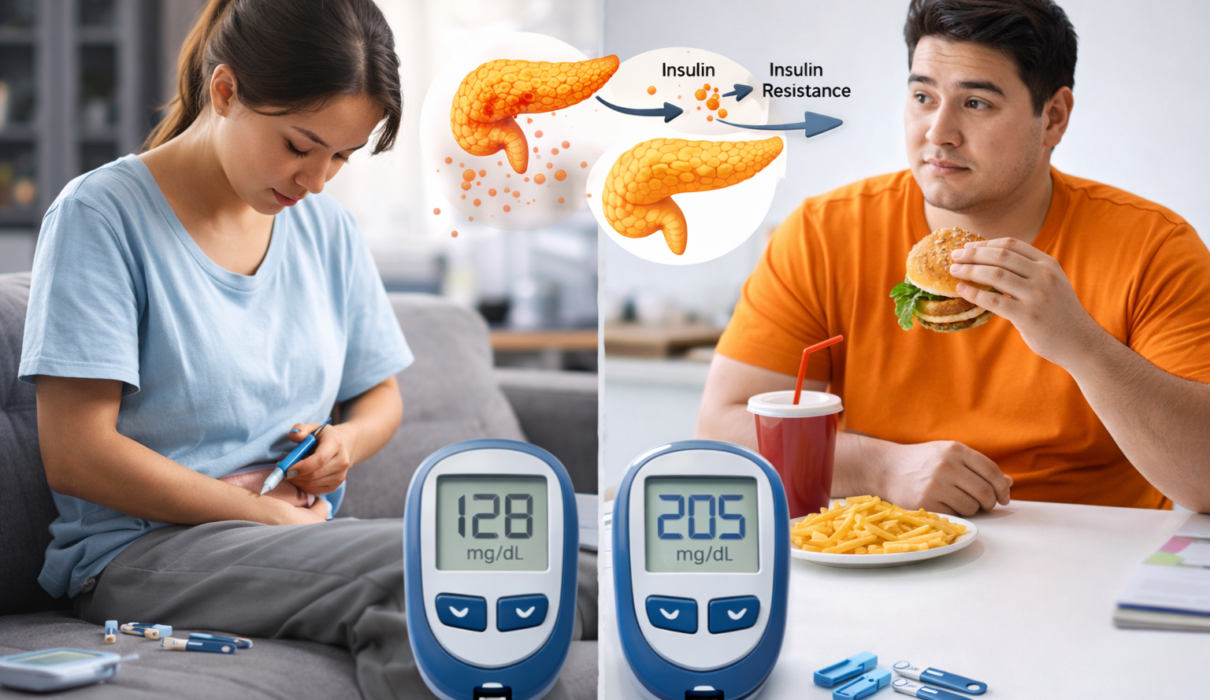
By Diabetes includes different conditions that affect how the body regulates blood sugar. The two most common forms are often confused with each other, even though their causes and progression are very different.
A simple comparison helps clarify these differences and removes common misunderstandings (CDC, 2024; WHO, 2022).
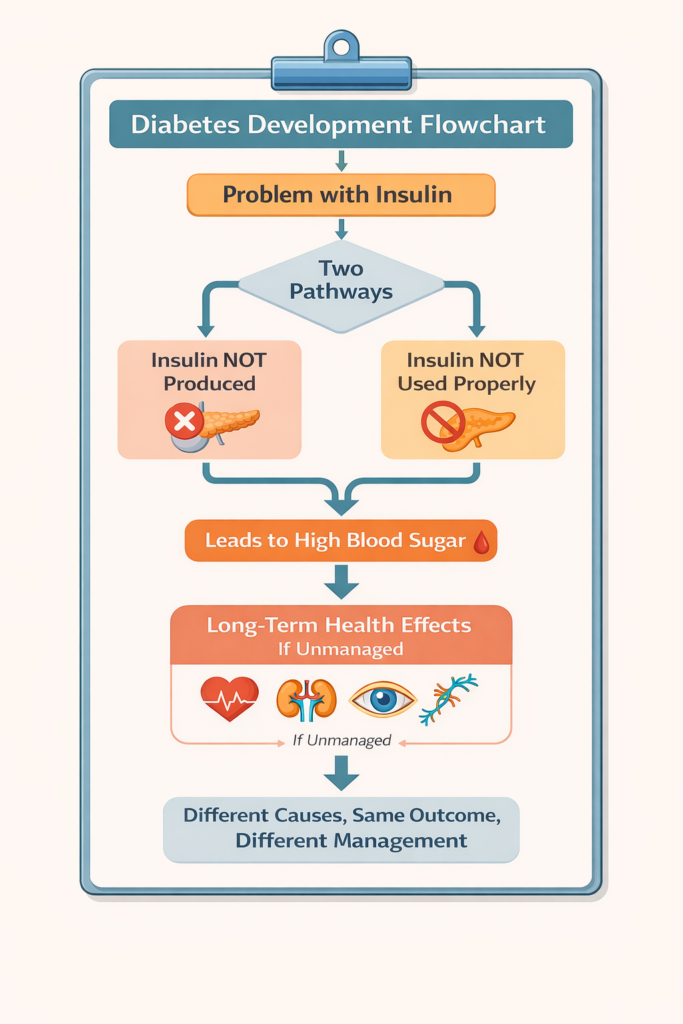
How Diabetes Develops (Flow Explanation)
Normal process:
Food → glucose enters blood → insulin moves glucose into cells → energy is produced
When diabetes develops, two main problems can occur:
- The body cannot produce insulin
- The body cannot use insulin properly
These two problems define the two main forms of diabetes.
Comparison Table: Key Differences
| Feature | Diabetes due to lack of insulin production | Diabetes due to insulin resistance |
|---|---|---|
| Main problem | Immune system damages insulin-producing cells | Cells stop responding well to insulin |
| Insulin levels | Very low or absent | Present but ineffective |
| Speed of onset | Often rapid | Develops gradually over years |
| Age at diagnosis | Common in children and young adults | Common in adults (increasingly younger) |
| Body weight | Often normal at diagnosis | Often associated with excess weight (not always) |
| Primary cause | Autoimmune process | Combination of genetics and lifestyle factors |
| Role of diet | Not the cause | Influences risk but is not the sole cause |
| Treatment focus | Insulin replacement required | Lifestyle measures, oral medicines, sometimes insulin |
| Prevention | Not currently preventable | Risk can often be reduced |
| Frequency | Less common | Most common form of diabetes |
Symptoms (Shared in Both Forms)
Both forms may show similar warning signs:
- Increased thirst
- Frequent urination
- Fatigue
- Blurred vision
- Weight changes
Difference in timeline:
- One form often appears suddenly
- The other develops silently and may go unnoticed for years (NHS, 2023)
Risk Factors (Flow Style)
Autoimmune pathway:
Genetics → immune attack on pancreas → loss of insulin → high blood sugar
Metabolic pathway:
Genetics + inactivity + weight + stress → insulin resistance → pancreas overworks → glucose rises
These are biologically different pathways leading to the same outcome: elevated blood sugar.
How Diagnosis Is Distinguished
Both forms are diagnosed using blood sugar tests:
- Fasting glucose
- HbA1c
- Oral glucose tolerance test
Additional tests may include:
- Autoantibody testing
- C-peptide levels
These help identify whether insulin production is absent or only reduced (NIDDK, 2023).
Long-Term Health Effects (Same for Both)
If not monitored, both forms can affect:
- Heart and blood vessels
- Kidneys
- Eyes
- Nerves
The risk depends on duration, glucose patterns, and overall health (CDC, 2024).
Common Misunderstandings
| Myth | Reality |
|---|---|
| Sugar causes diabetes | Sugar alone does not cause it |
| Only overweight people get diabetes | Thin people can also develop it |
| Children cannot get adult-type diabetes | Children can develop both forms |
| One type is “milder” | Both require medical care |
| Diabetes is contagious | It is not infectious |
Why This Comparison Matters
Understanding the difference helps:
- Choose appropriate treatment
- Reduce stigma
- Improve health education
- Encourage early screening
- Support long-term planning
Practical Takeaway (Flow Summary)
Final Thoughts
Diabetes is not one single disease. It represents different biological processes that lead to similar blood sugar changes. Viewing diabetes through a comparison lens makes the condition easier to understand and less prone to myths or blame.
Clear structure leads to clearer thinking.
Author
Written by Aman
Aman has a medical background and focuses on explaining health topics clearly and responsibly. This article is for educational purposes only and does not constitute medical advice.
References
- World Health Organization (WHO). (2022). Diabetes fact sheet. https://www.who.int/news-room/fact-sheets/detail/diabetes
- Centers for Disease Control and Prevention (CDC). (2024). Types of diabetes. https://www.cdc.gov/diabetes/basics/diabetes.html
- National Institute of Diabetes and Digestive and Kidney Diseases (NIDDK). (2023). Diabetes overview. https://www.niddk.nih.gov/health-information/diabetes
- National Health Service (NHS). (2023). Diabetes overview. https://www.nhs.uk/conditions/diabetes/
- American Diabetes Association (ADA). (2023). Classification and diagnosis of diabetes. https://diabetesjournals.org/care