

 By
By A urine routine examination, also known as urinalysis, is one of the most commonly performed laboratory tests. It is often ordered during routine checkups or when evaluating symptoms such as fever, pain, or changes in urination. Despite its simplicity, the test provides valuable insight into kidney function, hydration status, and metabolic health.
Understanding what a urine routine test measures helps place results into proper context and prevents unnecessary concern.
What Is a Urine Routine Examination?
A urine routine examination is a laboratory analysis of urine that evaluates its physical, chemical, and microscopic characteristics.
The test helps assess:
- Kidney function
- Urinary tract health
- Metabolic conditions
- Signs of infection or inflammation
It is a screening tool rather than a standalone diagnostic test.
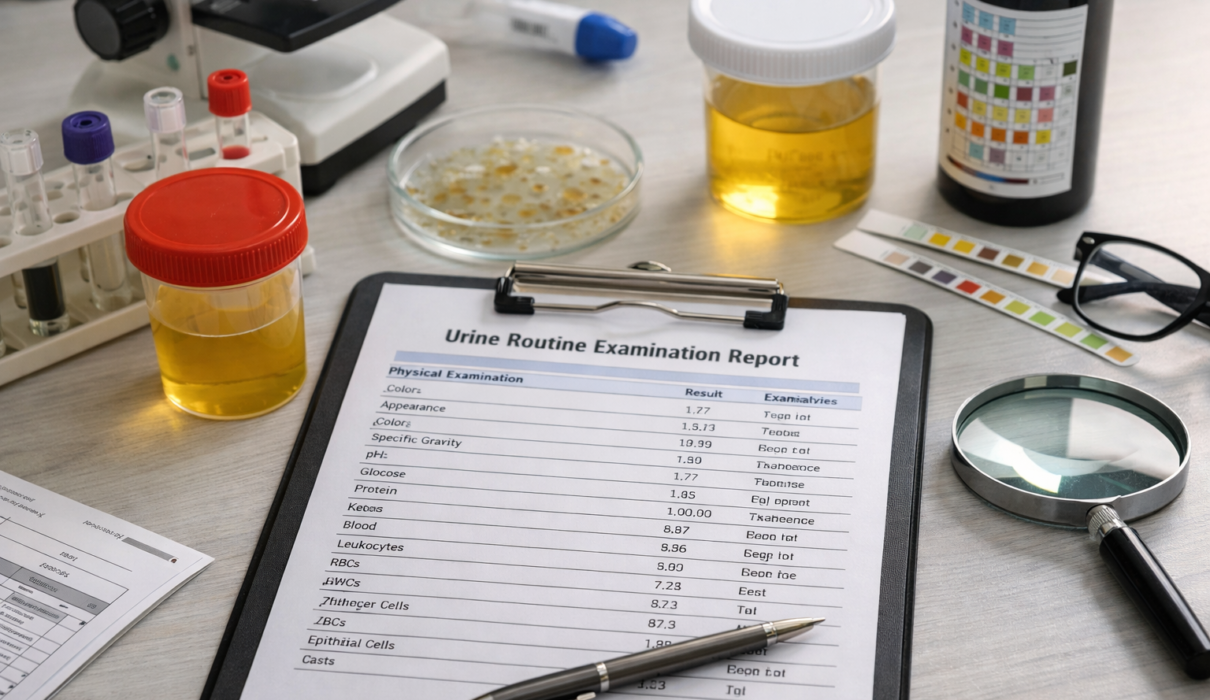
Components of a Urine Routine Test
Urinalysis is usually divided into three main parts:
- Physical examination
- Chemical analysis
- Microscopic examination
Each part provides different types of information.
Physical Examination
The physical portion looks at:
- Color
- Clarity
- Odor (sometimes noted)
Normal urine is typically pale yellow and clear. Changes in color or clarity may occur due to hydration level, diet, or medical conditions.
Chemical Analysis
Chemical testing is often done using a dipstick.
It may measure:
- pH
- Protein
- Glucose
- Ketones
- Blood
- Bilirubin
- Urobilinogen
- Nitrites
- Leukocyte esterase
These markers provide clues about kidney health, infections, and metabolic processes.
Microscopic Examination
Microscopic analysis examines urine under a microscope to detect:
- Red blood cells
- White blood cells
- Epithelial cells
- Crystals
- Bacteria or casts
This helps confirm findings suggested by the chemical analysis.
Why Is a Urine Routine Test Ordered?
Urinalysis may be ordered for:
- Routine health screening
- Suspected urinary tract infection
- Monitoring kidney disease
- Evaluating diabetes or dehydration
- Investigating unexplained symptoms
It is often used as a first-line investigation.
What Abnormal Results May Indicate
Abnormal findings do not always mean disease.
They may reflect:
- Temporary dehydration
- Recent exercise
- Minor infections
- Dietary influences
Persistent abnormalities require further evaluation by healthcare professionals.
Urine Test and Kidney Health
Urinalysis can detect early signs of kidney stress, such as:
- Protein in urine
- Blood in urine
- Abnormal casts
These findings are interpreted alongside blood tests and clinical history.
Common Misunderstandings About Urinalysis
- A single abnormal value does not confirm disease
- Cloudy urine does not always indicate infection
- Urine color alone is not diagnostic
- Results must be interpreted in context
Clear understanding helps reduce unnecessary anxiety.
How to Prepare for a Urine Test
Preparation usually includes:
- Using a clean collection container
- Collecting midstream urine
- Avoiding contamination
Special instructions may be given depending on the purpose of the test.
Practical Takeaway
A urine routine examination provides useful information about urinary and metabolic health. It is a simple, non-invasive test that supports early detection and monitoring of many conditions.
Final Thoughts
Urinalysis is a basic but powerful screening tool. When understood properly, it helps guide informed health decisions without causing undue worry over minor or temporary changes.
Author
Written by Aman
Aman has a medical background and focuses on explaining health topics clearly and responsibly. This article is for educational purposes only and does not constitute medical advice.
References
- World Health Organization (WHO). (2010). Basic laboratory procedures in clinical bacteriology (2nd ed.). https://www.who.int/publications/i/item/9241545453
- National Institute of Diabetes and Digestive and Kidney Diseases (NIDDK). (2023). Urinalysis and urine tests. https://www.niddk.nih.gov/health-information/diagnostic-tests/urinalysis
- Centers for Disease Control and Prevention (CDC). (2024). Urinary tract infection (UTI) – Diagnosis and testing. https://www.cdc.gov/uti/index.html
- National Health Service (NHS). (2023). Urine tests. https://www.nhs.uk/conditions/urine-tests/
- National Kidney Foundation (NKF). (2023). Urinalysis and kidney disease. https://www.kidney.org/kidney-topics/urinalysis
- Simerville, J. A., Maxted, W. C., & Pahira, J. J. (2005). Urinalysis: A comprehensive review. American Family Physician, 71(6), 1153–1162. https://pubmed.ncbi.nlm.nih.gov/15791892/