

 By
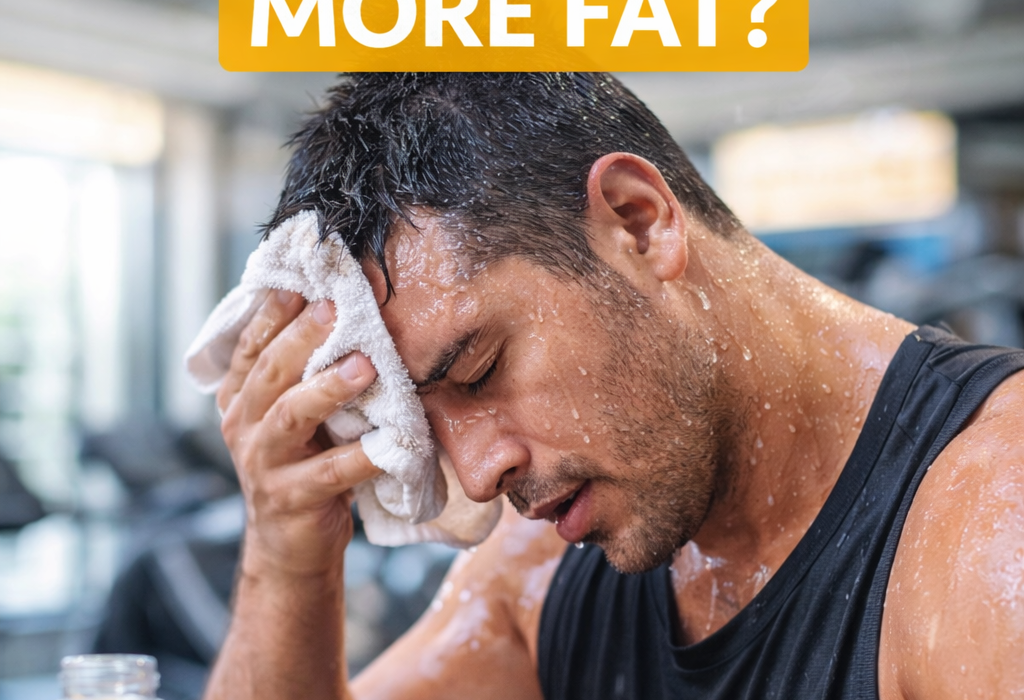
By Sweat is often seen as proof of a good workout. The more you sweat, the harder you must be working-and the more fat you must be burning. This belief is common in gyms, workout videos, and fitness marketing.
But is sweat actually a sign of fat loss?
Understanding what sweat does-and what it doesn’t-helps clear up a very common misconception.
What the Myth Claims
The myth suggests that sweating is directly linked to fat burning. According to this idea, workouts that make you sweat more—such as hot yoga, sauna suits, or exercising in warm environments-are believed to burn more fat than less sweaty sessions.
Sweat is often used as a visual indicator of effort and effectiveness.
Why People Believe It
Several factors reinforce this belief:
- Sweating feels intense and uncomfortable
- Temporary weight loss after workouts is often seen
- Fitness products market “sweat-inducing” benefits
- Heat and effort are often confused
When people see the scale drop after a sweaty workout, it feels like proof that fat was burned.
What Sweat Actually Does
Sweating is the body’s cooling mechanism.
When body temperature rises, sweat glands release fluid onto the skin. As this fluid evaporates, it helps regulate temperature. Sweat is primarily composed of water and electrolytes-not fat.
Sweating more does not mean more fat is being burned. It simply means your body is trying to cool itself.
Why the Scale Drops After Sweaty Workouts
The temporary weight loss seen after intense sweating is due to fluid loss, not fat loss.
Once fluids are replaced through drinking and eating, body weight typically returns to baseline. Fat loss, on the other hand, occurs gradually through sustained energy imbalance over time-not within a single workout.
Fat Burning Happens Differently
Fat loss is driven by:
- Total energy expenditure
- Exercise intensity and duration
- Overall calorie intake
- Consistency over time
Both low-sweat and high-sweat workouts can contribute to fat loss if they help create a sustainable calorie deficit. Sweating itself is not a reliable indicator.
Hot Workouts and Fat Loss
Exercising in hot environments may increase sweat rate, but it does not automatically increase fat loss.
In some cases, excessive heat can:
- Reduce performance
- Increase fatigue
- Limit workout quality
This can actually reduce total energy expenditure over time.
A More Useful Way to Measure Progress
Instead of focusing on sweat, better indicators of effective training include:
- Improved strength or endurance
- Consistency across weeks and months
- Gradual body composition changes
- Better recovery and energy levels
These reflect real physiological adaptation rather than short-term fluid shifts.
Practical Takeaway
Sweating is a sign of temperature regulation, not fat burning.
A workout that makes you sweat less can still be highly effective for fat loss if it is performed consistently and supports overall energy balance.
Final Thoughts
Sweat can feel satisfying, but it is not a measure of success.
Health and fat loss are built through consistent habits, quality movement, proper recovery, and long-term balance-not through how wet your clothes get during a workout.
Understanding this helps shift focus from appearances to outcomes.
Author
Written by Aman
Aman has a medical background and writes about health and fitness with a focus on evidence-based fundamentals, clarity, and long-term thinking. Content is educational and not medical advice.
References
This article is informed by research in exercise physiology and public health. Readers may explore the following reputable sources for further reading:
- American College of Sports Medicine (ACSM) – Exercise and Thermoregulation https://www.acsm.org
- National Institutes of Health (NIH) – Body Weight Regulation https://www.niddk.nih.gov
- Centers for Disease Control and Prevention (CDC) – Physical Activity https://www.cdc.gov/physicalactivity
- Harvard Medical School – Exercise and Weight Loss https://www.health.harvard.edu
- World Health Organization (WHO) – Physical Activity Guidelines https://www.who.int