

 By
By Polycystic Ovary Syndrome (PCOS) is one of the most commonly diagnosed hormonal conditions, yet the diagnostic process is often misunderstood. Many people expect a single test or scan to confirm PCOS, but diagnosis is actually based on a combination of findings rather than one definitive result.
Understanding how PCOS is diagnosed helps clarify why evaluations may take time and why results can differ between individuals.
There Is No Single Test for PCOS
PCOS cannot be diagnosed using one blood test, scan, or symptom alone.
Instead, diagnosis is made by assessing patterns related to:
- Menstrual and ovulatory function
- Hormonal balance
- Ovarian appearance (in some cases)
This approach reflects the complexity and variability of the condition.
Diagnostic Criteria for PCOS
Most healthcare professionals use established diagnostic criteria that require at least two of three key features to be present, after excluding other possible causes.
These features include:
- Irregular or absent ovulation
- Signs of excess androgens (clinical or biochemical)
- Polycystic ovarian appearance on ultrasound
Not all individuals with PCOS will have all three features.
Menstrual and Ovulatory History
Menstrual history is a core part of PCOS evaluation.
Irregular cycles may include:
- Infrequent periods
- Prolonged cycles
- Absent periods
These patterns suggest irregular ovulation, which is a common feature of PCOS.
Androgen Levels and Clinical Signs
Androgens are hormones present in all bodies but may be elevated in PCOS.
Evaluation may involve:
- Blood tests measuring hormone levels
- Clinical signs such as acne or excess hair growth
Hormonal results are interpreted carefully, as levels can fluctuate and overlap with normal ranges.
Ultrasound Findings
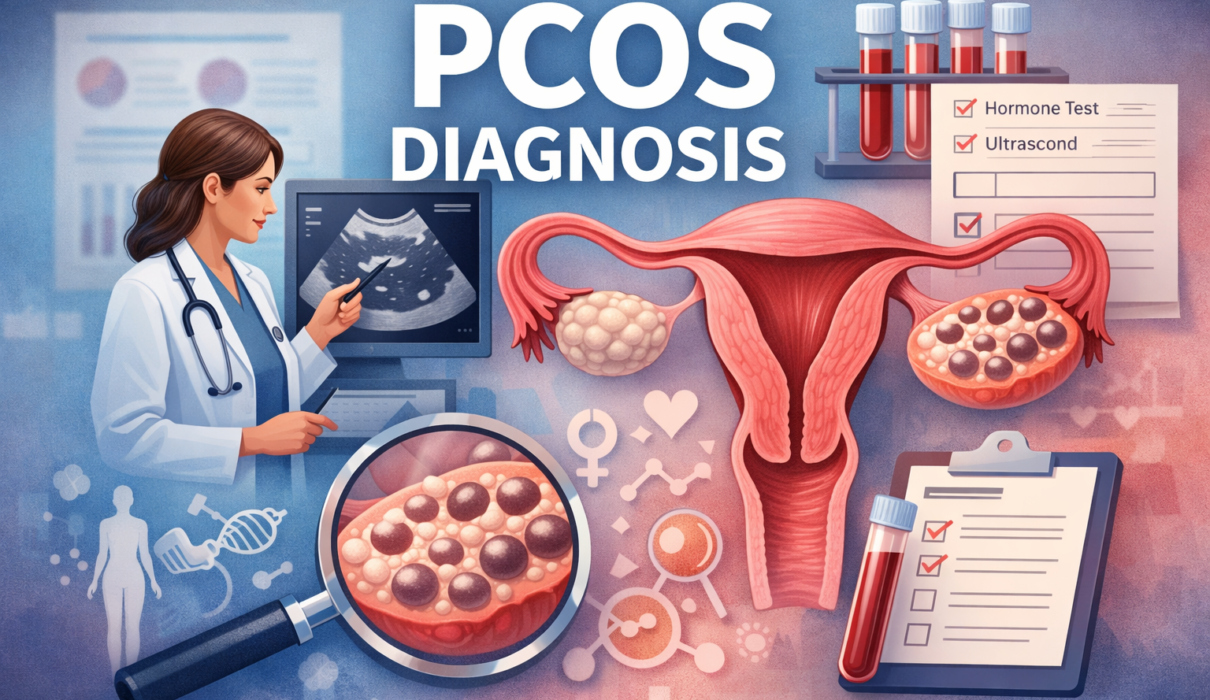
Pelvic ultrasound may be used to assess ovarian structure.
In PCOS, ovaries may show:
- Multiple small follicles
- Increased ovarian volume
However, ultrasound findings alone do not confirm PCOS and are not required in all cases, especially in younger individuals.
Ruling Out Other Conditions
An important part of diagnosing PCOS is excluding other conditions that can cause similar symptoms.
These may include:
- Thyroid disorders
- Elevated prolactin levels
- Other hormonal conditions
This step ensures accurate diagnosis and appropriate management.
PCOS Diagnosis in Adolescents
Diagnosing PCOS during adolescence requires additional caution.
Irregular cycles and acne can be normal during early reproductive years, so diagnosis is often delayed or based on persistent patterns rather than early changes alone.
Why Diagnosis Can Feel Unclear
PCOS exists on a spectrum, and symptoms can change over time.
This means:
- Some features may appear before others
- Diagnosis may evolve as patterns become clearer
- Different individuals may meet criteria differently
This variability is expected and does not indicate uncertainty or error.
A Balanced Perspective on Diagnosis
Receiving a PCOS diagnosis does not predict a specific health outcome.
Diagnosis helps guide:
- Monitoring
- Symptom management
- Long-term health planning
It does not define fertility, weight, or future health on its own.
Practical Takeaway
PCOS is diagnosed through a combination of menstrual history, hormonal evaluation, and clinical context. There is no single test that confirms or rules out PCOS in isolation.
Understanding the diagnostic process helps reduce confusion and unrealistic expectations.
Final Thoughts
PCOS diagnosis is a structured but flexible process designed to reflect the condition’s complexity. Clear explanation and individualized evaluation are more important than rushing to label or categorize.
Informed diagnosis supports better long-term health decisions and appropriate care.
Author
Written by Aman
Aman has a medical background and focuses on explaining health topics clearly and responsibly. This article is for educational purposes only and does not constitute medical advice.
References
- Endocrine Society
- National Institute of Child Health and Human Development (NICHD)
- Centers for Disease Control and Prevention (CDC)
- World Health Organization (WHO)
1 Comment