 By
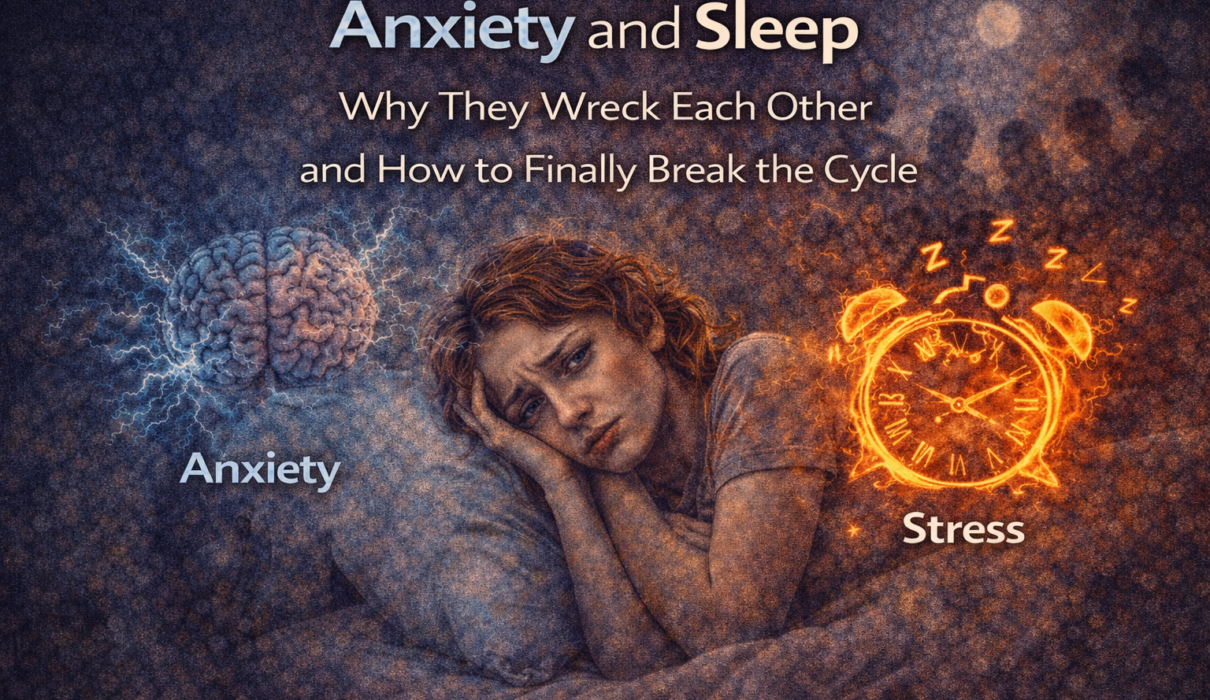
By You’re exhausted. Genuinely, bone-deep exhausted. You’ve been looking forward to bedtime all day.
And then you lie down — and your brain wakes up.
Tomorrow’s meeting. That awkward thing you said on Tuesday. Whether that pain in your side means something. Whether you’re saving enough money. Whether you’re doing enough, being enough, handling everything well enough.
Sleep won’t come. And the longer it won’t come, the more anxious you get about not sleeping. Which makes sleep even less likely.
By morning you’re wrecked. Everything feels harder, sharper, more threatening. Which makes the next night worse. Which makes the next day worse.
Sound familiar? You’re not alone — and more importantly, you’re not broken. This is one of the most common and most exhausting features of anxiety disorders in the United States. An estimated 50 to 70 million Americans deal with chronic sleep problems, and anxiety is one of the biggest reasons why (CDC, 2016).
This article breaks down exactly what’s happening, why it keeps happening, and what actually works to stop it.
This article is part of our anxiety series. For the full foundation on anxiety disorders, visit our Anxiety Disorders Explained guide.
Why Anxiety and Sleep Don’t Get Along
Here’s the thing about sleep — your brain has to feel safe before it will let you drift off.
Sleep requires your nervous system to shift from its alert, threat-scanning mode into a calm, restorative one. That shift cannot happen while your brain thinks something dangerous is going on. And if you have anxiety, your brain has a very low bar for dangerous.
It doesn’t have to be a real threat. It just has to feel like one.
So when you lie down and the day’s distractions disappear, your anxious brain finally has the quiet it needs to get to work. All the worries it was holding at bay come rushing in. Your stress hormones — cortisol and adrenaline — should be winding down by bedtime. In people with anxiety, they often aren’t. They stay elevated into the evening, keeping your nervous system humming when it should be shutting down (Backhaus et al., 2004).
The result is something deeply frustrating: you’re physically exhausted and mentally wired at the same time. And no amount of willpower changes that, because this isn’t a discipline problem. It’s a biology problem.
“You’re physically exhausted and mentally wired at the same time. And no amount of willpower changes that — because this isn’t a discipline problem. It’s a biology problem.”
The Three Ways Anxiety Disrupts Sleep
Anxiety doesn’t wreck sleep in just one way. It tends to hit at three different points in the night, and each one feels different.
The can’t-fall-asleep pattern is the most familiar. You’re tired, it’s late, conditions are perfect — but the moment you lie down, your mind finds things to do. It replays conversations. It drafts worry lists. It catastrophizes things that haven’t happened yet. The quietness that should feel restful instead feels like an empty stage your anxiety is happy to perform on.
The waking-during-the-night pattern catches people off guard because they fall asleep fine — then wake up multiple times through the night with anxious thoughts that restart immediately. This is particularly damaging because it fragments the deep sleep your body needs to genuinely recover, even if you technically spend eight hours in bed.
The 3am surge is the one that confuses people most. You wake up with a wave of dread for no obvious reason — no nightmare, no noise, just fear. Here’s what’s actually happening: cortisol, your primary stress hormone, starts rising naturally in the early morning hours to prepare your body for waking. In an anxious nervous system, that rise can trigger a full stress response before you’re even conscious. And at 3am, with your rational mind still half-asleep, everything feels catastrophic in a way it wouldn’t at noon.
How Bad Sleep Makes Anxiety Worse
This is the part that makes the cycle so hard to escape.
When you’re sleep-deprived, two things happen in your brain at the same time. The part responsible for rational thinking and emotional regulation becomes less effective. And the part that detects threats and generates anxiety becomes more reactive (Walker, 2017).
So you end up with a brain that’s worse at managing anxiety and better at producing it. A worry that would feel manageable after a decent night’s sleep can feel genuinely catastrophic after a poor one. Research confirms it — even a single night of bad sleep significantly increases anxiety levels the following day in people with anxiety disorders (Staner, 2003).
The sleep debt piles onto the anxiety load. The anxiety load makes the next night harder. And round and round it goes.
“You end up with a brain that’s worse at managing anxiety and better at producing it. One bad night doesn’t just leave you tired — it leaves you more anxious, which makes the next night harder.”
This is why people can spend years stuck in this cycle without it ever getting better on its own. It’s not a character flaw. It’s two biological systems feeding each other in the wrong direction.
The Worry About Worrying About Sleep
There’s a layer to this that doesn’t get talked about enough.
Once a pattern of poor sleep is established, many people develop a second anxiety — specifically about sleep itself. They start monitoring the clock, calculating how many hours they have left before the alarm, dreading tomorrow because of tonight. They lie awake worrying about the fact that anxiety is ruining their sleep, on top of all the other things they were already anxious about.
It’s a very specific kind of exhausting.
And then there’s what happens to the bedroom itself. After enough nights of lying awake anxious in bed, your brain starts associating the bed with wakefulness rather than sleep. This is called conditioned arousal, and it’s one of the reasons some people with anxiety-driven insomnia can fall asleep on the couch without much trouble but lie awake for hours the moment they get into their actual bed.
The bed has become a trigger. Your brain learned the association the same way it learns everything else — through repetition. And now the cue fires automatically, regardless of how tired you are.
What Actually Works
CBT-I — The Treatment Most People Have Never Heard Of
If there’s one thing to take from this article, it’s this: cognitive behavioral therapy for insomnia, known as CBT-I, is the most effective long-term treatment for chronic insomnia. It outperforms sleep medication when it comes to lasting results, and it specifically targets the anxiety-insomnia cycle rather than just suppressing symptoms.
CBT-I works by targeting both the behaviors and the thoughts that keep the cycle going. The core components include sleep restriction — which sounds awful but temporarily reduces time in bed to consolidate sleep and rebuild genuine sleepiness — and stimulus control, which breaks the conditioned association between the bed and wakefulness by having you get out of bed if you’ve been awake for more than about twenty minutes.
The cognitive side addresses the catastrophic thinking about sleep itself. The “if I don’t get eight hours I’ll be useless tomorrow” thoughts. The clock-monitoring. The dread. These patterns are maintaining the insomnia just as much as the anxiety itself, and CBT-I goes after them directly.
CBT-I is available through therapists specializing in behavioral sleep medicine across the US, and increasingly through digital platforms like Sleepio, which has solid clinical trial evidence behind it.
Treating the Anxiety Itself
CBT-I helps enormously with the sleep side. But if the underlying anxiety disorder isn’t addressed, sleep will always be fighting against the current. Treating the anxiety — through CBT, medication, or both — typically improves sleep as a secondary benefit because it reduces the physiological arousal and the worry load that are disrupting sleep in the first place.
The most durable approach is treating both simultaneously rather than hoping that fixing one automatically fixes the other.
Sleep Habits That Actually Matter
Sleep hygiene advice gets thrown around so much it’s become background noise. Most people have heard it and ignored it. But a few practices have real evidence behind them and are worth taking seriously, particularly for people whose sleep is anxiety-driven.
Keeping a consistent wake time — including on weekends — is the single most powerful behavioral anchor for the sleep-wake cycle. The body’s circadian rhythm needs consistent timing to function well. Sleeping in significantly on weekends creates what researchers call social jet lag, and it genuinely disrupts the system.
Getting morning sunlight within the first hour of waking helps regulate your cortisol rhythm, making the natural evening wind-down easier. Keeping your bedroom cool — around 65 to 68 degrees Fahrenheit — matters more than most people realize because your core body temperature actually needs to drop slightly for sleep onset to occur.
Caffeine’s half-life is five to seven hours. That means a two o’clock coffee still has half its caffeine active at nine in the evening. For people whose sleep is already fragile, that’s a meaningful contributor worth addressing before reaching for other solutions.
And if you’ve been lying awake for more than about twenty minutes, get out of bed. Lie on the couch. Read something dull. Go back to bed when you feel genuinely sleepy again. It feels counterintuitive, but it’s one of the most effective ways to undo the conditioned arousal between your bed and wakefulness.
Breathing That Genuinely Helps
Extending your exhale longer than your inhale activates the parasympathetic nervous system — the calming branch — directly through the vagus nerve. It’s not a cure and it’s not magic, but it is a real physiological tool for the moments when you wake at 3am with a pounding heart and reach instinctively for your phone.
A simple starting point: inhale for four counts, hold for one, exhale for six to eight counts. Do that for two or three minutes before you do anything else. It won’t solve chronic insomnia on its own, but it can take the edge off an acute anxiety spike in the night.
A Word on Medication
SSRIs and SNRIs — the first-line medications for anxiety disorders — often improve sleep as the anxiety itself improves over weeks of treatment. Some people experience worse sleep in the first few weeks of starting an SSRI before it gets better, which is worth knowing in advance so it doesn’t feel like the medication isn’t working.
Melatonin is widely used and generally safe, but the doses sold in most US pharmacies — three to ten milligrams — are much higher than what the body naturally produces. A dose of 0.5 to 1mg is actually sufficient for most people and more physiologically appropriate. Melatonin is most useful for circadian rhythm issues rather than anxiety-driven hyperarousal.
Sleeping pills like zolpidem (Ambien) and benzodiazepines provide short-term relief but don’t address the underlying anxiety, and they carry real risks of dependence and rebound insomnia with regular use. American sleep medicine guidelines recommend CBT-I over sleep medication for chronic insomnia for exactly this reason. Medication has a role — but as a bridge, not a destination.
When to Talk to Your Doctor
If sleep problems have lasted more than three months despite trying to improve sleep habits, it’s worth a conversation with your doctor rather than continued solo management. The same applies if you’re using alcohol or medication regularly to fall asleep, if daytime fatigue is significantly affecting your work or relationships, or if you’re waking most nights with intense anxiety and can’t get back to sleep.
Bring up both the sleep and the anxiety in the same appointment. They’re connected, and treating them as separate problems that each need their own specialist often means neither gets addressed as effectively as it could be.
Starting with your primary care physician or a telehealth provider is the most accessible first step for most Americans. From there, a referral to a therapist trained in CBT-I or a psychiatrist for anxiety medication management — or both — is the direction the evidence points toward.
Frequently Asked Questions
Q: If I treat my anxiety, will my sleep automatically get better?
Often yes, meaningfully — but not always completely. Once insomnia has been present for a long time, it can develop its own maintaining factors through conditioned arousal and sleep-focused anxiety that persist even after the underlying anxiety improves. Combining anxiety treatment with CBT-I produces better sleep outcomes than treating just one side. Think of it as fixing the fire alarm and also clearing the smoke.
Q: Why do I wake up between 3 and 5am feeling terrified for no obvious reason?
It’s not random and it’s not mysterious. Cortisol starts rising naturally in the early morning hours to prepare your body for waking. In an anxious nervous system, that rise can trigger a full stress response before you’re even fully conscious. And at three or four in the morning, your rational mind isn’t fully online yet to moderate the response, so worries that would feel manageable at noon feel genuinely catastrophic in the dark.
Q: Is melatonin safe to take every night?
Melatonin isn’t habit-forming and is generally safe for regular use. The main issue is that the doses sold in most US pharmacies are far higher than physiological levels. A dose of 0.5 to 1mg is sufficient and more appropriate than the three to ten milligram doses that are commonly marketed. Melatonin is most helpful for circadian rhythm disruption rather than anxiety-driven arousal, so don’t expect it to solve the problem on its own.
Q: Can anxiety cause nightmares?
Yes. An emotionally activated nervous system produces more intense and more threatening dream content during REM sleep. Treating the underlying anxiety typically reduces nightmare frequency as a secondary benefit — one that many people are genuinely surprised by once treatment takes hold.
Q: My sleep is only bad during stressful periods. Does that mean I have an anxiety disorder?
Not necessarily. Sleep disruption during stressful periods is normal and doesn’t automatically indicate a clinical condition. An anxiety disorder involves anxiety and sleep disruption that continues beyond the resolution of identifiable stressors, occurs most days over an extended period, and causes meaningful functional impairment. If your sleep reliably recovers when the stress eases, that’s more consistent with a normal stress response than a clinical anxiety disorder.
Disclaimer:This article is for educational purposes only and does not constitute medical advice. Always consult a qualified healthcare professional for personal health concerns. If you’re in crisis, call or text 988 to reach the Suicide and Crisis Lifeline.
References
Centers for Disease Control and Prevention (CDC). Sleep and Sleep Disorders. 2016. https://www.cdc.gov/sleep/index.html
Backhaus J, Junghanns K, Hohagen F. Sleep disturbances are correlated with decreased morning awakening salivary cortisol. Psychoneuroendocrinology. 2004;29(9):1184–1191. https://pubmed.ncbi.nlm.nih.gov/15219642
Walker MP. Why We Sleep: Unlocking the Power of Sleep and Dreams. New York: Scribner; 2017.
Staner L. Sleep and anxiety disorders. Dialogues Clin Neurosci. 2003;5(3):249–258. https://pubmed.ncbi.nlm.nih.gov/22033801
Harvey AG. A cognitive model of insomnia. Behav Res Ther. 2002;40(8):869–893. https://pubmed.ncbi.nlm.nih.gov/12186352
Morin CM, Bootzin RR, Buysse DJ, et al. Psychological and behavioral treatment of insomnia: update of the recent evidence. Sleep. 2006;29(11):1398–1414. https://pubmed.ncbi.nlm.nih.gov/17162986
National Institute of Mental Health (NIMH). Anxiety Disorders. 2023. https://www.nimh.nih.gov/health/topics/anxiety-disorders
Anxiety and Depression Association of America (ADAA). Sleep Disorders. 2023. https://adaa.org/understanding-anxiety/related-illnesses/sleep-disorders