 By
By The reason diabetes matters so much – the reason it sits at the top of every chronic disease priority list in American healthcare – is not the high blood sugar itself. It’s what that chronically high blood sugar does to the body over years and decades when it goes uncontrolled.
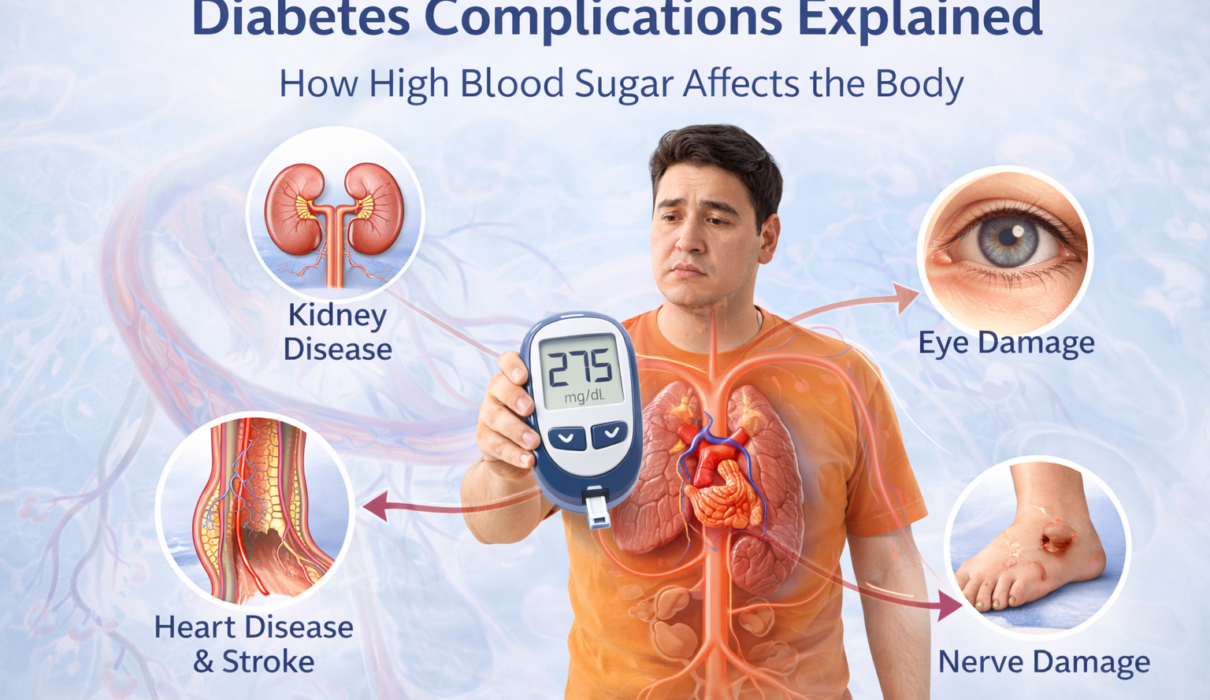
Glucose is not toxic in normal amounts. It’s the body’s primary fuel. But when it stays persistently elevated – when blood vessels and nerves are bathed in high-glucose blood day after day, year after year – it initiates a slow process of damage that eventually affects the eyes, kidneys, nerves, heart, and circulatory system in ways that can be permanently disabling and life-threatening.
The complications of diabetes are responsible for most of its human cost. Diabetes is the leading cause of adult blindness in the United States. The leading cause of kidney failure requiring dialysis. A major driver of heart disease and stroke. The leading cause of non-traumatic lower limb amputation. These are not rare outcomes for unlucky individuals – they are the predictable consequences of inadequately controlled blood glucose in a large population.
But here is the critically important counterpoint: most of these complications are largely preventable. The landmark clinical trials that established this – the DCCT for type 1 and the UKPDS for type 2 – demonstrated conclusively that tight glucose control dramatically reduces complication risk. Understanding what the complications are and why they develop is the first step toward taking the management that prevents them seriously.
This article is part of our Diabetes series. For the full overview, visit our Diabetes Explained guide.
How Elevated Blood Sugar Damages the Body
Before going through individual complications, it helps to understand the underlying mechanisms – because all diabetes complications trace back to a small number of pathways through which chronic hyperglycemia causes harm.
Advanced glycation end products (AGEs): Glucose binds to proteins throughout the body in a process called glycation. When this happens over time, it forms AGEs – abnormally modified proteins that stiffen tissues, impair function, and trigger inflammatory responses. Glycated hemoglobin (HbA1c) is one example – the same process that makes HbA1c a useful monitoring tool reflects the broader protein glycation happening throughout the body.
Oxidative stress: High glucose promotes the production of reactive oxygen species – free radicals that damage cell membranes, DNA, and proteins. Oxidative stress contributes to endothelial dysfunction, accelerates atherosclerosis, and damages nerve cell mitochondria.
Polyol pathway activation: Excess glucose is converted to sorbitol by an enzyme called aldose reductase. Sorbitol accumulates in cells – particularly in nerves, the lens of the eye, and kidney cells – causing osmotic stress and cell damage.
Inflammation: Chronic hyperglycemia promotes a low-grade inflammatory state that contributes to both microvascular and macrovascular damage.
These mechanisms work in parallel and reinforce each other, explaining why the damage from diabetes is so pervasive and affects so many organ systems simultaneously.
“Diabetes complications are not random bad luck. They are the predictable result of specific biochemical processes – glycation, oxidative stress, inflammation – that chronic hyperglycemia initiates in blood vessels and nerves throughout the body. Understanding the mechanism makes the case for tight glucose control viscerally clear.”
Microvascular Complications: Damage to Small Blood Vessels
The small blood vessels – capillaries and arterioles – are particularly vulnerable to the effects of chronic hyperglycemia. The three classic microvascular complications of diabetes each represent damage to the small vessels supplying a specific organ system.
Diabetic Retinopathy
Diabetic retinopathy is damage to the blood vessels of the retina – the light-sensitive tissue at the back of the eye that processes visual information. It is the leading cause of new cases of blindness among American adults aged 20 to 74 (CDC, 2024).
How it develops: Chronic hyperglycemia damages the walls of the retinal capillaries, causing them to leak fluid and blood, form abnormal new vessels (neovascularization), and eventually produce scar tissue that can detach the retina.
Stages:
- Non-proliferative diabetic retinopathy (NPDR) – early stage; microaneurysms, hemorrhages, and fluid leakage but no new vessel growth; may produce no symptoms or mild blurring
- Proliferative diabetic retinopathy (PDR) – advanced stage; new, fragile blood vessels grow into the vitreous; high risk of severe vision loss and retinal detachment
- Diabetic macular edema (DME) – fluid accumulation in the macula (central retina); can occur at any stage; causes blurring of central vision
Key facts:
- Affects approximately 1 in 3 people with diabetes of 20 years duration
- Often produces no symptoms until advanced stages – which is why annual dilated eye examinations are essential
- Tight glucose and blood pressure control significantly reduces the risk of development and progression
- Treatments include laser photocoagulation, anti-VEGF injections (ranibizumab, bevacizumab, aflibercept), and vitrectomy surgery for advanced cases
Diabetic Nephropathy (Diabetic Kidney Disease)
The kidneys filter approximately 180 liters of blood per day through tiny filtering units called glomeruli. Chronic hyperglycemia damages these glomeruli, impairing filtration and allowing protein to leak into the urine.
How it develops: Early diabetic nephropathy is characterized by microalbuminuria – small amounts of the protein albumin appearing in the urine, detectable only with sensitive testing. As damage progresses, protein leakage increases (macroalbuminuria), and the glomerular filtration rate (eGFR) declines. In advanced stages, kidney function fails sufficiently to require dialysis or transplantation.
Diabetic kidney disease is the leading cause of end-stage renal disease (ESRD) in the United States – accounting for approximately 44 percent of new dialysis cases annually (NIDDK, 2023).
Key facts:
- Develops in approximately 20 to 40 percent of people with diabetes
- Often completely silent until advanced – detected through urine albumin testing and eGFR
- Tight glucose control reduces risk by approximately 25 to 35 percent
- Blood pressure control – targeting below 130/80 mmHg – is equally critical; ACE inhibitors and ARBs have specific kidney-protective effects in diabetic nephropathy
- SGLT2 inhibitors (empagliflozin, dapagliflozin) have demonstrated significant kidney-protective effects in clinical trials independent of glucose lowering
Diabetic Neuropathy
Diabetic neuropathy – nerve damage caused by diabetes – is the most common complication of diabetes, affecting approximately 50 percent of people with long-standing diabetes (ADA, 2023). It takes several forms depending on which nerves are affected.
Peripheral neuropathy is the most common form – damage to the sensory and motor nerves of the feet, legs, and hands. It typically begins with:
- Tingling, burning, or pins-and-needles sensations in the feet
- Numbness and loss of sensation, starting in the toes and progressing upward
- Pain – often worse at night, described as burning, stabbing, or electric
- Weakness and balance problems in advanced cases
The loss of protective sensation in the feet is one of the most clinically dangerous aspects of peripheral neuropathy. Minor injuries – a blister from tight shoes, a cut, an ingrown toenail – go unnoticed and unaddressed, becoming infected and potentially progressing to ulcers and gangrene. Diabetic foot complications are the leading cause of non-traumatic lower limb amputation in the United States.
Autonomic neuropathy affects the nerves controlling involuntary body functions:
- Gastroparesis – delayed stomach emptying causing nausea, vomiting, and unpredictable blood glucose after meals
- Cardiovascular autonomic neuropathy – abnormal heart rate and blood pressure responses; increased cardiovascular mortality risk
- Bladder dysfunction – incomplete bladder emptying, increased UTI risk
- Sexual dysfunction – erectile dysfunction in men, reduced lubrication and sensation in women
- Hypoglycemia unawareness – loss of the warning symptoms that normally signal low blood glucose
Macrovascular Complications: Damage to Large Blood Vessels
While microvascular complications are specific to diabetes, macrovascular complications – damage to the larger arteries – represent an acceleration of the atherosclerotic process that affects the general population. People with diabetes develop atherosclerosis earlier, more rapidly, and more severely than people without it.
Cardiovascular Disease
People with diabetes have 2 to 4 times the risk of heart disease and are 2 to 4 times more likely to die from cardiovascular causes compared to people without diabetes (AHA, 2023). Cardiovascular disease is the leading cause of death in people with type 2 diabetes.
The mechanisms driving this risk include:
- Accelerated atherosclerosis from hyperglycemia, inflammation, and oxidative stress
- Dyslipidemia – elevated triglycerides and low HDL characteristic of insulin resistance
- Hypertension – highly prevalent in type 2 diabetes and independently contributing to cardiovascular risk
- Prothrombotic state – elevated clotting factors and platelet activity
Treatment implications: Several newer diabetes medications – particularly GLP-1 receptor agonists (semaglutide, liraglutide) and SGLT2 inhibitors (empagliflozin, dapagliflozin) – have demonstrated cardiovascular mortality reduction in large clinical trials, making them preferred options for people with established cardiovascular disease.
Stroke
The risk of stroke is approximately 1.5 to 2 times higher in people with diabetes compared to the general population (CDC, 2024). Diabetes promotes stroke through accelerated cerebrovascular atherosclerosis, hypertension, and a prothrombotic state. People with diabetes also tend to have worse outcomes after stroke.
Peripheral Artery Disease (PAD)
PAD occurs when atherosclerotic plaque narrows the arteries supplying the legs and feet. In people with diabetes, PAD is more common, more severe, and more likely to affect smaller distal vessels – making it harder to treat surgically.
Symptoms include:
- Claudication – cramping leg pain with walking that resolves with rest
- Rest pain in advanced cases
- Poor wound healing in the feet and lower legs
- Cold, pale, or discolored feet
PAD in the context of diabetic neuropathy is a particularly dangerous combination – the neuropathy means the person can’t feel the ischemic pain that would otherwise prompt medical attention.
Other Significant Complications
| Complication | What it involves | Clinical significance |
|---|---|---|
| Diabetic foot disease | Combination of neuropathy, PAD, and impaired healing | Leading cause of non-traumatic amputation in the US |
| Non-alcoholic fatty liver disease (NAFLD) | Insulin resistance promotes fat accumulation in the liver | Can progress to cirrhosis; increasingly recognized in type 2 diabetes |
| Cognitive decline and dementia | Cerebrovascular damage and metabolic effects on the brain | People with diabetes have higher risk of Alzheimer’s disease and vascular dementia |
| Depression and anxiety | Biological and psychological contributors | Significantly more prevalent in diabetes; bidirectional relationship |
| Dental disease | High glucose promotes bacterial growth in the mouth | Higher rates of periodontitis; oral infections can worsen glucose control |
| Increased infection susceptibility | Impaired immune cell function | Higher rates of UTIs, skin infections, pneumonia, and fungal infections |
What Determines Complication Risk
Complications are not inevitable. Risk is determined by several modifiable and non-modifiable factors:
Most important modifiable factors:
- HbA1c – the single strongest predictor of microvascular complication risk; the UKPDS showed that each 1% reduction in HbA1c reduces microvascular complication risk by approximately 35 percent
- Blood pressure – major driver of both microvascular and macrovascular complications; target below 130/80 mmHg
- Lipid levels – LDL cholesterol management with statins reduces cardiovascular event risk significantly
- Smoking – dramatically increases cardiovascular and peripheral vascular complications
- Duration of diabetes – longer duration means more cumulative exposure
Non-modifiable factors:
- Duration since diagnosis
- Genetics – some people develop complications at lower glucose levels than others
- Age at diagnosis
“The most powerful thing about diabetes complications is that they are largely preventable. Every 1% reduction in HbA1c reduces microvascular complication risk by approximately 35 percent. Blood pressure control, statin therapy, and not smoking reduce macrovascular risk significantly. The evidence is clear – good management matters enormously.”
Monitoring: How Complications Are Detected Early
Most diabetes complications develop silently – which is exactly why scheduled monitoring is non-negotiable rather than optional:
| Complication | Monitoring test | Recommended frequency |
|---|---|---|
| Diabetic retinopathy | Dilated eye examination | Annually; more frequently if retinopathy present |
| Diabetic nephropathy | Urine albumin-to-creatinine ratio + eGFR | Annually |
| Peripheral neuropathy | Foot examination with monofilament testing | Annually |
| Cardiovascular disease | Blood pressure, lipid panel, cardiovascular risk assessment | Every visit (BP); annually (lipids) |
| Peripheral artery disease | Ankle-brachial index if symptoms present | As clinically indicated |
| Dental disease | Dental examination | Every 6 months |
The critical principle is that by the time a complication produces symptoms – blurred vision, swollen ankles, foot ulcers – significant damage has usually already occurred. The value of monitoring is catching complications early, when intervention is most effective.
Frequently Asked Questions
Q: If my blood sugar is only slightly elevated, do I still risk complications?
Yes – there is no completely safe threshold for chronic hyperglycemia. The relationship between blood glucose and complication risk is continuous – higher and more prolonged elevation means greater risk, but even modest persistent elevation above normal carries risk over time. This is why prediabetes, which involves chronically elevated blood glucose below the diabetes diagnostic threshold, is associated with early microvascular changes and elevated cardiovascular risk.
Q: I’ve had diabetes for 20 years and no complications. Does that mean I’m safe?
Not entirely – complications can develop at any point and long duration of diabetes remains a risk factor. But 20 years without complications is genuinely a positive sign suggesting your glucose and cardiovascular risk factor management has been effective. Continued monitoring and management remain important – the goal is to extend that track record, not to relax vigilance.
Q: Can complications be reversed once they develop?
Some early complications respond to glucose control improvements – early nephropathy (microalbuminuria) can stabilize or partially reverse with tight glucose and blood pressure control. Early neuropathy symptoms sometimes improve. But established complications – retinal damage, significant kidney function loss, established neuropathy – cannot be reversed. The goal shifts from reversal to slowing progression and preventing further damage. This is another compelling reason to manage glucose aggressively before complications develop.
Q: My doctor wants me on a statin even though my cholesterol looks normal. Why?
People with diabetes have a substantially elevated cardiovascular risk independent of their LDL cholesterol level. Current guidelines recommend statin therapy for most adults with diabetes aged 40 to 75 regardless of baseline LDL, because the cardiovascular risk reduction benefit is significant at that risk level. “Normal” cholesterol in a person with diabetes doesn’t mean normal cardiovascular risk – it means the statin recommendation is based on absolute risk rather than just the cholesterol number.
Q: Is diabetic neuropathy painful or does it cause numbness?
Both – and this confuses people. Peripheral neuropathy can cause painful symptoms (burning, stabbing, electric sensations – often worse at night) or loss of sensation (numbness, reduced pain and temperature perception), or a combination of both at different stages and in different people. Painful neuropathy is in some ways easier to manage because the pain itself prompts medical attention. Loss of protective sensation is clinically more dangerous because injuries go unnoticed.
Disclaimer: This article is for educational purposes only and does not constitute medical advice. Always consult a qualified healthcare professional for personal health concerns.
References
Centers for Disease Control and Prevention (CDC). National Diabetes Statistics Report. 2024. https://www.cdc.gov/diabetes/data/statistics-report/index.html
American Diabetes Association (ADA). Standards of Care in Diabetes – Microvascular Complications and Foot Care. 2023. https://diabetesjournals.org/care/issue/46/Supplement_1
National Institute of Diabetes and Digestive and Kidney Diseases (NIDDK). Diabetes and Kidney Disease. 2023. https://www.niddk.nih.gov/health-information/diabetes/overview/preventing-problems/diabetic-kidney-disease
American Heart Association (AHA). Cardiovascular Disease and Diabetes. 2023. https://www.heart.org/en/health-topics/diabetes/why-diabetes-matters/cardiovascular-disease–diabetes
The Diabetes Control and Complications Trial Research Group. The effect of intensive treatment of diabetes on the development and progression of long-term complications. N Engl J Med. 1993;329(14):977-986. https://pubmed.ncbi.nlm.nih.gov/8366922
UK Prospective Diabetes Study (UKPDS) Group. Intensive blood-glucose control with sulphonylureas or insulin compared with conventional treatment and risk of complications in patients with type 2 diabetes. Lancet. 1998;352(9131):837-853. https://pubmed.ncbi.nlm.nih.gov/9742976
Stratton IM, Adler AI, Neil HA, et al. Association of glycaemia with macrovascular and microvascular complications of type 2 diabetes (UKPDS 35). BMJ. 2000;321(7258):405-412. https://pubmed.ncbi.nlm.nih.gov/10938048
Zinman B, Wanner C, Lachin JM, et al. Empagliflozin, cardiovascular outcomes, and mortality in type 2 diabetes. N Engl J Med. 2015;373(22):2117-2128. https://pubmed.ncbi.nlm.nih.gov/26378978