

 By
By Here is the thing about diabetes symptoms that most people don’t know: for the most common form of the condition, they often don’t exist.
Type 2 diabetes – which accounts for approximately 90 to 95 percent of all diabetes in the United States – frequently produces no noticeable symptoms for years. Blood glucose levels rise slowly, the body adapts, and the person feels more or less normal while damage quietly accumulates in blood vessels, nerves, and organs. An estimated 8.5 million Americans have undiagnosed diabetes right now – not because they ignored symptoms, but because there were none to notice (CDC, 2024).
This is the most important thing to understand about diabetes symptoms before reading anything else: their absence means nothing. You cannot use the way you feel as a reliable guide to whether your blood glucose is in a safe range. The only way to know is to test.
With that said, symptoms do occur – particularly when blood glucose rises more rapidly, as in type 1 diabetes, or when type 2 has progressed significantly without detection. Understanding what those symptoms are, why they happen, and what they mean is genuinely useful for knowing when to seek testing and what warrants urgent attention.
This article is part of our Diabetes series. For the full overview, visit our Diabetes Explained guide.
Why Diabetes Causes the Symptoms It Does
Every symptom of diabetes follows logically from what high blood glucose actually does to the body. Understanding the mechanism makes the symptoms make sense – and makes them easier to recognize and take seriously.
When blood glucose rises above the kidney’s threshold for reabsorption – approximately 180 mg/dL – glucose spills into the urine. Glucose in the urine draws water with it through osmosis, producing large volumes of dilute urine. The loss of fluid triggers thirst. The cells, starved of glucose they can’t access despite its abundance in the bloodstream, signal energy deprivation. The body breaks down fat and muscle for alternative fuel. Blood becomes thicker and more concentrated, affecting the lens of the eye, the circulation in small blood vessels, and the function of nerves.
Every classic diabetes symptom – the thirst, the frequent urination, the fatigue, the blurred vision, the slow healing – traces directly back to these mechanisms. They are not random. They are the body’s logical, predictable responses to a glucose regulation system that has broken down.
“Every diabetes symptom follows directly from what elevated blood glucose does to the body. When you understand the mechanism, the symptoms make sense – and become easier to recognize as signals worth paying attention to.”
The Classic Symptoms: What They Feel Like and Why They Happen
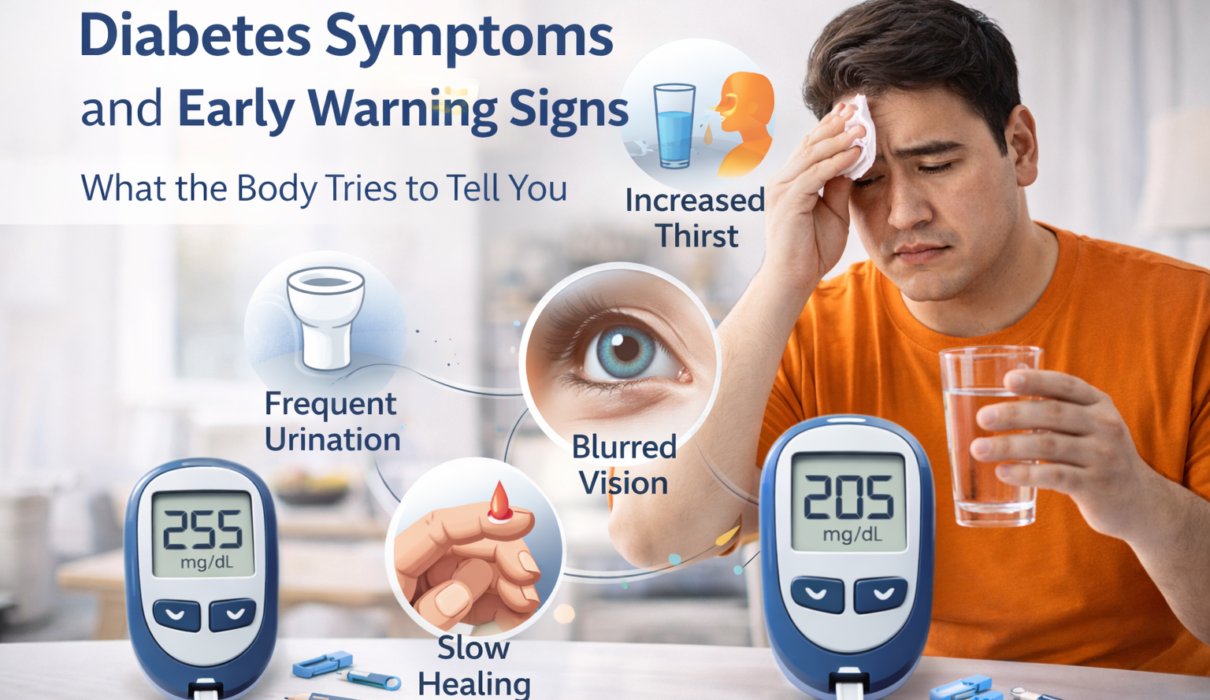
Increased Thirst (Polydipsia)
What it feels like: An unusual, persistent thirst that doesn’t fully resolve with normal fluid intake. Drinking feels necessary almost constantly. Dry mouth persists.
Why it happens: As glucose spills into urine and pulls fluid with it, the body becomes dehydrated. Dehydration triggers thirst – the body’s signal to replace the lost fluid. The more glucose in the urine, the more fluid is lost, and the more intense the thirst.
Frequent Urination (Polyuria)
What it feels like: Needing to urinate much more often than usual – sometimes every hour or two during the day, and waking multiple times at night. Urine volume is typically larger than normal.
Why it happens: Excess glucose in the urine acts as an osmotic agent, pulling water from the body into the urine. The kidneys filter more fluid than usual, producing large volumes of glucose-rich, dilute urine. Thirst and frequent urination are closely linked – drinking more to compensate for fluid loss increases urine production further.
Fatigue and Low Energy
What it feels like: A persistent tiredness that isn’t explained by activity level or sleep. Mental fatigue and difficulty concentrating are common alongside physical tiredness. Energy crashes after meals, particularly carbohydrate-heavy ones, are characteristic.
Why it happens: Even with abundant glucose in the bloodstream, cells in insulin-resistant or insulin-deficient states can’t access it effectively. The body is running on less available cellular energy than it should be. Additionally, dehydration from polyuria contributes to fatigue, and in type 2 diabetes the insulin resistance itself is metabolically costly.
Blurred Vision
What it feels like: Vision that seems blurry or out of focus, sometimes fluctuating throughout the day. It may affect one or both eyes. This is distinct from the vision changes of established diabetic retinopathy – which develop slowly over years.
Why it happens: Elevated blood glucose changes the osmotic balance in the tissues of the eye, causing the lens to swell and change shape. A swollen lens focuses light differently, producing blurry vision. The good news is that this type of blur typically improves when blood glucose is brought under control – the lens returns to its normal shape. The bad news is that it is often dismissed as needing glasses rather than triggering investigation of blood glucose.
Unexplained Weight Loss
What it feels like: Losing weight without trying – sometimes significantly and rapidly in type 1 diabetes. Appetite may actually be increased even as weight falls.
Why it happens: When cells can’t access glucose for energy, the body turns to fat and muscle as alternative fuel sources, breaking them down for energy even when food intake is normal. In type 1 diabetes particularly, this can produce rapid and dramatic weight loss before diagnosis. In type 2, weight loss is less common and less dramatic, but can occur with significantly elevated blood glucose.
Increased Hunger (Polyphagia)
What it feels like: Persistent hunger even after eating – particularly noticeable in type 1 diabetes. Eating doesn’t satisfy hunger the way it should.
Why it happens: Cells deprived of glucose signal the brain for more fuel despite high blood glucose levels. The hunger is real and physiological, not psychological – the cells genuinely aren’t getting adequate energy despite the blood glucose being elevated.
Less Obvious Warning Signs
These symptoms tend to develop with longer-standing elevated blood glucose and are less specific to diabetes – but are worth knowing as signals that testing is warranted.
Slow healing of cuts and wounds: Elevated blood glucose impairs immune cell function, reduces blood flow to small vessels, and creates an environment where bacteria thrive. The result is wounds – even minor ones – that take significantly longer to heal than they should, and that are more prone to infection. This is one of the earliest signs of microvascular damage and should be taken seriously.
Frequent infections: High blood glucose feeds bacterial and fungal growth. Recurrent urinary tract infections, skin infections, yeast infections (particularly vaginal yeast infections in women and thrush in men), and gum infections are all associated with poorly controlled blood glucose. Recurrent infections without an obvious explanation are worth investigating metabolically.
Tingling, numbness, or burning in the hands and feet: Peripheral neuropathy – nerve damage caused by chronic glucose elevation – typically begins in the feet and toes before spreading upward. Early symptoms include tingling, pins-and-needles sensations, burning, or reduced sensation. This is particularly significant because it represents actual nerve damage and indicates that blood glucose has been elevated long enough to cause structural changes.
Darkening of skin in body folds: Acanthosis nigricans – velvety darkening and thickening of the skin in the neck creases, armpits, and groin – is a visible sign of insulin resistance. It is not caused by diabetes directly but by the elevated insulin levels that accompany insulin resistance. It can appear years before blood glucose becomes abnormal and is a useful visual indicator that metabolic evaluation is warranted.
Recurrent thrush or genital itching: High blood glucose provides ideal conditions for Candida yeast to overgrow. Recurrent oral thrush or genital yeast infections – particularly when they occur without an obvious trigger like antibiotic use – can be an early and often overlooked indicator of elevated blood glucose.
How Symptoms Differ Between Type 1 and Type 2
The symptom picture in type 1 and type 2 diabetes is similar in terms of what symptoms appear, but dramatically different in terms of how quickly they develop and how severe they are.
| Symptom feature | Type 1 diabetes | Type 2 diabetes |
|---|---|---|
| Onset speed | Rapid – days to weeks | Gradual – months to years |
| Symptom severity | Often dramatic | Often mild or absent |
| Weight change | Significant weight loss common | Weight loss less common; weight gain more typical |
| Hunger | Often intense | Variable |
| DKA risk | High if untreated | Low (except in severe cases) |
| Typical age | Children, young adults | Adults (increasingly younger) |
| Often found by chance | Less common – symptoms usually prompt testing | Very common – found on routine blood work |
In type 1 diabetes, the rapid destruction of insulin-producing cells means blood glucose can rise dramatically within weeks. Symptoms are typically obvious and often severe enough to prompt urgent medical attention. Diabetic ketoacidosis – a medical emergency – is a real risk in undiagnosed or undertreated type 1.
In type 2 diabetes, the gradual nature of insulin resistance means blood glucose rises slowly over years. Symptoms may be so mild that they’re attributed to stress, aging, or being busy. Many people with type 2 diabetes are diagnosed entirely through routine blood testing with no symptoms at all.
“Type 1 diabetes typically announces itself – symptoms develop quickly and dramatically. Type 2 diabetes typically doesn’t – it develops silently over years while damage accumulates. Waiting for symptoms before getting tested for type 2 diabetes means waiting until the condition has already progressed significantly.”
Emergency Warning Signs: When to Seek Urgent Care
Some diabetes-related symptoms represent medical emergencies requiring immediate attention.
Diabetic Ketoacidosis (DKA) – Primarily Type 1
DKA occurs when the body, severely insulin-deficient, breaks down fat so rapidly that acidic ketones accumulate in the blood to dangerous levels. It is a medical emergency.
Warning signs of DKA:
- Nausea and vomiting
- Severe abdominal pain
- Fruity or acetone-smelling breath
- Rapid, deep breathing (Kussmaul breathing)
- Confusion or altered consciousness
- Extreme fatigue and weakness
DKA requires emergency medical treatment – do not wait if these symptoms appear.
Hyperosmolar Hyperglycemic State (HHS) – Primarily Type 2
HHS occurs in type 2 diabetes when blood glucose rises to extremely high levels (often above 600 mg/dL) with severe dehydration. It develops more slowly than DKA but is equally life-threatening.
Warning signs of HHS:
- Extreme thirst and dry mouth
- Confusion or disorientation
- Weakness on one side of the body (stroke-like symptoms)
- Seizures in severe cases
- Very dark, concentrated urine
Severe Hypoglycemia (Low Blood Sugar)
People already diagnosed with diabetes and taking insulin or certain other medications can develop dangerously low blood glucose. Symptoms include shakiness, sweating, confusion, pale skin, and in severe cases, loss of consciousness. This is a medical emergency requiring immediate sugar intake and, if severe, emergency services.
Who Should Get Tested – and When
Given that type 2 diabetes is frequently asymptomatic, the ADA recommends screening based on risk factors rather than waiting for symptoms:
- All adults aged 35 to 70 who are overweight or obese – at least every 3 years
- Adults of any age with risk factors including family history, PCOS, hypertension, high cholesterol, history of gestational diabetes, or prediabetes
- Pregnant women – between 24 and 28 weeks of pregnancy for gestational diabetes screening
- Anyone experiencing the classic symptoms described above – regardless of age or risk profile
The screening tests are simple blood tests – fasting glucose or HbA1c – that can be done at any routine primary care appointment.
Frequently Asked Questions
Q: I have no symptoms at all. Does that mean I don’t have diabetes?
No – this is one of the most important things to understand about diabetes. Type 2 diabetes is frequently completely asymptomatic in its early stages. Millions of Americans have it and feel entirely normal. The only reliable way to know your blood glucose status is blood testing. If you have risk factors – family history, overweight, sedentary lifestyle, age over 35 – getting tested is appropriate regardless of how you feel.
Q: I’ve been really thirsty and urinating a lot lately. How worried should I be?
These are classic diabetes symptoms and warrant a blood test rather than reassurance. They could be caused by other things – a UTI, hot weather, simply drinking more coffee – but they are also exactly what elevated blood glucose produces. A fasting glucose or HbA1c test at your doctor’s office will answer the question definitively. Don’t wait to see if it resolves on its own.
Q: Can stress cause these symptoms without diabetes?
Stress can temporarily elevate blood glucose through cortisol – and in someone with prediabetes or undiagnosed type 2 diabetes, stress may be enough to push blood glucose high enough to produce mild symptoms. Stress alone in a metabolically healthy person typically doesn’t produce the classic diabetes symptom pattern. If you’re experiencing multiple symptoms and attributing them to stress, a blood test is a reasonable step to rule out an underlying glucose issue.
Q: My vision has been blurry lately. Could it be diabetes?
Possibly – the lens of the eye swells in response to elevated blood glucose, producing blurry vision that can fluctuate throughout the day. If blurred vision is a new development – particularly alongside other potential diabetes symptoms like increased thirst or fatigue – blood glucose testing is appropriate before assuming you need new glasses. Optometrists may also detect signs of diabetic retinopathy during a routine eye examination, even before the person knows they have diabetes.
Q: My child is very thirsty and tired all the time. Should I be concerned about diabetes?
Yes – particularly if these symptoms have come on in the past few weeks and are accompanied by weight loss or frequent urination. Type 1 diabetes in children can develop rapidly and is a medical emergency if DKA develops. A child with new-onset significant thirst, frequent urination, and fatigue should be seen by a doctor promptly – not next week, but within a day or two.
Disclaimer: This article is for educational purposes only and does not constitute medical advice. Always consult a qualified healthcare professional for personal health concerns. If you or someone you know is experiencing symptoms of diabetic ketoacidosis, seek emergency medical care immediately.
References
Centers for Disease Control and Prevention (CDC). National Diabetes Statistics Report. 2024. https://www.cdc.gov/diabetes/data/statistics-report/index.html
American Diabetes Association (ADA). Standards of Care in Diabetes – Classification and Diagnosis. 2023. https://diabetesjournals.org/care/issue/46/Supplement_1
National Institute of Diabetes and Digestive and Kidney Diseases (NIDDK). Symptoms and Causes of Diabetes. 2023. https://www.niddk.nih.gov/health-information/diabetes/overview/symptoms-causes
National Institute of Diabetes and Digestive and Kidney Diseases (NIDDK). Diabetic Ketoacidosis. 2023. https://www.niddk.nih.gov/health-information/diabetes/overview/preventing-problems/diabetic-ketoacidosis
World Health Organization (WHO). Diabetes Fact Sheet. 2023. https://www.who.int/news-room/fact-sheets/detail/diabetes
American Diabetes Association (ADA). Diabetes Symptoms. 2023. https://diabetes.org/diabetes/symptoms
Kitabchi AE, Umpierrez GE, Miles JM, Fisher JN. Hyperglycemic crises in adult patients with diabetes. Diabetes Care. 2009;32(7):1335-1343. https://pubmed.ncbi.nlm.nih.gov/19564476




1 Comment