 By
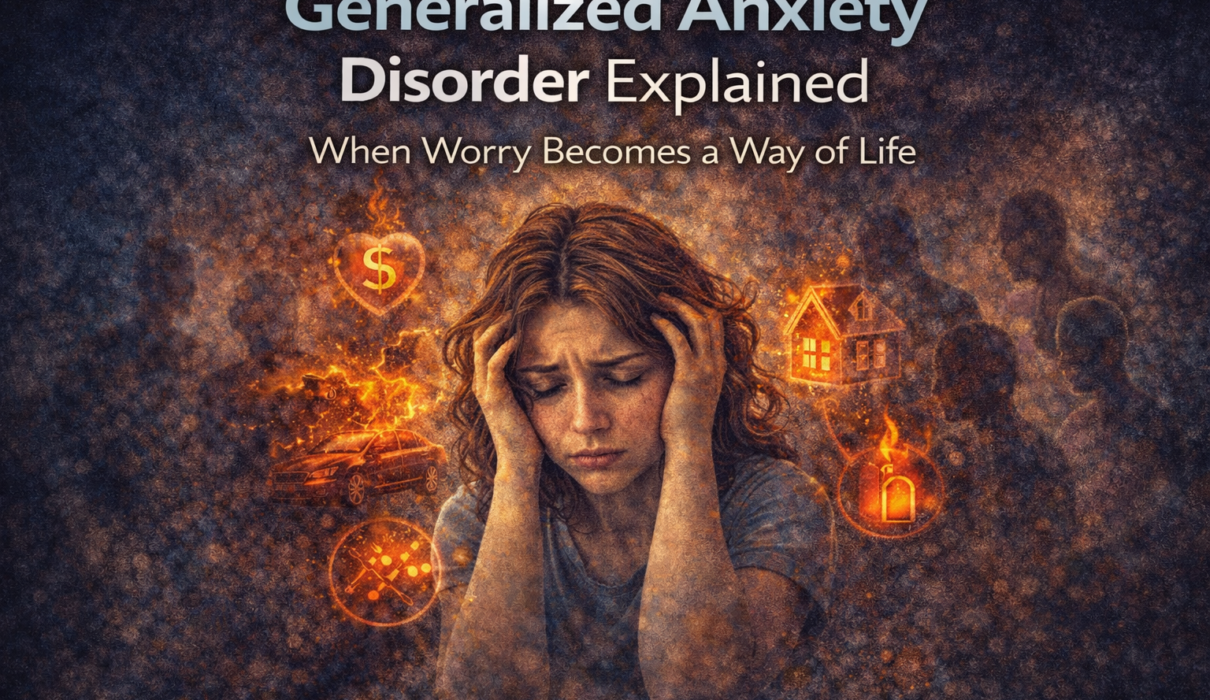
By Most people worry. About money, about health, about the people they love, about whether they said the wrong thing in a meeting last Tuesday. Worry is a normal part of being human, and in moderate amounts it can even be useful — it motivates preparation, helps us anticipate problems, and keeps us from being blindsided by things we could have seen coming.
But for people with generalized anxiety disorder, worry is not a tool. It is a constant companion that cannot be switched off, does not respond to reassurance, and attaches itself to virtually every area of life regardless of whether there is any real reason for concern. The worry feels urgent and necessary in the moment, as though stopping it would somehow invite the very outcomes being feared. And yet it never actually resolves anything. It just moves to the next topic, and the next, and the one after that.
Generalized anxiety disorder, or GAD, is one of the most common anxiety disorders in the United States, affecting an estimated 6.8 million American adults. Despite being so prevalent, it is frequently underdiagnosed, often misattributed to stress or personality, and significantly undertreated. Many people with GAD have been living with it for years before they ever learn that what they experience has a name, a biological basis, and highly effective treatment options.
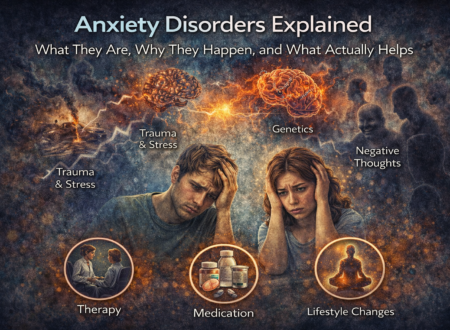
This article is part of our anxiety series. For the full foundation on anxiety disorders, visit our Anxiety Disorders Explained guide.
What Generalized Anxiety Disorder Actually Is
GAD is defined by persistent, excessive, and difficult-to-control worry about a wide range of topics that occurs more days than not for at least six months and is accompanied by physical and cognitive symptoms that reflect a chronically activated stress response.
The key word in that definition is excessive. Everyone worries about real problems. GAD worry is characterized by its disproportionality to the actual likelihood or impact of the feared outcomes, its breadth across multiple life domains rather than fixation on one specific thing, its resistance to reassurance and rational reframing, and the significant distress and functional impairment it causes.
People with GAD do not worry about one thing. They worry about everything. And when one worry is resolved, another immediately takes its place. The content of the worry shifts, but the underlying state of anxious apprehension remains constant.
This is an important distinction from other anxiety disorders. Someone with a specific phobia fears a specific thing. Someone with social anxiety fears social evaluation. Someone with panic disorder fears panic attacks. Someone with GAD fears life in general — its uncertainty, its unpredictability, and the possibility that something somewhere will go wrong.
The Diagnostic Criteria for GAD
In the United States, GAD is diagnosed using the criteria from the Diagnostic and Statistical Manual of Mental Disorders, Fifth Edition, known as the DSM-5. A diagnosis of GAD requires all of the following.
Excessive anxiety and worry about multiple topics or events occurring more days than not for at least six months. The person finds it difficult to control the worry. The anxiety and worry are associated with at least three of the following six symptoms in adults: restlessness or feeling keyed up or on edge, being easily fatigued, difficulty concentrating or mind going blank, irritability, muscle tension, and sleep disturbance. The anxiety, worry, or physical symptoms cause significant distress or functional impairment. The symptoms are not attributable to a substance or medical condition and are not better explained by another mental disorder (APA, 2022).
The six-month duration requirement is clinically important because it distinguishes GAD from shorter-term anxiety responses to specific stressors, which are normal and do not require the same level of clinical intervention.
What GAD Feels Like From the Inside
Clinical criteria describe GAD from the outside. What the condition actually feels like from the inside is something that does not always make it into the medical literature but matters enormously for understanding why people with GAD struggle to simply stop worrying when told to.
For many people with GAD, worry feels protective. If I worry about this enough, maybe I can prevent it from happening. If I think through every possible bad outcome, maybe I will be prepared. This is sometimes called the positive beliefs about worry — a cognitive pattern in which worry is unconsciously experienced as a coping strategy rather than a symptom (Wells, 1995). The problem is that it never actually works. The preparation never feels complete. The reassurance never sticks. And the relief from resolving one worry is immediately replaced by the arrival of the next.
Many people with GAD also experience what is called intolerance of uncertainty. Not knowing how something will turn out feels genuinely unbearable, and worry is the mind’s attempt to achieve certainty through exhaustive mental preparation. This is why reassurance-seeking is common in GAD — checking in with partners, doctors, or friends for confirmation that things will be okay — and why it provides only temporary relief before the next wave of uncertainty demands attention.
The physical experience of GAD is also significant and often underappreciated. Chronic muscle tension, particularly in the neck, shoulders, and jaw, is extremely common and can produce headaches, jaw pain, and general physical exhaustion. Many people with GAD describe feeling perpetually tired, not because they are sleeping too little necessarily, but because their nervous system is running at elevated activation around the clock, which is genuinely metabolically costly.
Physical Symptoms of GAD
GAD is not purely a mental experience. The chronic activation of the stress response produces real, measurable physical effects that can sometimes be the most prominent complaint bringing someone to a doctor’s office.
Muscle tension is one of the most universal physical symptoms of GAD. The body is essentially braced for danger that never arrives, maintaining a low-level state of physical readiness that becomes exhausting over time. Headaches, particularly tension headaches at the back of the skull and across the forehead, are common. Jaw clenching and bruxism, or teeth grinding, often occur during sleep as an expression of the same chronic tension.
Gastrointestinal symptoms are extremely common in GAD. The gut and the brain are connected through the enteric nervous system and the vagus nerve, and chronic anxiety reliably disrupts gut motility, increases gut sensitivity, and alters the gut microbiome. Nausea, stomach upset, diarrhea, and irritable bowel symptoms frequently accompany GAD, and many people are treated for gut conditions for years before the anxiety driving them is identified.
Sleep disturbance is nearly universal in GAD, affecting the majority of people with the condition. The most common pattern is difficulty falling asleep due to an overactive, worrying mind that cannot quiet itself when the distractions of the day are removed. Waking during the night with anxious thoughts and early morning awakening with immediate resumption of worry are also common. The relationship between GAD and sleep is bidirectional — poor sleep worsens anxiety reactivity, and anxiety disrupts sleep, creating a cycle that can be difficult to break without addressing both sides.
Fatigue is a near-constant companion for many people with GAD, even when they have slept. Chronic physiological arousal is energetically expensive, and the cognitive load of constant worry is similarly draining. Many people with GAD describe a persistent tiredness that does not respond to rest in the way ordinary fatigue does.
Difficulty concentrating is one of the DSM-5 diagnostic criteria for GAD and is one of the most functionally disruptive symptoms. The mind, preoccupied with worry, has fewer cognitive resources available for focused work. Tasks that should be straightforward take longer. Memory suffers. The person may feel mentally foggy or scattered despite being physically present.
Irritability is another recognized symptom that is often overlooked in discussions of GAD. When someone is running on chronically elevated stress hormones with limited sleep and cognitive resources stretched thin by constant worry, their threshold for frustration is significantly lowered. Irritability in GAD is not a character failing — it is a physiological consequence of a nervous system operating at its limit.
Who Gets GAD and When Does It Start
GAD can begin at any age, but the average age of onset in the United States is 31 years old, making it somewhat later in onset than many other anxiety disorders (NIMH, 2023). However, many people with GAD report having been worriers from childhood, suggesting that the full clinical syndrome often develops gradually from a temperamental and biological predisposition that has been present much longer.
GAD is significantly more common in women than men, with women diagnosed at roughly twice the rate. This gender disparity is consistent across most anxiety disorders and reflects a combination of biological, hormonal, socialization, and health-seeking behavior factors.
People with a family history of anxiety or mood disorders are at higher risk. Certain personality traits — particularly high neuroticism, perfectionism, and a tendency toward negative interpretation — are associated with GAD vulnerability. Chronic stress, adverse life experiences, and major life transitions are common precipitants for the onset or worsening of GAD in people who are predisposed.
GAD frequently co-occurs with other mental health conditions. Depression is the most common co-occurring condition — an estimated 30 to 40 percent of people with GAD also meet criteria for major depressive disorder at some point. Panic disorder, social anxiety disorder, and substance use disorders also commonly co-occur. The presence of comorbid conditions typically makes treatment more complex and underscores the importance of comprehensive evaluation.
How GAD Is Diagnosed in the United States
GAD is diagnosed through a clinical interview conducted by a licensed mental health professional or physician. In American primary care, the GAD-7, a seven-item self-report questionnaire, is widely used as a screening tool. Scores of 5, 10, and 15 represent mild, moderate, and severe anxiety respectively, with a score of 10 or above typically indicating probable GAD warranting further evaluation (Spitzer et al., 2006).
A score on the GAD-7 is not a diagnosis on its own but a starting point for a clinical conversation. Diagnosis involves assessing the full symptom picture, its duration and functional impact, ruling out medical causes including thyroid dysfunction and cardiac arrhythmias that can produce anxiety-like symptoms, and ruling out other mental health conditions that might better explain the presentation.
Many people first bring their GAD symptoms to a primary care physician, often presenting with the physical complaints — fatigue, stomach problems, headaches, sleep difficulties — rather than directly reporting excessive worry. Recognizing the anxiety driving these physical symptoms is an important part of good primary care in the United States, and improving this recognition has been a focus of mental health integration efforts in American healthcare.
Treatment for GAD: What the Evidence Shows
GAD is a highly treatable condition. The evidence base for both psychological and pharmacological treatment is strong, and the majority of people who receive appropriate treatment experience meaningful and lasting improvement.
Cognitive Behavioral Therapy
Cognitive behavioral therapy, or CBT, is the most extensively researched and consistently effective psychological treatment for GAD. For GAD specifically, CBT targets the cognitive patterns that maintain worry — particularly the tendency to overestimate threat, the intolerance of uncertainty, and the positive beliefs about worry that make it feel necessary and protective.
A component of CBT for GAD that is particularly important is worry postponement and containment, in which the person learns to designate a specific time for worry rather than allowing it to run throughout the day. Behavioral experiments that test the actual consequences of tolerating uncertainty, and relaxation training to address the chronic physiological arousal, are also central components.
Meta-analyses of CBT for GAD consistently show response rates of 50 to 60 percent, with many patients experiencing substantial improvement in both anxiety symptoms and quality of life (Hofmann et al., 2012).
Acceptance and Commitment Therapy
Acceptance and commitment therapy, or ACT, has a growing evidence base for GAD. Rather than directly challenging the content of worries, ACT focuses on changing the person’s relationship to their thoughts — developing the ability to observe worry without being fused with it or compelled to act on it. Values clarification and committed action toward meaningful life goals despite the presence of anxiety are central to the ACT approach. For people who have not responded fully to CBT or who find cognitive restructuring difficult, ACT offers a genuinely different and complementary framework.
Medication
Selective serotonin reuptake inhibitors and serotonin-norepinephrine reuptake inhibitors are the first-line pharmacological treatments for GAD in the United States. Escitalopram (Lexapro), sertraline (Zoloft), venlafaxine (Effexor), and duloxetine (Cymbalta) are among the most commonly prescribed and have demonstrated effectiveness in randomized controlled trials. These medications require 4 to 6 weeks to reach full therapeutic effect and are not habit-forming, making them appropriate for longer-term management.
Buspirone is a non-habit-forming anxiolytic specifically indicated for GAD. It works differently from SSRIs and SNRIs, acting on serotonin and dopamine receptors, and is particularly useful for people who cannot tolerate the side effects of SSRIs or who prefer a non-antidepressant option. Like SSRIs, it requires several weeks to become effective and is not appropriate for acute or as-needed use.
Benzodiazepines may be used for short-term management of severe anxiety symptoms but are generally not recommended for ongoing GAD management due to their risks of dependence and tolerance. American psychiatric guidelines advise caution with long-term benzodiazepine use in GAD (Bandelow et al., 2017).
Lifestyle Factors
Regular aerobic exercise has among the strongest non-pharmacological evidence for anxiety reduction. Studies have shown that consistent exercise — ideally 30 minutes of moderate-intensity activity most days of the week — produces meaningful reductions in GAD symptoms through multiple mechanisms including reduced cortisol reactivity, increased GABA activity, and promotion of neuroplasticity (Stubbs et al., 2017).
Caffeine reduction is frequently underutilized as an intervention in GAD. Caffeine is a stimulant that directly increases physiological arousal and can worsen both the subjective experience of anxiety and the physical symptoms of GAD. For people who consume significant amounts of coffee, energy drinks, or other caffeinated beverages, reducing intake is a practical and often impactful change.
Sleep optimization, dietary patterns that support stable blood sugar, and mindfulness-based practices including mindfulness-based stress reduction, or MBSR, all have evidence of benefit for GAD and complement formal treatment approaches.
A Note on Getting Help in the United States
Finding mental health care in the United States can be genuinely difficult. Wait times for therapy are long in many parts of the country. Cost and insurance coverage remain significant barriers for many people. And the stigma around mental health, while improving, has not disappeared.
If you suspect you have GAD, starting with your primary care physician is often the most accessible first step. They can screen for GAD using the GAD-7, rule out medical causes, and initiate treatment or provide a referral to a mental health specialist. Community mental health centers offer sliding-scale fees for people without adequate insurance. Telehealth platforms including BetterHelp, Talkspace, and others have expanded access to CBT and other therapies significantly, though quality varies and these platforms are not appropriate for everyone.
If cost is a barrier, the Substance Abuse and Mental Health Services Administration, or SAMHSA, maintains a national helpline at 1-800-662-4357 that can connect you with local mental health resources.
Frequently Asked Questions
Q: Is GAD just being a chronic worrier, or is it a real medical condition? GAD is a recognized medical condition with a clear evidence base for biological, psychological, and environmental contributors. The distinction between being a chronic worrier and having GAD lies in the severity, the difficulty controlling the worry, the presence of physical symptoms, and the functional impairment it causes. Many people with GAD have been told they are just worriers their whole lives and do not realize that what they experience is both diagnosable and highly treatable.
Q: Can you have GAD without knowing it? Absolutely. Many people with GAD present to their doctor with physical complaints — fatigue, stomach problems, headaches, muscle pain, sleep difficulties — without identifying excessive worry as the central problem. Because worry can feel like a personality trait rather than a symptom, and because the physical manifestations of GAD overlap with many other conditions, it is frequently missed or attributed to other causes for years before a correct diagnosis is made.
Q: Will I need medication for GAD, or can therapy alone work? For mild to moderate GAD, CBT alone is often highly effective and can produce durable improvements without medication. For moderate to severe GAD, the combination of therapy and medication typically produces the best outcomes. The right approach depends on symptom severity, personal preference, access to care, and individual response. This is a conversation worth having with a healthcare provider rather than deciding in advance.
Q: How long does treatment for GAD take before I see improvement? Most people in CBT for GAD begin to notice meaningful improvement within 6 to 8 weeks, with more substantial gains accumulating over a 12 to 20 week course. Medication typically takes 4 to 6 weeks to reach its full therapeutic effect. GAD is often a condition that benefits from ongoing skills practice even after formal treatment ends, as the cognitive and behavioral tools learned in therapy continue to be relevant for managing life’s inevitable uncertainties.
Q: Is GAD curable, or is it something I will always have? GAD is highly treatable, and many people achieve substantial remission from symptoms with appropriate treatment. Whether to think of it as curable or manageable depends on the individual. Some people have a single episode of GAD that responds to treatment and does not recur. Others have a more chronic course with periods of improvement and worsening. The evidence strongly supports that treatment significantly reduces both the severity and the duration of GAD episodes, and that the skills learned in therapy provide lasting benefit even in people with a more chronic course.
This article is for educational purposes only and does not constitute medical advice. Always consult a qualified healthcare professional for personal mental health concerns. If you are in crisis, call or text 988 to reach the Suicide and Crisis Lifeline.
References
American Psychiatric Association. Diagnostic and Statistical Manual of Mental Disorders, Fifth Edition, Text Revision (DSM-5-TR). Washington, DC: APA; 2022. https://www.psychiatry.org/psychiatrists/practice/dsm
National Institute of Mental Health (NIMH). Generalized Anxiety Disorder. 2023. https://www.nimh.nih.gov/health/statistics/generalized-anxiety-disorder
Spitzer RL, Kroenke K, Williams JB, Löwe B. A brief measure for assessing generalized anxiety disorder: the GAD-7. Arch Intern Med. 2006;166(10):1092–1097. https://pubmed.ncbi.nlm.nih.gov/16717171
Wells A. A metacognitive model and therapy for generalized anxiety disorder. Clin Psychol Psychother. 1999;6(2):86–95. https://onlinelibrary.wiley.com/doi/10.1002/(SICI)1099-0879(199905)6:2%3C86::AID-CPP189%3E3.0.CO;2-S
Hofmann SG, Asnaani A, Vonk IJ, Sawyer AT, Fang A. The efficacy of cognitive behavioral therapy: a review of meta-analyses. Cognit Ther Res. 2012;36(5):427–440. https://pubmed.ncbi.nlm.nih.gov/23459093
Bandelow B, Michaelis S, Wedekind D. Treatment of anxiety disorders. Dialogues Clin Neurosci. 2017;19(2):93–107. https://pubmed.ncbi.nlm.nih.gov/28867934
Stubbs B, Vancampfort D, Rosenbaum S, et al. An examination of the anxiolytic effects of exercise for people with anxiety and stress-related disorders. Psychiatry Res. 2017;249:102–108. https://pubmed.ncbi.nlm.nih.gov/28088704
Anxiety and Depression Association of America (ADAA). Generalized Anxiety Disorder (GAD). 2023. https://adaa.org/understanding-anxiety/generalized-anxiety-disorder-gad