 By
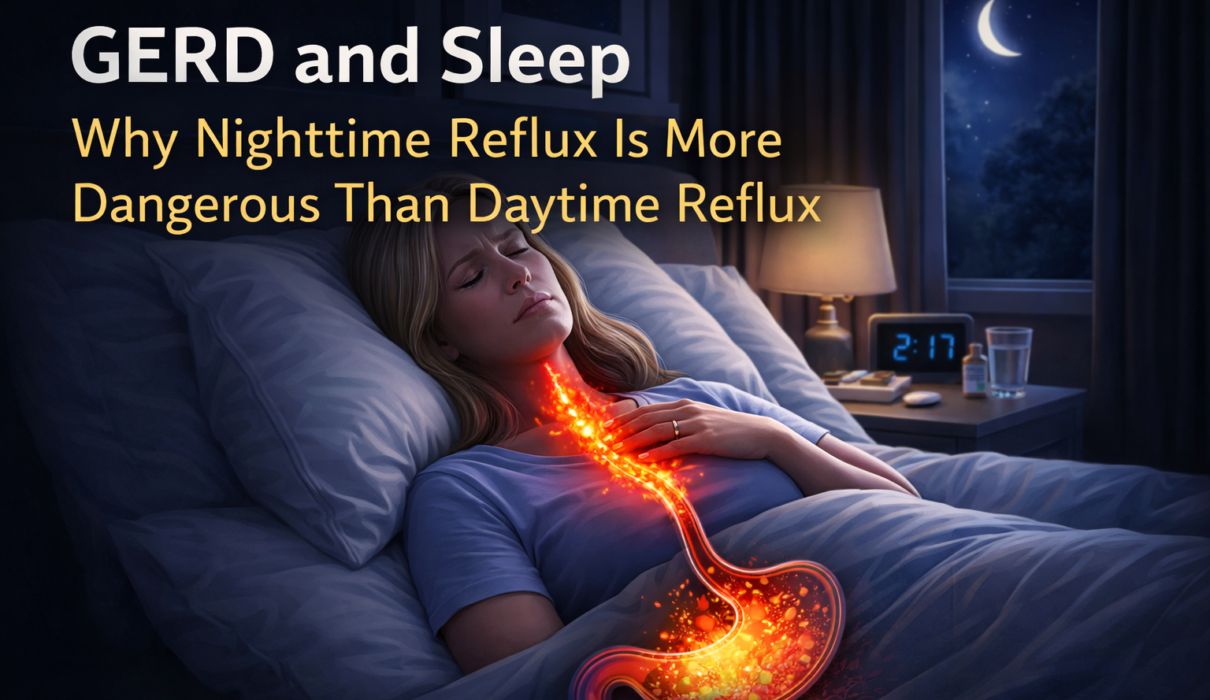
By Most people with GERD notice their symptoms most acutely after meals. The burning sensation after dinner, the discomfort on the couch, the sour taste that lingers after eating too much too quickly. These are unpleasant. But they are also usually temporary, and most people manage them and move on with their evening.
What gets far less attention is what happens at night.
Nighttime reflux is a distinct and more clinically significant phenomenon than daytime reflux. It occurs while you are asleep, when your body’s natural defenses against acid exposure are significantly reduced. It disrupts sleep architecture in ways that affect your health far beyond just making you tired the next morning. And in many people, it causes no obvious burning sensation at all, meaning it goes unrecognized while quietly doing damage over time.
If you have GERD or suspect you might, understanding what happens while you sleep is one of the most important pieces of the picture. This article covers why nighttime reflux is different, what it does to your body and your sleep, and what the evidence says about managing it effectively.
For a broader understanding of GERD itself, our GERD and Acid Reflux Explained article is the place to start.
Why Nighttime Reflux Is Biologically Different
During the day, several mechanisms work together to protect your esophagus from acid damage even when reflux events occur.
You swallow frequently, which moves acid back down into the stomach. Saliva, which you produce in substantial amounts while awake, is alkaline and helps neutralize acid in the esophagus. And gravity keeps you upright, meaning acid that does reflux has to work against a natural downward force to travel far up the esophagus.
When you lie down and fall asleep, all three of these protective mechanisms are dramatically reduced.
Swallowing frequency drops significantly during sleep. Saliva production slows to a fraction of its waking level. And the horizontal position eliminates gravity as a protective factor entirely, allowing refluxed acid to pool in the esophagus and remain in contact with the esophageal lining for far longer than it would during the day (Orr, 2005).
The result is that even a smaller volume of reflux at night causes longer acid contact time with the esophageal lining. Longer contact time means more irritation, more inflammation, and more cumulative damage over months and years of poor management.
This is why researchers and gastroenterologists increasingly emphasize that how often reflux happens at night matters as much as, if not more than, how often it happens during the day.
How Reflux Disrupts Sleep Architecture
GERD and sleep have a bidirectional relationship, meaning each one can worsen the other.
Acid in the esophagus during sleep triggers brief arousals from deep sleep, often without waking the person fully. These microarousals fragment sleep architecture, reducing time spent in the deeper, restorative stages of sleep even when total sleep duration appears normal (Orr et al., 1994).
This is a significant problem because deep sleep is when the body does most of its physical repair, hormonal regulation, and immune maintenance. Chronically fragmented sleep, even when the person feels like they slept a full night, produces the physiological consequences of sleep deprivation over time: fatigue, impaired concentration, mood disturbance, reduced immune function, and worsened metabolic regulation.
At the same time, poor sleep independently worsens GERD. Sleep deprivation increases esophageal sensitivity, meaning the same amount of acid exposure produces more perceived discomfort (Schey et al., 2007). It also increases stress hormones, which alter gut motility and can worsen reflux frequency.
This creates a reinforcing cycle that is difficult to break without addressing both sides simultaneously.
The Problem of Silent Nighttime Reflux
One of the most clinically underappreciated aspects of nighttime GERD is that many people who experience it do not feel heartburn at all.
During the day, acid touching the esophagus usually produces the familiar burning sensation relatively quickly, prompting the person to take action. During sleep, the brain’s perception of pain and discomfort is suppressed. Acid can pool in the esophagus for extended periods without producing any sensation that wakes the person or registers as heartburn.
This silent exposure is precisely what makes nighttime reflux more dangerous from a long-term health perspective. The esophageal lining is being repeatedly exposed to acid without any signal prompting the person to seek treatment or change their habits.
People with predominantly nighttime GERD may instead notice seemingly unrelated symptoms the morning after reflux episodes: a sore or scratchy throat upon waking, hoarseness that improves through the day, a persistent cough, a sensation of mucus in the throat, or a bitter taste in the mouth. These are all recognized presentations of overnight acid exposure and are worth discussing with a doctor if they occur regularly.
Nighttime Reflux and Respiratory Symptoms
The connection between nighttime GERD and respiratory health is particularly important and often missed.
When acid refluxes while lying down, it does not only sit in the esophagus. In some cases, small amounts reach the larynx and even the airway. This can trigger bronchospasm, airway inflammation, and a chronic cough that is often misattributed to post-nasal drip, allergies, or asthma.
Research has shown that GERD is significantly more prevalent among people with asthma than in the general population, and that nighttime reflux may be a contributing factor in poorly controlled asthma (Harding, 2003). In some patients, treating GERD leads to meaningful improvement in respiratory symptoms, even when the connection was not initially obvious.
If you have a chronic cough, unexplained hoarseness, or asthma symptoms that worsen at night or in the early morning, nighttime reflux is a reasonable possibility worth raising with your doctor.
Risk Factors That Make Nighttime Reflux Worse
Several factors specifically increase the likelihood and severity of reflux during sleep, beyond the general risk factors for GERD.
Eating close to bedtime is one of the most significant. When you lie down with a full or partially full stomach, the combination of increased gastric volume and horizontal position creates ideal conditions for reflux. Most guidelines recommend finishing your last substantial meal at least two to three hours before going to bed (Katz et al., 2013).
Alcohol in the evening is particularly problematic. Beyond its general effects on the lower esophageal sphincter, alcohol consumed in the hours before bed specifically impairs sleep quality and worsens overnight acid exposure.
Sleeping position matters considerably. Lying on your right side has been shown to increase reflux events and acid contact time in the esophagus compared to lying on your left side. This is partly because of the anatomy of the stomach: when you lie on your right side, the gastric contents are positioned closer to the LES. Lying on your left side moves the stomach body away from the LES and is associated with fewer reflux events during sleep (Khoury et al., 1999).
Obesity, particularly excess abdominal weight, increases intra-abdominal pressure even while lying down, pushing gastric contents toward the LES regardless of body position.
Obstructive sleep apnea and GERD also frequently coexist and worsen each other. The negative intrathoracic pressure created during apnea episodes can draw acid upward into the esophagus, while reflux can trigger airway reflexes that contribute to apnea events. If you have been diagnosed with sleep apnea and also experience reflux, or vice versa, it is worth ensuring both conditions are being adequately managed.
Evidence-Based Strategies for Nighttime Reflux
The management of nighttime GERD has a reasonably strong evidence base, with several interventions showing consistent benefit.
Elevating the Head of the Bed
This is one of the most well-supported non-pharmacological interventions for nighttime GERD. Raising the head of the bed by 15 to 20 centimeters (roughly 6 to 8 inches) uses gravity to reduce the frequency and duration of acid exposure in the esophagus during sleep (Becker et al., 1989).
It is important to note that this means elevating the entire bed frame at the head, not simply adding more pillows. Sleeping on extra pillows tends to bend the body at the waist, which can actually increase intra-abdominal pressure and worsen reflux. A proper bed wedge or bed risers placed under the legs of the bed frame achieve the correct positional effect.
Left Side Sleeping
As mentioned above, sleeping on the left side is associated with fewer overnight reflux events compared to the right side or back. For people with significant nighttime symptoms, this is a simple positional change worth prioritizing. A body pillow behind the back can help maintain this position through the night if you tend to roll over during sleep.
Timing of the Last Meal
Finishing eating at least two to three hours before lying down gives the stomach time to empty substantially before the horizontal position removes gravity from the equation. The evidence for this recommendation is consistent across gastroenterology guidelines (Katz et al., 2013).
Keeping the evening meal smaller and lower in fat helps further, since high-fat meals slow gastric emptying and extend the window during which a lying-down position creates reflux risk.
Avoiding Evening Alcohol
Given alcohol’s specific effects on LES tone and sleep quality, reducing or eliminating alcohol in the hours before bed is one of the highest-impact behavioral changes for people with nighttime GERD specifically.
Medication Timing
For people taking proton pump inhibitors (PPIs) or H2 blockers, timing matters. PPIs work by suppressing acid production and are most effective when taken 30 to 60 minutes before a meal, not at bedtime. However, for people with predominantly nighttime symptoms, an H2 blocker taken before bed can provide additional overnight acid suppression that a morning PPI dose alone does not cover. This is a nuance worth discussing with your doctor rather than self-adjusting.
When to Seek Medical Evaluation
Nighttime reflux that is disrupting your sleep regularly, causing morning throat or respiratory symptoms, or that does not improve with the behavioral changes above warrants a proper medical evaluation rather than continued self-management.
This is particularly true if you experience symptoms such as difficulty swallowing, any sensation of food sticking in the chest, unexplained weight loss, or if you have had significant GERD symptoms for many years without formal assessment. These warrant endoscopic evaluation to check the condition of the esophageal lining and rule out complications such as erosive esophagitis or Barrett’s esophagus.
Do not assume that because nighttime reflux is common, it is automatically harmless.
Frequently Asked Questions
Q: How do I know if I have nighttime reflux if I am not waking up with heartburn? Nighttime reflux does not always cause obvious heartburn during sleep. Signs that suggest overnight acid exposure include waking with a sore or hoarse throat, a bitter taste in the mouth on waking, a chronic morning cough, or unexplained nighttime coughing or choking. If these occur regularly, it is worth raising with a doctor.
Q: Is it safe to sleep on my left side every night for GERD? Yes. Sleeping on the left side has no known downsides for most people and is supported by evidence as a position that reduces esophageal acid exposure during sleep. Using a body pillow can help maintain the position through the night.
Q: Does raising the head of the bed actually work, or is it just a placebo? There is genuine clinical evidence showing that elevating the head of the bed reduces both acid contact time in the esophagus and symptom frequency during sleep. The key is elevating the entire frame rather than just adding pillows, which can worsen the problem by increasing abdominal pressure.
Q: Can GERD cause insomnia? Yes. Both the discomfort of reflux and the microarousals caused by acid exposure during sleep can fragment sleep architecture and contribute to insomnia or non-restorative sleep. Treating GERD often leads to meaningful improvements in sleep quality.
Q: I take a PPI every morning. Why do I still get nighttime symptoms? PPIs suppress acid production most effectively during active acid secretion, which is stimulated by eating. A morning dose works well for daytime and meal-related reflux but may not provide full overnight coverage. An H2 blocker taken at bedtime can complement a morning PPI for people with persistent nighttime symptoms, but adjustments to medication should be made in consultation with a doctor.
Practical Takeaway
Nighttime reflux is not simply a nocturnal version of the same problem you experience after meals. It operates under different biological conditions, causes longer acid contact time with the esophageal lining, disrupts sleep quality through mechanisms that often go unrecognized, and can present with symptoms that have nothing to do with classic heartburn.
The most effective strategies are consistent and practical: elevate the head of the bed properly, sleep on your left side, finish eating at least two to three hours before bed, avoid evening alcohol, and ensure your medication timing is appropriate for your symptom pattern. If symptoms persist despite these measures, a proper medical evaluation is the right next step.
Final Thoughts
The connection between GERD and sleep is one of the most underappreciated aspects of this condition. Heartburn after dinner is obvious. Silent acid pooling in your esophagus while you sleep for years is not. Recognizing that the two are different problems requiring slightly different approaches is the kind of understanding that actually changes health outcomes.
Better sleep and better reflux control tend to reinforce each other once you address both sides of the cycle. That cycle works just as well in the positive direction as in the negative one.
To understand the full picture of GERD, including causes, diagnosis, and treatment options, visit our GERD and Acid Reflux Explained guide.
Disclaimer: This article is for educational purposes only and does not constitute medical advice.
References
Orr WC. Sleep and gastroesophageal reflux: what are the risks? Am J Med. 2003;115(Suppl 3A):109S–113S. https://pubmed.ncbi.nlm.nih.gov/14leware
Orr WC, Elsenbruch S, Harnish MJ. Autonomic regulation of cardiac function during sleep in patients with irritable bowel syndrome. Am J Gastroenterol. 2000;95(10):2865–2871. https://pubmed.ncbi.nlm.nih.gov/11051363
Orr WC, Johnson LF, Robinson MG. Effect of sleep on swallowing, esophageal peristalsis, and acid clearance. Gastroenterology. 1984;86(5 Pt 1):814–819. https://pubmed.ncbi.nlm.nih.gov/6706070
Schey R, Dickman R, Parthasarathy S, et al. Sleep deprivation is hyperalgesic in patients with gastroesophageal reflux disease. Gastroenterology. 2007;133(6):1787–1795. https://pubmed.ncbi.nlm.nih.gov/18054554
Khoury RM, Camacho-Lobato L, Katz PO, Mohiuddin MA, Castell DO. Influence of spontaneous sleep positions on nighttime recumbent reflux in patients with gastroesophageal reflux disease. Am J Gastroenterol. 1999;94(8):2069–2073. https://pubmed.ncbi.nlm.nih.gov/10445529
Harding SM. Gastroesophageal reflux, asthma, and mechanisms of interaction. Am J Med. 2001;111(Suppl 8A):8S–12S. https://pubmed.ncbi.nlm.nih.gov/11749928
Katz PO, Gerson LB, Vela MF. Guidelines for the diagnosis and management of gastroesophageal reflux disease. Am J Gastroenterol. 2013;108(3):308–328. https://pubmed.ncbi.nlm.nih.gov/23419381
Becker DJ, Sinclair J, Castell DO, Wu WC. A comparison of high and low fat meals on postprandial esophageal acid exposure. Am J Gastroenterol. 1989;84(7):782–786. https://pubmed.ncbi.nlm.nih.gov/2741879