 By
By There is a moment that many people with upper digestive discomfort eventually reach. The burning is happening too often to ignore. You have started avoiding certain foods. You are Googling your symptoms at midnight. And somewhere in your search, two conditions keep coming up side by side: GERD and peptic ulcer disease.
They both involve the upper digestive tract. They both cause burning discomfort. They are both influenced by stomach acid. And they are both extremely common worldwide. So it is completely understandable that people confuse them, self-diagnose one when they actually have the other, or assume they are essentially the same condition with different names.
They are not.
GERD and peptic ulcer disease are distinct conditions with different locations, different mechanisms, different symptom patterns, and different risks if left untreated. Getting the distinction right matters not just for academic reasons but because the management of each condition, while overlapping in some areas, has important differences.
This article breaks down exactly what separates the two, how their symptoms differ, when symptoms overlap and why, and what proper diagnosis and management look like for each.
For a full explanation of GERD specifically, our GERD and Acid Reflux Explained guide covers the condition in depth.
What Is GERD, Briefly Revisited
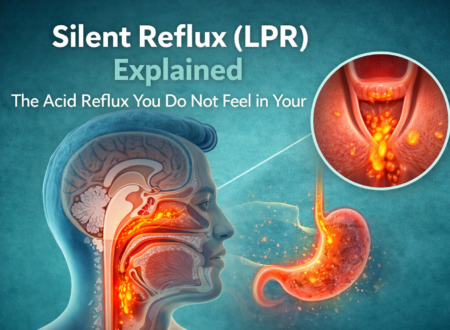
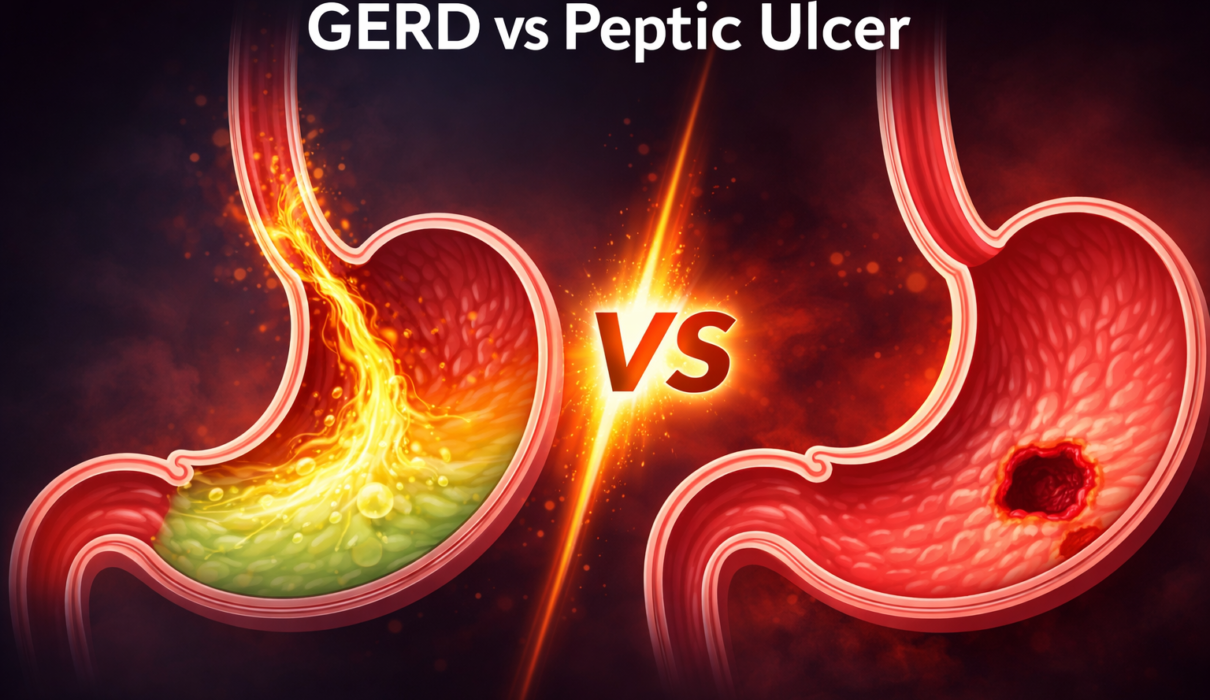
GERD, or gastroesophageal reflux disease, is a condition in which stomach acid repeatedly flows back up into the esophagus, the tube that connects your mouth to your stomach. The problem is not primarily that too much acid is being produced. The problem is that acid is ending up somewhere it should not be: in the esophagus, which does not have the protective lining that the stomach does.
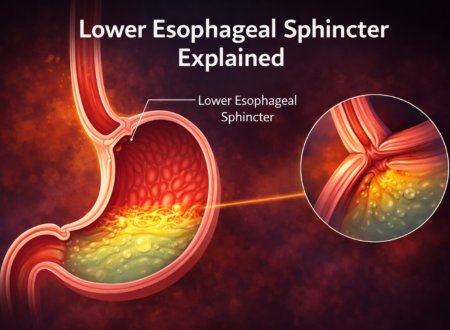
The core mechanism is a dysfunctional lower esophageal sphincter, the muscular valve at the junction of the esophagus and stomach, which fails to stay closed properly and allows acid to reflux upward.
The damage in GERD happens to the esophageal lining. The symptoms are felt primarily in the chest and throat area.
What Is Peptic Ulcer Disease
A peptic ulcer is a sore or erosion that develops in the lining of the stomach or the upper part of the small intestine, called the duodenum. When the ulcer is in the stomach it is called a gastric ulcer. When it is in the duodenum it is called a duodenal ulcer. Both are classified as peptic ulcer disease.
The stomach has a thick mucus lining that normally protects it from the acid it produces. When something disrupts that protective lining, the stomach acid begins eroding the tissue underneath, eventually creating an open sore.
The two most common causes of this disruption are infection with Helicobacter pylori bacteria (H. pylori) and long-term use of nonsteroidal anti-inflammatory drugs (NSAIDs) such as ibuprofen, aspirin, and naproxen (Lanas and Chan, 2017).
H. pylori is a bacterium that colonizes the stomach lining and weakens the mucus barrier, making the underlying tissue vulnerable to acid damage. It is remarkably common globally, present in roughly half the world’s population, though not everyone who carries it develops an ulcer.
NSAIDs inhibit prostaglandin synthesis. Prostaglandins are molecules that help maintain the stomach’s protective mucus layer. Regular NSAID use suppresses this protection, increasing the risk of erosion and ulcer formation.
Less commonly, ulcers can result from excess acid production due to a rare condition called Zollinger-Ellison syndrome, or from stress in critically ill patients. But H. pylori and NSAIDs account for the vast majority of cases.
Where the Symptoms Overlap
Both GERD and peptic ulcer disease cause burning or gnawing discomfort in the upper abdomen and chest area. Both are influenced by eating, both can disturb sleep, and both respond at least partially to acid-suppressing medications. This is why people frequently confuse the two or why a person with one condition might initially be treated empirically for the other.
Both conditions can also cause nausea, belching, and a general sense of upper digestive discomfort that is hard to precisely localize. And both are extremely common, meaning that at a population level, many people have either one or both simultaneously.
There is also significant symptom overlap simply because stomach acid is involved in both. Anything that reduces acid, whether through medication, dietary change, or avoiding triggers, tends to provide partial relief regardless of which condition is present.
Where the Symptoms Differ
Despite the overlap, there are meaningful differences in how these two conditions tend to present that can help distinguish them clinically.
Location of Discomfort
In GERD, the burning sensation is typically felt behind the breastbone, in the chest, and sometimes rising toward the throat. The classic description is heartburn: a retrosternal burning that moves upward. Regurgitation of acid or food into the mouth is a hallmark of GERD and is not typically seen in peptic ulcer disease.
In peptic ulcer disease, the discomfort is more commonly felt in the upper central abdomen, below the breastbone and above the navel. It is described more often as a gnawing, aching, or empty pain rather than a burning sensation moving upward.
Relationship to Eating
This is one of the most clinically useful distinguishing features.
In GERD, symptoms typically worsen after eating, particularly after large meals, fatty foods, or lying down soon after eating. Food in the stomach increases volume and pressure, promoting reflux.
In peptic ulcer disease, the relationship with food is more variable and depends on where the ulcer is located. Duodenal ulcers classically cause pain that improves temporarily with eating, because food buffers acid in the duodenum and reduces direct acid contact with the ulcer. The pain often returns one to three hours after eating when the stomach empties and acid rises again. This pattern of relief with eating followed by delayed pain is relatively specific to duodenal ulcers.
Gastric ulcers, by contrast, often worsen with eating because food stimulates acid secretion directly onto the ulcer. People with gastric ulcers may begin to avoid eating due to anticipatory discomfort, which is not typical in GERD.
Nighttime Symptoms
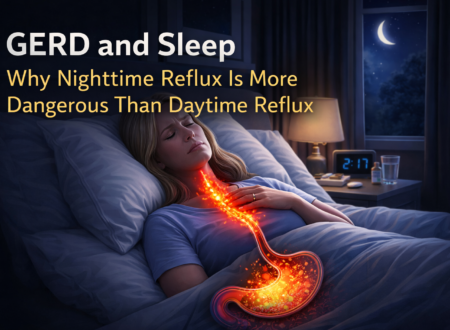
Both conditions can cause nighttime symptoms, but the pattern differs. In GERD, nighttime symptoms are related to the lying-down position, which eliminates gravity as a protective factor. They tend to be more prominent in the early hours of sleep and are often accompanied by regurgitation or a sour taste.
In duodenal ulcer disease, nighttime pain is common and characteristically occurs in the early morning hours, typically between midnight and 3am, when acid secretion is high and there is no food in the stomach to buffer it. This middle-of-the-night pain that wakes a person from sleep and is relieved by eating or taking an antacid is a fairly classic presentation of a duodenal ulcer.
Presence of Alarm Symptoms
Peptic ulcer disease carries a higher risk of serious complications than GERD, and certain symptoms should prompt urgent medical evaluation.
Bleeding from an ulcer can present as blood in the stool, which may appear black and tarry, or as vomiting blood, which may look red or like coffee grounds. These are medical emergencies.
Perforation of an ulcer, though rare, causes sudden severe abdominal pain and is a surgical emergency.
Unintentional weight loss, progressive difficulty eating, and persistent vomiting are also concerning features that require prompt investigation regardless of whether GERD or ulcer disease is suspected.
GERD does not typically cause these alarm features in its early stages. Their presence should always be investigated urgently.
Can You Have Both at the Same Time
Yes, and it is not uncommon. GERD and peptic ulcer disease are both prevalent conditions and can coexist in the same person. H. pylori infection, for instance, has been studied in relation to both conditions, and NSAID use can worsen both ulcer formation and LES dysfunction.
People on long-term NSAID therapy who also have GERD may experience symptoms from both conditions simultaneously, making clinical distinction more difficult. In these cases, proper investigation rather than empirical treatment is particularly important.
How Each Is Diagnosed
Diagnosing GERD
GERD is often diagnosed clinically, meaning on the basis of a doctor’s assessment of the symptom history and pattern. A trial of acid-suppressing medication (usually a proton pump inhibitor) is commonly used as both a therapeutic and a diagnostic step. Significant symptom improvement supports the GERD diagnosis.
When symptoms are atypical, severe, or do not respond to initial treatment, further investigation is needed. Upper endoscopy (gastroscopy) allows direct visualization of the esophageal lining and can identify erosions, inflammation, or other complications. pH monitoring measures actual acid exposure in the esophagus over 24 hours and provides objective data.
Diagnosing Peptic Ulcer Disease
Unlike GERD, peptic ulcer disease requires more objective confirmation. Upper endoscopy is the primary diagnostic tool, as it can directly visualize the ulcer, identify its location, assess its severity, and obtain a biopsy to test for H. pylori and rule out malignancy, which is an important consideration in gastric ulcers.
H. pylori testing can also be done non-invasively through a urea breath test or stool antigen test, both of which are accurate and widely available. A positive H. pylori test in a person with consistent symptoms supports the diagnosis and guides treatment.
Blood tests for H. pylori antibodies exist but are less reliable for confirming active infection.
Self-diagnosing peptic ulcer disease and self-treating with antacids or over-the-counter acid suppressants is particularly problematic because it can mask symptoms while an ulcer continues to progress or H. pylori infection remains untreated.
How Each Is Treated
Treating GERD
GERD management is primarily layered across lifestyle modification, medication, and in some cases procedural intervention. Lifestyle changes include elevating the head of the bed, avoiding late meals, reducing fatty food and alcohol intake, weight management, and identifying personal dietary triggers.
Medications include antacids for symptomatic relief, H2 blockers for moderate symptom control, and proton pump inhibitors for more significant acid suppression and for healing erosive esophagitis. Long-term management aims to use the lowest effective dose necessary to control symptoms.
Our GERD and Acid Reflux Explained guide covers the full management approach in detail.
Treating Peptic Ulcer Disease
If H. pylori is present, the cornerstone of treatment is eradication of the infection. This is done with a combination of antibiotics and a proton pump inhibitor, taken together for a specified course, usually one to two weeks depending on the regimen. Eradicating H. pylori dramatically reduces the risk of ulcer recurrence and is curative in the majority of cases (Malfertheiner et al., 2017).
If NSAIDs are the cause, stopping or reducing them is essential wherever possible. A proton pump inhibitor is used to allow the ulcer to heal, and if NSAID use cannot be stopped for medical reasons, a PPI is continued as gastroprotective cover.
Ulcers caused by other factors are managed with acid suppression to allow healing, along with addressing the underlying cause.
Follow-up endoscopy is recommended for gastric ulcers after treatment to confirm healing and ensure there is no underlying malignancy, as gastric cancer can occasionally present as or alongside an ulcer.
A Practical Way to Think About the Two Conditions
If it helps to have a simple mental model: GERD is primarily a structural problem at the junction between the esophagus and stomach, causing acid to go where it should not. The esophagus bears the consequences.
Peptic ulcer disease is primarily a damage problem within the stomach or duodenum itself, where the protective lining has been breached. The stomach or duodenum bears the consequences.
Both involve acid. But the location of the damage, the cause of that damage, and the clinical implications are meaningfully different.
Frequently Asked Questions
Q: Can antacids treat both GERD and peptic ulcers? Antacids can temporarily relieve symptoms of both conditions by neutralizing stomach acid. However, they do not treat the underlying cause of either. For GERD, they do not address LES dysfunction. For peptic ulcers caused by H. pylori, they do not eradicate the infection. Relying on antacids alone for either condition without proper diagnosis is not appropriate long-term management.
Q: If my pain improves when I eat, does that mean I have an ulcer rather than GERD? Eating-related pain relief is more characteristic of duodenal ulcers, as described above. It is a useful distinguishing feature but not definitive. Some people with GERD also find that eating briefly soothes symptoms. Symptom patterns guide clinical suspicion but do not replace investigation.
Q: Is H. pylori contagious? H. pylori is transmitted person to person, most commonly through oral-oral or fecal-oral routes, and is often acquired in childhood. It is more prevalent in regions with higher population density and lower sanitation standards. Having H. pylori does not mean someone will develop an ulcer, but it does increase the risk.
Q: Can stress cause an ulcer? Psychological stress alone does not directly cause peptic ulcers in the way H. pylori or NSAIDs do. However, stress can worsen symptoms in people who already have either GERD or ulcer disease, and critical physiological stress (such as severe illness or major surgery) can cause stress ulcers through a different mechanism entirely.
Q: How long does it take for a peptic ulcer to heal? With appropriate treatment, most uncomplicated peptic ulcers heal within four to eight weeks. H. pylori eradication significantly reduces the chance of recurrence. Gastric ulcers are typically confirmed healed via follow-up endoscopy, while duodenal ulcers are usually assessed by symptom resolution alone after successful H. pylori treatment.
Practical Takeaway
GERD and peptic ulcer disease are distinct conditions that share enough surface-level similarities to cause genuine confusion. The key differences lie in the location of the problem, the relationship between symptoms and eating, the nature of the discomfort, and the cause of each condition.
GERD is a reflux problem affecting the esophagus. Peptic ulcer disease is a mucosal damage problem affecting the stomach or duodenum, most commonly caused by H. pylori or NSAID use. Both require proper diagnosis rather than prolonged self-treatment, and both have effective management options when the underlying cause is correctly identified.
If you experience any alarm symptoms such as blood in the stool, vomiting blood, unintentional weight loss, or progressive swallowing difficulty, seek medical attention promptly regardless of which condition you suspect.
Final Thoughts
Upper digestive discomfort is one of the most common reasons people seek medical attention globally, and for good reason. The conditions that cause it range from easily managed to genuinely serious, and the overlap in symptoms between them makes accurate assessment essential.
Understanding the distinction between GERD and peptic ulcer disease gives you a clearer framework for recognizing your own symptoms, having more informed conversations with your doctor, and making sure the right condition is being treated with the right approach.
Clarity does not replace clinical assessment. But it makes that assessment more productive.
For the full picture on GERD, visit our GERD and Acid Reflux Explained guide.
Disclaimer: This article is for educational purposes only and does not constitute medical advice.
References
Lanas A, Chan FKL. Peptic ulcer disease. Lancet. 2017;390(10094):613–624. https://pubmed.ncbi.nlm.nih.gov/28242110
Malfertheiner P, Megraud F, O’Morain CA, et al. Management of Helicobacter pylori infection: the Maastricht V/Florence Consensus Report. Gut. 2017;66(1):6–30. https://gut.bmj.com/content/66/1/6
Katz PO, Gerson LB, Vela MF. Guidelines for the diagnosis and management of gastroesophageal reflux disease. Am J Gastroenterol. 2013;108(3):308–328. https://pubmed.ncbi.nlm.nih.gov/23419381
Vakil N, van Zanten SV, Kahrilas P, Dent J, Jones R. The Montreal definition and classification of gastroesophageal reflux disease. Am J Gastroenterol. 2006;101(8):1900–1920. https://pubmed.ncbi.nlm.nih.gov/16928254
Sung JJ, Kuipers EJ, El-Serag HB. Systematic review: the global incidence and prevalence of peptic ulcer disease. Aliment Pharmacol Ther. 2009;29(9):938–946. https://pubmed.ncbi.nlm.nih.gov/19220208
Bytzer P, Talley NJ. Dyspepsia. Ann Intern Med. 2001;134(9 Pt 2):815–822. https://pubmed.ncbi.nlm.nih.gov/11346317