 By
By You’ve probably heard it your whole life: drink eight glasses of water a day. It’s on wellness posters, in fitness apps, repeated by well-meaning friends. The only problem? There’s no solid science behind it.
That’s not to say hydration doesn’t matter – it absolutely does. But the conversation around hydration has been oversimplified to the point of being misleading. And the part that almost never comes up in those conversations? Electrolytes. The minerals that make water actually work in your body.
This article covers what hydration really means, why electrolytes are just as important as the water itself, and what it actually looks like when things go wrong.
What Does “Hydrated” Actually Mean?
Hydration isn’t just about water in your body. It’s about water being in the right places, at the right concentrations, doing the right things.
Your body is about 60% water. That water lives in two main compartments: inside your cells (intracellular fluid) and outside your cells (extracellular fluid, which includes blood plasma and the fluid between cells). For your body to function properly, the balance of water and dissolved minerals across these compartments needs to stay tightly regulated.
This is where electrolytes come in.
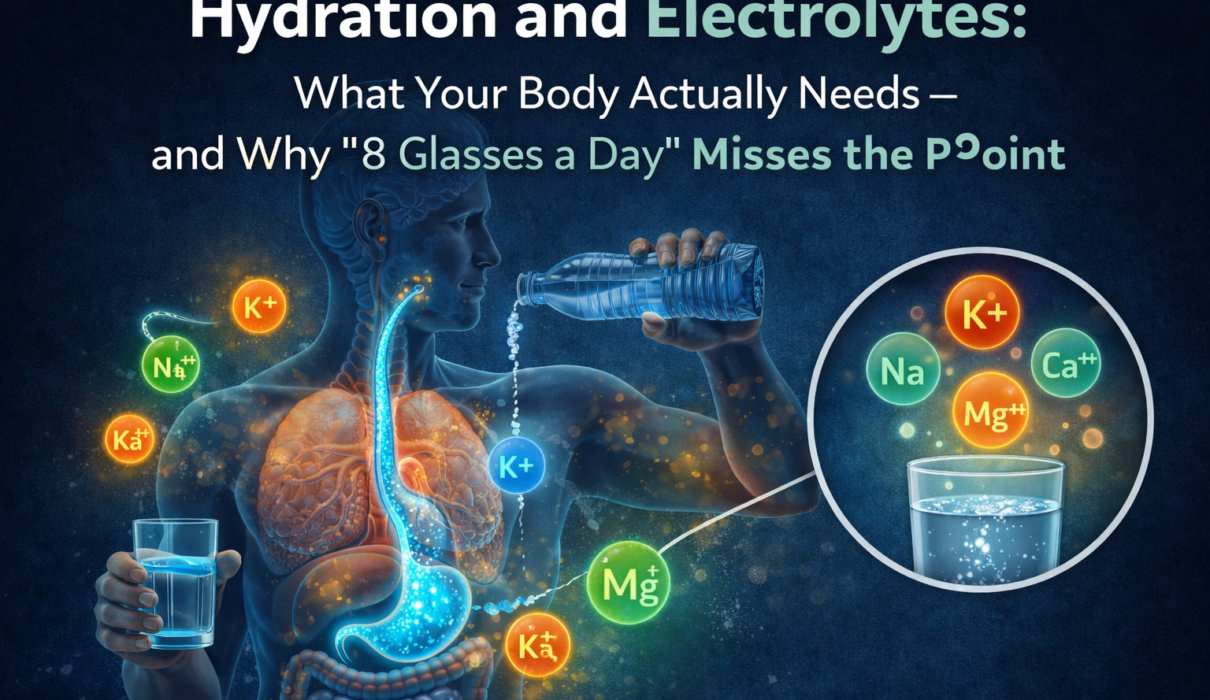
Electrolytes are minerals that carry an electrical charge when dissolved in water. The main ones in your body are:
- Sodium – the primary electrolyte in your blood and extracellular fluid; regulates fluid balance and blood pressure
- Potassium – concentrated inside your cells; critical for heart and muscle function
- Magnesium – involved in over 300 enzymatic reactions; affects nerve function, muscle contraction, and blood sugar
- Calcium – not just for bones; essential for muscle contractions, nerve signaling, and blood clotting
- Chloride – works alongside sodium to maintain fluid balance
- Phosphate – involved in energy production and bone structure
- Bicarbonate – helps maintain the acid-base balance of your blood
Drinking water without adequate electrolytes doesn’t automatically hydrate your cells. In fact, drinking excessive plain water can actually dilute your electrolytes – a condition called hyponatremia, which can be dangerous.
The key insight: Hydration is a balancing act between water and electrolytes. You can’t optimize one without the other.
Where Did “8 Glasses a Day” Come From?
The origin of this rule is surprisingly thin. One frequently cited source is a 1945 U.S. Food and Nutrition Board recommendation – but that same document noted that most of this water requirement would be met by food. That part got left out when the “8 glasses” rule spread through popular culture.
A 2002 review published in the American Journal of Physiology – Regulatory, Integrative and Comparative Physiology found no scientific evidence supporting the 8×8 rule (eight 8-ounce glasses per day). More recent guidance from the National Academies of Sciences, Engineering, and Medicine sets adequate intake at about 15.5 cups (3.7 liters) per day for men and 11.5 cups (2.7 liters) for women – but this includes water from all food and beverages, not just drinking water. About 20% of daily water intake typically comes from food.
Your actual water needs depend on:
- Body size and composition
- Physical activity level
- Climate and temperature
- Health status (fever, illness, pregnancy, breastfeeding)
- Medications (some diuretics, for instance)
- Diet (high fruit and vegetable intake provides significant water)
A sedentary person sitting in an air-conditioned office has very different needs than someone doing outdoor labor in July in Phoenix. No single number captures that.
How Your Body Regulates Fluid Balance
Your kidneys are the main regulators here, and they’re remarkably precise. Working alongside hormones – particularly antidiuretic hormone (ADH) from the brain and aldosterone from the adrenal glands – your kidneys adjust how much water and sodium you retain or excrete based on what your blood concentration looks like at any given moment.
When you’re dehydrated, your blood becomes more concentrated, ADH levels rise, and your kidneys hold on to more water. You feel thirsty. You drink. Balance is restored.
When you drink too much plain water, your blood becomes diluted. ADH drops. Your kidneys excrete more water. You urinate more frequently.
This system works well under normal conditions. The problems arise when:
- Losses are too rapid (intense exercise, vomiting, diarrhea)
- Electrolytes aren’t being replaced alongside fluids
- There’s an underlying condition affecting kidney function or hormone regulation
- Someone is deliberately drinking far more than their kidneys can process
Signs of Dehydration – and How to Recognize Them
Mild to moderate dehydration can cause symptoms that are easy to misattribute to other things:
- Dry mouth and increased thirst
- Darker urine (pale yellow is generally well-hydrated; dark amber or orange signals dehydration)
- Decreased urine frequency or output
- Fatigue and low energy, often in the afternoon
- Headache – particularly tension-type headaches
- Difficulty concentrating or brain fog
- Dry skin, chapped lips
- Dizziness when standing up (orthostatic hypotension)
- Constipation and slowed digestion
- Muscle cramps, particularly in the legs or during exercise
A practical check: Urine color is one of the most reliable everyday indicators of hydration status. Pale straw yellow = well hydrated. Dark yellow to amber = drink more. Clear and colorless doesn’t necessarily mean better – it may mean you’re overhydrating or your kidneys are just very efficient at the moment.
Severe dehydration – which typically involves loss of more than 10% body weight in fluid – is a medical emergency and includes symptoms like rapid heart rate, low blood pressure, confusion, extreme weakness, and little to no urine output.
The Electrolyte Imbalances You Should Know About
Hyponatremia (Low Sodium)
This is what happens when sodium in the blood drops too low – usually from drinking excessive water without sodium replacement. It’s more common than people realize, particularly among endurance athletes who drink large amounts of plain water during long events.
Symptoms include: nausea, headache, confusion, seizures in severe cases. Mild cases can look a lot like general fatigue or overexertion, which is why it’s sometimes missed.
The American College of Sports Medicine and other sports medicine organizations now emphasize drinking to thirst rather than pre-set fluid targets during endurance events – partly to prevent hyponatremia.
Hypokalemia (Low Potassium)
Low potassium is often caused by heavy sweating, vomiting, diarrhea, or overuse of diuretics. Symptoms include:
- Muscle weakness or cramps
- Fatigue
- Constipation
- Heart palpitations or irregular heartbeat in more severe cases
People on certain blood pressure medications (particularly thiazide diuretics) are at higher risk of potassium depletion and may need monitoring.
Hypomagnesemia (Low Magnesium)
Magnesium deficiency is surprisingly common in the US – estimates suggest a significant portion of adults don’t meet the recommended daily intake through diet. Symptoms are often subtle: muscle twitching or cramping, poor sleep, fatigue, anxiety, and headaches. Chronic low magnesium is also associated with increased risk of type 2 diabetes, hypertension, and migraines.
| Electrolyte | Normal Blood Range | Common Cause of Deficiency | Key Symptoms |
|---|---|---|---|
| Sodium | 136-145 mEq/L | Excess water intake, sweating | Nausea, headache, confusion |
| Potassium | 3.5-5.0 mEq/L | Diuretics, vomiting, diarrhea | Muscle weakness, palpitations |
| Magnesium | 1.7-2.2 mg/dL | Poor diet, alcohol use | Cramps, fatigue, poor sleep |
| Calcium | 8.5-10.2 mg/dL | Low vitamin D, poor intake | Muscle spasms, numbness |
| Chloride | 98-106 mEq/L | Vomiting, diuretics | Weakness, difficulty breathing |
Hydration During Exercise: What the Evidence Says
Exercise significantly increases fluid and electrolyte losses through sweat. Sweat contains water, sodium, chloride, potassium, and small amounts of other minerals. The exact composition varies widely by individual – some people are “salty sweaters” who lose significantly more sodium than average.
For exercise lasting less than an hour at moderate intensity, water is usually sufficient.
For longer or more intense sessions – particularly in heat – both fluids and electrolytes need to be replaced. Sports drinks, electrolyte tablets, or electrolyte-enhanced beverages serve this purpose better than plain water alone for prolonged activity.
For most gym-goers: Plain water is fine for standard 45-60 minute workouts. The elaborate electrolyte drinks marketed to casual exercisers are largely unnecessary unless you’re doing extended endurance work or sweating heavily.
The CDC and American College of Sports Medicine recommend drinking before you feel thirsty during prolonged activity – thirst is a slightly lagging indicator during intense exercise. But they also caution against drinking so aggressively that you override your thirst signals.
Who Is More at Risk for Hydration Problems?
Certain groups deserve more attention when it comes to fluid and electrolyte balance:
- Older adults – The sense of thirst diminishes with age. Older adults can become significantly dehydrated without feeling thirsty. Kidney function also declines with age, making electrolyte regulation less efficient.
- Infants and young children – A much higher proportion of their body weight is water, and they lose it faster relative to body size. Diarrheal illness is a leading cause of dehydration in young children globally.
- People with kidney disease – Kidneys that don’t function normally can’t regulate fluid and electrolyte balance effectively. These individuals often need careful monitoring and specific fluid intake targets.
- People with heart failure – Paradoxically, fluid restriction is sometimes necessary to prevent dangerous fluid accumulation, even when the person feels thirsty.
- Athletes doing endurance sports – As discussed, the combination of high sweat losses and high plain water intake creates real risk of hyponatremia.
- People taking diuretic medications – These increase fluid and electrolyte excretion and may require supplementation or dietary adjustments.
Food as a Source of Hydration and Electrolytes
This part gets left out of most hydration conversations: a significant portion of your daily fluid and electrolyte intake can and should come from food.
High water content foods (over 90% water by weight) include cucumbers, celery, lettuce, tomatoes, watermelon, strawberries, cantaloupe, and oranges. A diet rich in fruits and vegetables meaningfully contributes to daily hydration.
Good food sources of key electrolytes:
- Sodium – Most people in the US get more than enough from food (the bigger concern is overconsumption, not deficiency, for most people)
- Potassium – Bananas, potatoes (especially with skin), spinach, avocado, beans, yogurt, salmon
- Magnesium – Pumpkin seeds, almonds, dark chocolate, black beans, leafy greens, whole grains
- Calcium – Dairy products, fortified plant milks, sardines, kale, broccoli
- Chloride – Salt (sodium chloride), seaweed, tomatoes, lettuce
What About Coconut Water, Sports Drinks, and Electrolyte Packets?
Coconut water is marketed heavily as a natural electrolyte drink. It does contain potassium and some magnesium, but its sodium content is lower than most sports drinks – which matters more for heavy sweating. It’s a fine choice but not uniquely superior to a balanced diet with adequate hydration.
Sports drinks like Gatorade or Powerade are designed for sustained athletic performance and contain sodium, potassium, and carbohydrates for fuel. For long endurance events, they serve a real purpose. For casual exercisers or office workers, the added sugars aren’t necessary.
Electrolyte packets (brands like LMNT, Liquid IV, Nuun, etc.) vary widely in composition. Some are high in sodium, which is useful for endurance athletes but unnecessary for most people. Read the label – sugar content, sodium levels, and whether they contain clinically meaningful amounts of minerals varies a lot.
Coffee and tea do count toward daily fluid intake. The mild diuretic effect of caffeine is largely offset by the fluid they contain, according to research published in multiple sports nutrition reviews. They’re not the hydration enemy they’re often made out to be.
Frequently Asked Questions
Can you drink too much water? Yes. Drinking water faster than your kidneys can process it (roughly 0.8-1 liter per hour) dilutes sodium in your blood, leading to hyponatremia. This is rare in everyday life but a real risk during endurance events when people drink aggressively without electrolyte replacement.
Does thirst accurately tell you when to drink? For most healthy adults in everyday situations, yes – thirst is a reliable signal. It lags slightly during intense exercise, which is why athletes are advised to stay ahead of it during prolonged activity. Older adults should be more proactive about drinking since thirst sensation declines with age.
Are electrolyte drinks worth it for everyday use? For most people eating a reasonably balanced diet and doing moderate activity, no. Electrolyte supplements are most useful during prolonged heavy exercise, recovery from illness involving vomiting or diarrhea, hot weather, or when a healthcare provider recommends them.
What’s the best way to monitor hydration status at home? Urine color is a practical and fairly reliable indicator – aim for pale straw yellow. Clear urine may indicate overhydration; dark amber or orange suggests you need more fluids. Urine frequency and whether you feel generally well are also useful markers.
Do caffeinated beverages dehydrate you? Not meaningfully. While caffeine has a mild diuretic effect, the water content of coffee and tea more than compensates. Regular caffeine consumers also build tolerance to the diuretic effect over time. Current evidence supports counting caffeinated drinks toward daily fluid intake.
Disclaimer
This article is intended for general informational purposes only and does not constitute medical advice. The information provided should not be used as a substitute for professional medical guidance, diagnosis, or treatment. Always consult a qualified healthcare provider regarding any questions about your health, medical conditions, or treatment options. Do not disregard or delay seeking medical advice based on content found here.
References
- Valtin H. “Drink at least eight glasses of water a day.” Really? Is there scientific evidence for “8 x 8”? American Journal of Physiology – Regulatory, Integrative and Comparative Physiology. 2002;283(5):R993-R1004. https://doi.org/10.1152/ajpregu.00365.2002
- National Academies of Sciences, Engineering, and Medicine. Dietary Reference Intakes for Water, Potassium, Sodium, Chloride, and Sulfate. Washington, DC: The National Academies Press; 2005. https://www.ncbi.nlm.nih.gov/books/NBK545063/
- Sawka MN, Burke LM, Eichner ER, et al. American College of Sports Medicine position stand. Exercise and fluid replacement. Medicine & Science in Sports & Exercise. 2007;39(2):377-390. https://doi.org/10.1249/mss.0b013e31802ca597
- Sterns RH. Disorders of plasma sodium – causes, consequences, and correction. New England Journal of Medicine. 2015;372(1):55-65. https://doi.org/10.1056/NEJMra1404489
- Rosner MH, Kirven J. Exercise-associated hyponatremia. Clinical Journal of the American Society of Nephrology. 2007;2(1):151-161. https://doi.org/10.2215/CJN.02730806
- Riebl SK, Davy BM. The hydration equation: Update on water balance and cognitive performance. ACSM’s Health & Fitness Journal. 2013;17(6):21-28. https://doi.org/10.1249/FIT.0b013e3182a9570f
- DiNicolantonio JJ, O’Keefe JH, Wilson W. Subclinical magnesium deficiency: a principal driver of cardiovascular disease and a public health crisis. Open Heart. 2018;5(1):e000668. https://doi.org/10.1136/openhrt-2017-000668
- Centers for Disease Control and Prevention. Water and Healthier Drinks. https://www.cdc.gov/healthyweight/healthy_eating/water-and-healthier-drinks.html
- Armstrong LE, Muñoz CX, Armstrong EM. Distinguishing low and high water consumers – a paradigm of disease risk. Nutrients. 2020;12(3):858. https://doi.org/10.3390/nu12030858
- Maughan RJ, Watson P, Cordery PA, et al. A randomized trial to assess the potential of different beverages to affect hydration status: development of a beverage hydration index. American Journal of Clinical Nutrition. 2016;103(3):717-723. https://doi.org/10.3945/ajcn.115.114769
Share
Project content
Created by you