 By
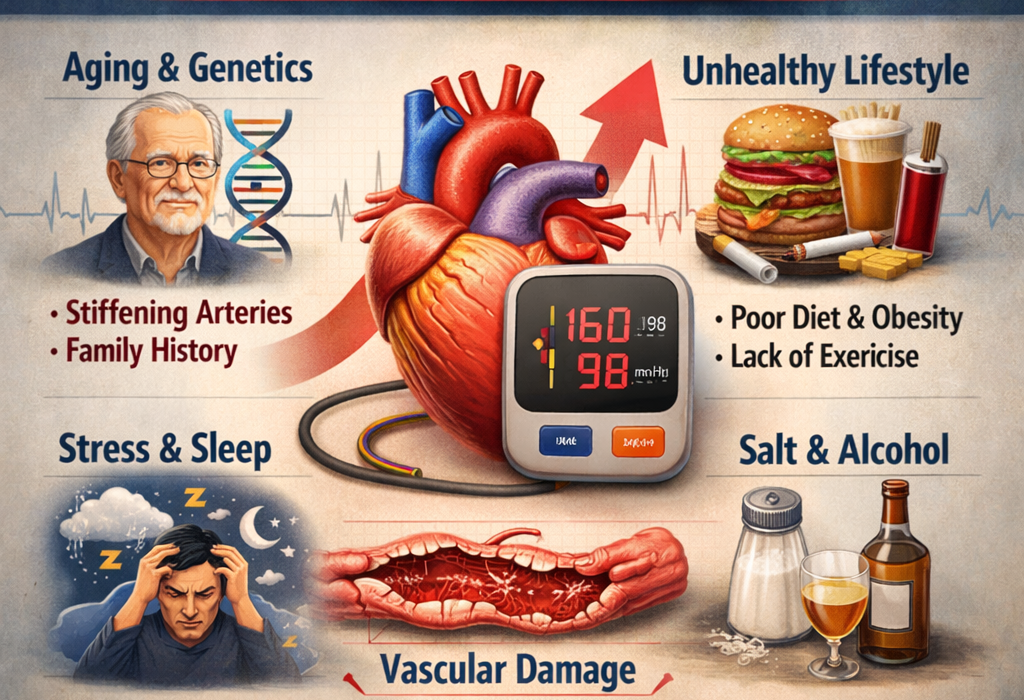
By Most people with hypertension didn’t do one dramatic thing wrong. Blood pressure rises through a slow accumulation of risk – genetics layered over age, layered over lifestyle, layered over conditions that compound each other over years. Understanding this isn’t about assigning blame. It’s about knowing which factors you can change, which you can’t, and how much each one actually contributes.
This article covers every major risk factor for hypertension with the mechanism behind it, the evidence that supports it, and honest context about what modifying it actually achieves.
Non-Modifiable Risk Factors
These are the factors you’re born with or that develop with time. You can’t change them – but knowing they apply to you tells you how vigilant to be about the ones you can change.
Age
Blood pressure rises with age in virtually every population studied. In the United States, nearly 70% of adults over 65 have hypertension, compared to about 22% of adults aged 18-39. This isn’t inevitable in the strictest biological sense – populations with very different lifestyles show less age-related blood pressure rise – but within the context of modern Western life, it’s essentially universal.
The mechanism is arterial stiffening. As elastic fibers in the arterial wall degrade over time and are replaced by stiffer collagen, arteries lose their ability to cushion the pressure wave from each heartbeat. The aorta and large arteries become less compliant, causing systolic pressure to rise while diastolic pressure often plateaus or even falls in later life – producing isolated systolic hypertension, the most common pattern in adults over 60.
Sex and Hormonal Status
Before age 55, hypertension is more common in men. After menopause, the prevalence in women catches up and eventually exceeds men’s. Estrogen has protective effects on vascular function – it supports endothelial nitric oxide production, which keeps blood vessels dilated and flexible. Loss of estrogen at menopause accelerates the arterial stiffening and vascular aging that raises blood pressure.
This is why blood pressure screening becomes particularly important for women in their late 40s and 50s, when the hormonal protection that kept blood pressure lower is reduced.
Genetics and Family History
Having one parent with hypertension approximately doubles the risk of developing it. Having both parents with hypertension raises the risk substantially further. Twin studies estimate that genetic factors account for roughly 30-60% of blood pressure variability in the population.
The genetic mechanisms are complex and involve hundreds of variants with small individual effects. Key pathways include: how the kidneys handle sodium (some people are genetically “salt-sensitive”), how the RAAS (renin-angiotensin-aldosterone system) is regulated, how blood vessels respond to sympathetic nervous system signals, and how efficiently various antihypertensive pathways work. There is no single “hypertension gene” – it’s a polygenic trait shaped by many variants acting together.
Race and Ethnicity
Black Americans have significantly higher rates of hypertension than white, Hispanic, or Asian Americans – hypertension affects approximately 57% of Black adults compared to about 44% of white adults. More importantly, hypertension in Black Americans tends to develop earlier, reach higher levels, and cause more severe end-organ damage including kidney failure and stroke at higher rates.
The reasons are multifactorial – higher rates of salt sensitivity, differences in RAAS activity, higher rates of obesity and diabetes, and the well-documented cardiovascular effects of chronic stress from structural racism and socioeconomic disadvantage. From a clinical standpoint, thiazide diuretics and calcium channel blockers tend to be particularly effective in Black Americans, who often respond less robustly to ACE inhibitors and ARBs as monotherapy.
Modifiable Risk Factors
These are the factors where intervention can genuinely change outcomes.
Sodium Intake
The average American consumes approximately 3,400 mg of sodium daily – well above the AHA’s recommended maximum of 2,300 mg and far above the 1,500 mg target for people with hypertension.
The relationship between sodium and blood pressure isn’t universal – individuals vary in “salt sensitivity,” meaning how much their blood pressure responds to dietary sodium. Salt sensitivity is more common in older adults, Black Americans, people with diabetes, and those with existing kidney disease. But at a population level, reducing sodium consistently lowers blood pressure.
A landmark meta-analysis published in the British Medical Journal found that reducing sodium by 1,200 mg per day lowered systolic blood pressure by approximately 5 mmHg in people with hypertension. The DASH-Sodium trial showed that combining the DASH dietary pattern with sodium restriction to 1,500 mg/day produced blood pressure reductions comparable to starting a single antihypertensive medication.
The challenge is that about 70% of dietary sodium in the US comes from processed and restaurant foods, not from the salt shaker. Meaningful sodium reduction requires dietary change beyond just avoiding added salt.
Excess Body Weight
Obesity – particularly visceral (abdominal) adiposity – raises blood pressure through multiple interconnected mechanisms: increased blood volume, increased cardiac output, activation of the sympathetic nervous system, insulin resistance and hyperinsulinemia (which promotes sodium retention), RAAS activation from adipose-derived angiotensinogen, and chronic low-grade inflammation affecting vascular function.
The relationship is dose-dependent: for every 10 kg of weight gain, systolic blood pressure rises by approximately 3 mmHg. Conversely, weight loss of 5-10% of body weight produces meaningful blood pressure reductions – roughly 1 mmHg per kilogram of weight lost, with effects more pronounced in those with greater weight loss and higher starting blood pressure.
Importantly, hypertension is not solely a disease of people with obesity – about 30% of hypertension cases occur in people with normal BMI – but weight is one of the most impactful modifiable contributors for those it affects.
Physical Inactivity
Regular aerobic exercise lowers resting blood pressure through multiple mechanisms: improved endothelial function and arterial compliance, reduced sympathetic nervous system tone, beneficial effects on weight and insulin sensitivity, and direct effects on vascular smooth muscle.
The blood pressure effect of regular aerobic exercise is well documented. Meta-analyses of randomized trials show that moderate-intensity aerobic exercise (150 minutes per week, the standard CDC recommendation) lowers resting systolic blood pressure by approximately 5-8 mmHg – comparable to the effect of a single antihypertensive drug.
Resistance training also lowers blood pressure, though the effect is somewhat smaller than aerobic exercise. For people with Stage 1 hypertension and no other major risk factors, structured exercise is a legitimate first-line intervention before or alongside medication consideration.
Dietary Patterns
Beyond sodium, overall dietary patterns significantly influence blood pressure. The DASH diet (Dietary Approaches to Stop Hypertension) – which emphasizes fruits, vegetables, whole grains, lean protein, and low-fat dairy, while limiting saturated fat, red meat, and sweets – reduces systolic blood pressure by 8-14 mmHg in people with hypertension. This effect operates through multiple pathways including increased potassium intake (which promotes urinary sodium excretion and directly relaxes vascular smooth muscle), increased magnesium and calcium, reduced saturated fat, and higher fiber.
High potassium intake is particularly important. Dietary potassium from food (bananas, potatoes, avocado, beans, leafy greens) has a meaningful blood pressure-lowering effect that’s separate from sodium restriction.
Alcohol Consumption
The relationship between alcohol and blood pressure is dose-dependent. Moderate alcohol consumption (up to 1 drink per day for women, 2 for men) has a relatively small effect on blood pressure. Heavy drinking – more than 3 drinks per day or binge drinking patterns – raises blood pressure significantly through sympathetic nervous system activation, increased cortisol, and direct vascular effects.
A 2021 meta-analysis in Hypertension found that reducing from moderate-heavy to lighter drinking lowered systolic blood pressure by about 3-4 mmHg. For heavy drinkers, reducing alcohol intake is one of the most impactful lifestyle changes available.
Tobacco Use
Smoking causes acute blood pressure spikes with each cigarette through nicotine-driven sympathetic activation. Chronic tobacco exposure accelerates arterial stiffening and atherosclerosis, and smokers tend to have higher average blood pressure over time. People with hypertension who smoke have multiplicatively higher cardiovascular risk than either condition alone.
Smoking cessation is associated with blood pressure improvement over time and dramatically reduces the cardiovascular risk that comes on top of hypertension.
Chronic Stress
Chronic psychological stress activates the hypothalamic-pituitary-adrenal axis and sympathetic nervous system, elevating cortisol and catecholamines (epinephrine, norepinephrine) that raise blood pressure through increased cardiac output and vasoconstriction. In animal models and human studies, sustained stress exposure consistently elevates blood pressure.
The complication is that stress itself is hard to measure, and studies on stress reduction for blood pressure management show more variable results than diet or exercise interventions. But the physiological pathway is real, and conditions like chronic work stress, poor social support, and post-traumatic stress disorder are all associated with higher hypertension prevalence.
Sleep and Sleep Disorders
Blood pressure normally dips during sleep – a healthy “dipping” pattern of 10-20% reduction from daytime levels. This nocturnal dip matters: research shows that non-dipping patterns (where BP stays elevated during sleep) are associated with greater end-organ damage than daytime readings alone suggest.
Obstructive sleep apnea (OSA) – where repeated episodes of airway obstruction during sleep cause intermittent hypoxia – is a major and underdiagnosed secondary cause of hypertension. OSA affects an estimated 30 million Americans, many undiagnosed, and is present in a substantial proportion of people with resistant hypertension (blood pressure that remains high despite three or more medications). Treating OSA with CPAP therapy reduces blood pressure, particularly nocturnal blood pressure.
Short sleep duration (less than 6 hours per night) is also independently associated with higher blood pressure and greater hypertension risk in epidemiological studies.
Secondary Causes: When Hypertension Is a Symptom, Not the Disease
In 5-10% of hypertension cases, an identifiable underlying condition is driving the elevated blood pressure. These are called secondary hypertension causes, and they’re particularly worth considering in:
- People who develop hypertension before age 30
- People whose hypertension is difficult to control despite multiple medications
- People with sudden onset or dramatic worsening of previously stable blood pressure
- People with specific clinical features pointing to an underlying cause
Common secondary causes include:
- Primary hyperaldosteronism: The adrenal glands produce excess aldosterone, causing sodium retention and potassium loss. It’s more common than previously recognized and accounts for approximately 5-10% of hypertension cases, making it one of the most underdiagnosed secondary causes.
- Obstructive sleep apnea: As above – present in a high proportion of resistant hypertension cases.
- Renal artery stenosis (renovascular hypertension): Narrowing of the artery supplying one or both kidneys, most often from atherosclerosis in older adults or fibromuscular dysplasia in younger women, causes the affected kidney to over-activate the RAAS.
- Chronic kidney disease: As covered in the dedicated article on this site, the kidneys play a central role in blood pressure regulation, and any disease that impairs kidney function can raise blood pressure.
- Thyroid disease: Both hypothyroidism (particularly diastolic hypertension) and hyperthyroidism (primarily systolic) can raise blood pressure.
- Medications: NSAIDs, oral contraceptives, decongestants containing pseudoephedrine, stimulant medications (amphetamines, modafinil), some antidepressants, corticosteroids, and calcineurin inhibitors (tacrolimus, cyclosporine) all raise blood pressure through various mechanisms.
How Risk Factors Multiply
One of the most clinically important insights from cardiovascular risk research is that risk factors don’t just add – they multiply. A person with hypertension who also smokes, has diabetes, and has elevated LDL cholesterol has a cardiovascular risk that is far greater than the sum of those individual factors.
This is why blood pressure management in clinical practice uses cardiovascular risk calculators (like the ACC/AHA Pooled Cohort Equations) that incorporate multiple risk factors simultaneously to determine treatment thresholds, not just blood pressure alone.
Frequently Asked Questions
If hypertension runs in my family, is it inevitable? No. Genetics increases susceptibility but doesn’t determine destiny. People with strong family histories who maintain healthy weight, exercise regularly, eat a low-sodium diet, avoid heavy alcohol use, and don’t smoke substantially reduce their lifetime risk compared to those with the same genetics who don’t. The genetic risk is real but modifiable by behavior.
How much does reducing sodium actually lower blood pressure? For most adults, reducing sodium from the average American intake (~3,400 mg/day) to 2,300 mg/day lowers systolic blood pressure by 2-4 mmHg. Going further to 1,500 mg/day can produce reductions of 4-7 mmHg in salt-sensitive individuals. The effect is larger in people with existing hypertension, older adults, Black Americans, and those with kidney disease. This is meaningful – comparable to starting a low-dose antihypertensive in some cases – but for most people it’s one component of a broader approach, not a standalone fix.
Does stress cause hypertension? Acute stress consistently and reliably raises blood pressure temporarily. Whether chronic stress causes sustained hypertension is more complex – the evidence suggests it’s a contributing factor rather than a direct cause for most people, working through mechanisms like sleep disruption, unhealthy coping behaviors (alcohol, overeating), and direct sympathetic activation. Stress reduction alone rarely normalizes established hypertension, but it may help prevent progression in those at risk.
Can young people have hypertension from lifestyle alone? Yes. Hypertension is increasingly diagnosed in younger adults, often driven by obesity, sedentary lifestyle, high sodium intake, and alcohol use in the context of genetic susceptibility. The 2017 ACC/AHA guidelines, which lowered the diagnostic threshold to 130/80 mmHg, significantly increased the number of younger adults classified as having elevated blood pressure. Early-onset hypertension carries greater lifetime cardiovascular risk due to longer exposure.
Does caffeine raise blood pressure? Caffeine causes an acute rise in blood pressure of about 5-10 mmHg, particularly in people who aren’t regular caffeine consumers. Regular coffee drinkers develop tolerance to this effect. Long-term moderate coffee consumption (2-4 cups per day) is not associated with sustained hypertension in most studies. If you’re measuring blood pressure, avoid caffeine for at least 30 minutes beforehand.
Disclaimer
This article is for educational purposes only and does not constitute medical advice. Hypertension risk assessment and management should be individualized with a qualified healthcare provider. Do not start, stop, or adjust medications or make major dietary changes based solely on this content without medical guidance.
References
- Whelton PK, et al. 2017 ACC/AHA high blood pressure guideline. Journal of the American College of Cardiology. 2018;71(19):e127-e248. https://doi.org/10.1016/j.jacc.2017.11.006
- He FJ, MacGregor GA. Effect of longer-term modest salt reduction on blood pressure. Cochrane Database of Systematic Reviews. 2004;3:CD004937. https://doi.org/10.1002/14651858.CD004937
- Pescatello LS, et al. American College of Sports Medicine position stand. Exercise and hypertension. Medicine & Science in Sports & Exercise. 2004;36(3):533-553. https://doi.org/10.1249/01.MSS.0000115224.88514.3A
- Appel LJ, et al. A clinical trial of the effects of dietary patterns on blood pressure. DASH Collaborative Research Group. New England Journal of Medicine. 1997;336(16):1117-1124. https://doi.org/10.1056/NEJM199704173361601
- Roerecke M, et al. The effect of a reduction in alcohol consumption on blood pressure. The Lancet Public Health. 2017;2(2):e108-e120. https://doi.org/10.1016/S2468-2667(17)30003-8
- Carey RM, et al. Resistant hypertension: detection, evaluation, and management. Hypertension. 2018;72(5):e53-e90. https://doi.org/10.1161/HYP.0000000000000084
- Centers for Disease Control and Prevention (CDC). High blood pressure risk factors. https://www.cdc.gov/bloodpressure/risk_factors.htm
- National Heart, Lung, and Blood Institute (NHLBI). What causes high blood pressure? https://www.nhlbi.nih.gov/health/high-blood-pressure/causes
- Flint AC, et al. Effect of systolic and diastolic blood pressure on cardiovascular outcomes. New England Journal of Medicine. 2019;381(3):243-251. https://doi.org/10.1056/NEJMoa1803180
- American Heart Association. Understanding blood pressure readings. https://www.heart.org/en/health-topics/high-blood-pressure/understanding-blood-pressure-readings