

 By
By You’ve just gotten your cholesterol results back. There are four or five numbers on the report, one or two are flagged, and your doctor either rushed through the explanation or told you to “watch your diet” without much detail. You’re left trying to figure out what these numbers actually mean – not just whether they’re high or low, but what they’re measuring, how they relate to each other, and what really matters for your heart.
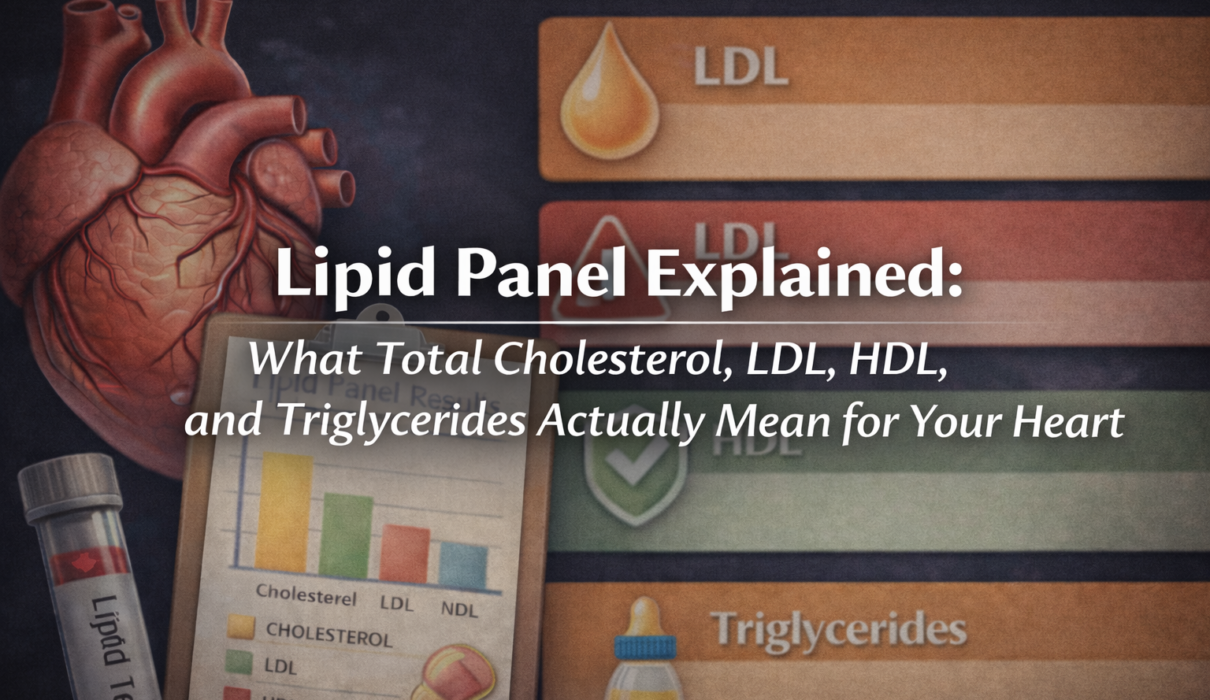
This article covers the full lipid panel – every component, what it measures, what the numbers look like, and how to read the pattern rather than fixating on a single value.
What a Lipid Panel Is – and What It’s Actually Measuring
A lipid panel (also called a lipid profile or cholesterol test) measures the different types of fats circulating in your bloodstream. But calling it a “fat test” undersells what’s actually being assessed. The panel reflects how your body packages and transports cholesterol through the bloodstream – and it’s that packaging and transport system, not cholesterol itself, that drives cardiovascular risk.
Cholesterol is not inherently harmful. It’s essential. Your body uses it to build cell membranes, produce steroid hormones (including testosterone, estrogen, and cortisol), synthesize vitamin D, and make bile acids for fat digestion. The liver produces most of the cholesterol in your body – about 75-80% – and dietary intake accounts for the rest.
The problem isn’t cholesterol existing. The problem is when too much of it accumulates in artery walls, triggering an inflammatory process that leads to plaque formation, narrowing, and eventually heart attack or stroke. And whether that happens depends heavily on how cholesterol is being carried in the blood – which is exactly what the lipid panel reveals.
The Components: What Each Number Measures
Total Cholesterol
Total cholesterol is the sum of all cholesterol in your blood – LDL, HDL, VLDL, and other minor fractions combined. It gives a broad overview but on its own is a poor predictor of cardiovascular risk. Someone can have a total cholesterol of 220 mg/dL with excellent HDL and low LDL, and be at lower risk than someone with a total cholesterol of 190 mg/dL but very low HDL and high LDL. The breakdown matters more than the total.
General thresholds (AHA/ACC):
| Total Cholesterol | Category |
|---|---|
| Less than 200 mg/dL | Desirable |
| 200 – 239 mg/dL | Borderline high |
| 240 mg/dL and above | High |
LDL Cholesterol – Low-Density Lipoprotein
LDL is the particle that carries cholesterol from the liver to the rest of the body. When LDL levels are high, excess LDL particles penetrate artery walls and become oxidized, triggering immune activity and plaque formation – the foundational process of atherosclerosis.
LDL is the primary target of cardiovascular risk management for a straightforward reason: the evidence that lowering LDL reduces heart attacks and strokes is among the most replicated findings in medicine. Statin trials, genetic studies of people with naturally low LDL, and Mendelian randomization studies all point in the same direction. Lower LDL over time means less plaque accumulation.
LDL targets vary by risk level:
| LDL Level | Category |
|---|---|
| Less than 100 mg/dL | Optimal |
| 100 – 129 mg/dL | Near optimal |
| 130 – 159 mg/dL | Borderline high |
| 160 – 189 mg/dL | High |
| 190 mg/dL and above | Very high |
For people with established cardiovascular disease, diabetes, or very high 10-year risk, the 2019 ACC/AHA guidelines target LDL below 70 mg/dL. For those with very high-risk ASCVD, below 55 mg/dL is now recommended.
LDL is the single most important modifiable lipid marker for long-term cardiovascular risk. But what that number means for you personally depends entirely on your full risk profile – your age, blood pressure, smoking status, diabetes, family history, and other factors.
HDL Cholesterol – High-Density Lipoprotein
HDL is often called “good cholesterol,” which is an oversimplification but directionally correct. HDL particles help transport excess cholesterol back from the peripheral tissues and artery walls to the liver for processing and excretion – a process called reverse cholesterol transport. Higher HDL is associated with lower cardiovascular risk in observational studies.
The “good” label has important caveats though. Attempts to pharmacologically raise HDL – particularly with drugs like niacin and CETP inhibitors – have repeatedly failed to reduce cardiovascular events even when HDL rises substantially. This suggests HDL may be a marker of a healthier metabolic state rather than a cause of protection in itself. Lifestyle factors that raise HDL (exercise, weight loss, smoking cessation) do reduce cardiovascular risk, but that may be through multiple pathways, not HDL elevation specifically.
HDL thresholds:
| HDL Level | Interpretation |
|---|---|
| Less than 40 mg/dL (men) | Low – associated with higher risk |
| Less than 50 mg/dL (women) | Low – associated with higher risk |
| 60 mg/dL and above | High – associated with lower risk |
Triglycerides
Triglycerides are the primary storage form of fat in the body. After a meal, calories not immediately needed for energy are packaged into triglycerides and stored in fat cells. Between meals, triglycerides are released and used for fuel.
Elevated triglycerides in the bloodstream are associated with cardiovascular risk, though the relationship is more complex than with LDL. High triglycerides often accompany low HDL and high small-dense LDL – a cluster called atherogenic dyslipidemia that’s strongly associated with insulin resistance, metabolic syndrome, and type 2 diabetes. In many people, triglycerides are more a marker of overall metabolic health than an independent driver of risk.
Very high triglycerides (above 500 mg/dL) carry their own specific risk: acute pancreatitis, a potentially life-threatening inflammation of the pancreas.
Triglyceride thresholds (AHA/ACC):
| Triglyceride Level | Category |
|---|---|
| Less than 150 mg/dL | Normal |
| 150 – 199 mg/dL | Borderline high |
| 200 – 499 mg/dL | High |
| 500 mg/dL and above | Very high |
Triglycerides are highly sensitive to recent food intake, which is why fasting for 9-12 hours before a lipid panel is traditionally recommended. A non-fasting triglyceride above 175 mg/dL is now considered elevated by some guidelines, though fasting values remain the standard for most clinical decisions.
Non-HDL Cholesterol
Non-HDL cholesterol is total cholesterol minus HDL. It captures all the cholesterol carried in atherogenic (plaque-forming) particles – LDL, VLDL, IDL, and lipoprotein(a) – in a single number. Many lipid specialists consider non-HDL a better risk predictor than LDL alone because it accounts for all the particles contributing to atherosclerosis.
Non-HDL target: Generally below 130 mg/dL for most adults; below 100 mg/dL for high-risk individuals.
If non-HDL is on your report, pay attention to it. If it isn’t, you can calculate it yourself: Total Cholesterol minus HDL.
VLDL and the Total Cholesterol/HDL Ratio
VLDL (very-low-density lipoprotein) carries triglycerides from the liver to tissues. It’s not directly measured but calculated from triglycerides (VLDL ≈ triglycerides divided by 5). It’s a minor component of most routine reports.
The total cholesterol/HDL ratio is sometimes included as a summary risk measure. A ratio below 4.0 is generally considered favorable; above 5.0 begins to indicate higher risk. Like total cholesterol alone, it’s useful context but not a substitute for looking at each component.
How to Read the Pattern – Not Just Individual Numbers
This is the most important thing most cholesterol explainers don’t tell you: no single number on a lipid panel defines your risk. The pattern across all values, interpreted in the context of your full cardiovascular risk profile, is what matters.
Some patterns to understand:
High LDL, normal HDL, normal triglycerides: May reflect familial hypercholesterolemia or dietary factors. Cardiovascular risk depends heavily on how high LDL is and other risk factors.
Low HDL, high triglycerides, borderline LDL: Classic atherogenic dyslipidemia – strongly associated with insulin resistance and metabolic syndrome. Often more responsive to lifestyle change (weight loss, reduced refined carbohydrates and alcohol, exercise) than to statins alone.
High total cholesterol, high HDL, normal LDL, normal triglycerides: May actually indicate low risk. Some people have naturally elevated total cholesterol driven by very high HDL – this doesn’t carry the same risk as high total cholesterol driven by high LDL.
Normal LDL, high triglycerides: Suggests metabolic issues driving excess triglyceride production – diet, alcohol, diabetes, hypothyroidism, or certain medications are common drivers.
A normal total cholesterol does not guarantee low cardiovascular risk. A single elevated number doesn’t define your future health. The pattern, the trend over time, and the full clinical context all matter.
What Drives Lipid Levels – and What You Can Change
Lipid levels are shaped by both genetics and lifestyle, in proportions that vary considerably between individuals.
Dietary factors with the strongest evidence:
Saturated fat intake raises LDL – this relationship is well established. Replacing saturated fat with unsaturated fat (particularly polyunsaturated fat from sources like nuts, seeds, and fatty fish) lowers LDL and reduces cardiovascular events. The relationship between dietary cholesterol and blood cholesterol is more modest for most people, because the liver compensates by adjusting its own cholesterol production.
Trans fats (industrially produced partially hydrogenated oils) both raise LDL and lower HDL – a particularly damaging combination. They’ve been largely eliminated from the US food supply since the FDA’s 2018 ban, but some processed foods still contain small amounts.
Refined carbohydrates and added sugars raise triglycerides and lower HDL. Omega-3 fatty acids from fatty fish (salmon, mackerel, sardines) or supplements significantly reduce triglycerides.
Lifestyle factors:
Regular aerobic exercise raises HDL and lowers triglycerides. Even 30 minutes of moderate activity most days produces measurable lipid benefits over time. Smoking lowers HDL. Excess alcohol raises triglycerides. Obesity – particularly abdominal obesity – drives the atherogenic dyslipidemia pattern.
Conditions that affect lipid levels:
Hypothyroidism raises LDL significantly – a thyroid test is often part of the workup for unexpectedly high LDL. Type 2 diabetes and insulin resistance raise triglycerides and lower HDL. Kidney disease affects multiple lipid fractions. Certain medications – corticosteroids, some antipsychotics, beta-blockers, retinoids – can substantially alter the lipid panel.
Fasting vs Non-Fasting: Does It Matter?
Traditionally, lipid panels required a 9-12 hour fast because triglycerides are significantly affected by recent food intake. Non-fasting triglycerides can be 20-30% higher than fasting levels in some people.
The 2018 AHA/ACC cholesterol guidelines now acknowledge that non-fasting lipid panels are acceptable for initial cardiovascular risk screening, because LDL, HDL, and total cholesterol are minimally affected by food intake. However, if triglycerides are elevated on a non-fasting sample, a fasting repeat is usually recommended to confirm.
For most clinical decisions – particularly statin prescribing – fasting panels remain the standard. If your doctor specified fasting, follow those instructions. If nothing was specified, ask.
When Medication Is Considered
Not everyone with elevated LDL needs a statin. The 2019 ACC/AHA guidelines recommend evaluating 10-year ASCVD risk using the Pooled Cohort Equations before initiating statin therapy in most adults aged 40-75 without established cardiovascular disease. This calculator incorporates age, sex, race, blood pressure, cholesterol values, diabetes status, and smoking history.
Statins are generally recommended for:
- LDL 190 mg/dL or above (regardless of other risk factors)
- Established ASCVD (prior heart attack, stroke, or peripheral arterial disease)
- Diabetes aged 40-75 with LDL 70 mg/dL or above
- 10-year ASCVD risk of 7.5% or higher where statin benefit outweighs risk
Lifestyle changes remain the first approach for most people with borderline or moderately elevated lipids, and they’re recommended alongside statins for those who do start medication.
Frequently Asked Questions
My LDL is 145 mg/dL. Do I need a statin? Not necessarily based on that number alone. Whether medication is appropriate depends on your full cardiovascular risk profile – age, blood pressure, smoking status, diabetes, family history, and your calculated 10-year risk. An LDL of 145 in a 35-year-old non-smoker with no other risk factors is very different from the same number in a 60-year-old with hypertension and diabetes. This is a conversation to have with your doctor using your full risk calculation, not just the LDL figure.
Is high cholesterol always about diet? No. Genetics plays a major role in lipid levels. Familial hypercholesterolemia (FH) – a genetic condition causing very high LDL – affects roughly 1 in 250 Americans and often requires medication regardless of diet. For most people, diet has a meaningful but limited effect on LDL: dietary changes can typically move LDL by 10-20%. If your LDL is very high and your diet is already reasonable, genetic factors may be driving it.
Can my cholesterol be too low? Very low LDL from lifestyle or genetics is not generally associated with health problems. Some medications achieve extremely low LDL levels (below 40 mg/dL) safely. However, very low total cholesterol from severe malnutrition, liver disease, or malabsorption is a different situation and can reflect serious underlying illness.
Why do my triglycerides vary so much between tests? Triglycerides are the most variable component of the lipid panel. They fluctuate significantly with food intake, alcohol consumption, physical activity, and time of day. A single high result on a non-fasting sample is not necessarily meaningful. If elevated triglycerides persist on fasting panels, that’s when further evaluation and action are warranted.
Does high HDL mean I don’t need to worry about my LDL? High HDL is protective but doesn’t fully offset the risk from high LDL. The two operate somewhat independently. Someone with an LDL of 180 mg/dL and an HDL of 75 mg/dL still has elevated LDL-driven risk. HDL is most useful when it’s low – that’s a meaningful risk flag. When it’s high, it’s a favorable sign but not a free pass.
Disclaimer
This article is for educational purposes only and does not constitute medical advice. Lipid panel results must be interpreted by a qualified healthcare provider in the context of your full cardiovascular risk profile, medical history, and clinical circumstances. Do not start, stop, or adjust any medication based on this content without consulting your doctor.
References
- Grundy SM, Stone NJ, Bailey AL, et al. 2018 AHA/ACC/AACVPR/AAPA/ABC/ACPM/ADA/AGS/APhA/ASPC/NLA/PCNA guideline on the management of blood cholesterol. Journal of the American College of Cardiology. 2019;73(24):e285-e350. https://doi.org/10.1016/j.jacc.2018.11.003
- Arnett DK, Blumenthal RS, Albert MA, et al. 2019 ACC/AHA guideline on the primary prevention of cardiovascular disease. Journal of the American College of Cardiology. 2019;74(10):e177-e232. https://doi.org/10.1016/j.jacc.2019.03.010
- American Heart Association. What your cholesterol levels mean. https://www.heart.org/en/health-topics/cholesterol/about-cholesterol/what-your-cholesterol-levels-mean
- Ference BA, Ginsberg HN, Graham I, et al. Low-density lipoproteins cause atherosclerotic cardiovascular disease. European Heart Journal. 2017;38(32):2459-2472. https://doi.org/10.1093/eurheartj/ehx144
- National Heart, Lung, and Blood Institute (NHLBI). Blood cholesterol. https://www.nhlbi.nih.gov/health/blood-cholesterol
- Toth PP, Patti AM, Giglio RV, et al. Management of dyslipidemia in patients with cardiovascular risk. Journal of Clinical Medicine. 2019;8(7):995. https://doi.org/10.3390/jcm8070995
- Libby P. The changing landscape of atherosclerosis. Nature. 2021;592(7855):524-533. https://doi.org/10.1038/s41586-021-03392-8
- National Cholesterol Education Program (NCEP) Expert Panel. Third report on detection, evaluation, and treatment of high blood cholesterol in adults (ATP III). Circulation. 2002;106(25):3143-3421. https://doi.org/10.1161/circ.106.25.3143
- Centers for Disease Control and Prevention (CDC). Getting your cholesterol checked. https://www.cdc.gov/cholesterol/cholesterol_screening.htm
- Catapano AL, Graham I, De Backer G, et al. 2016 ESC/EAS guidelines for the management of dyslipidaemias. European Heart Journal. 2016;37(39):2999-3058. https://doi.org/10.1093/eurheartj/ehw272

2 Comments